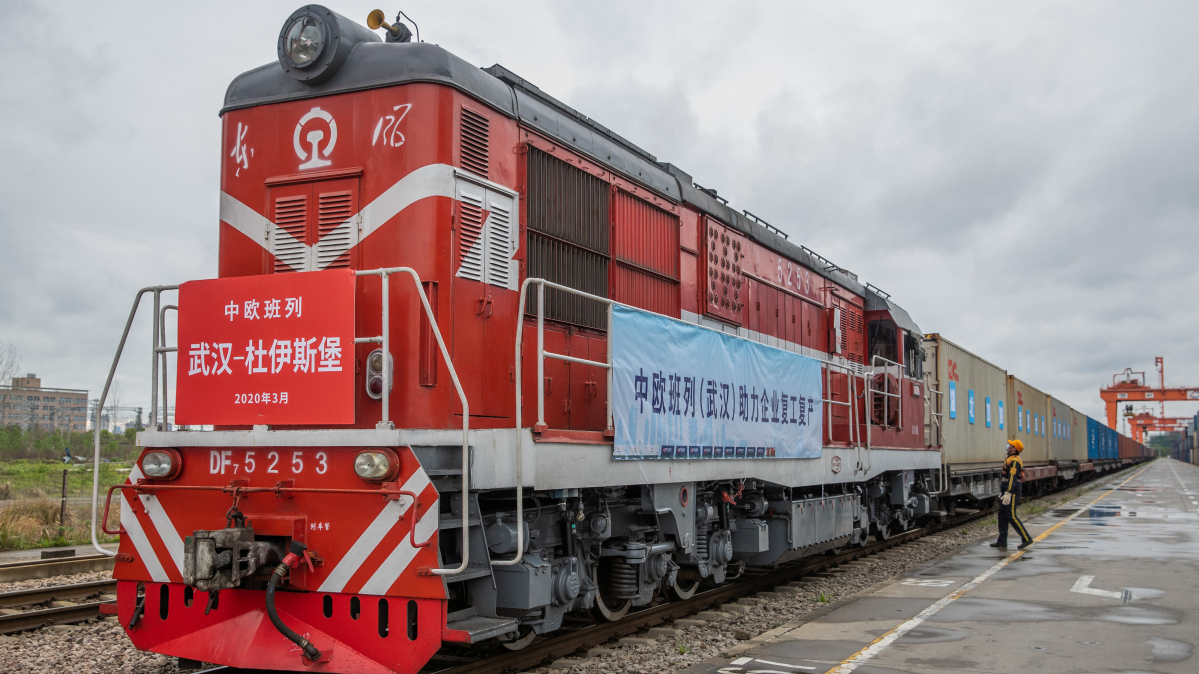
Freight transport on the China–Europe Railway Express grew strongly in the first two months of 2026, highlighting the growing importance of rail links between Asia and Europe. The network moved about 352,000 shipping containers between January and February, a 25% increase from a year earlier.
According to data released by China State Railway Group, around 3,500 freight train journeys were operated along the routes during the same period, marking a sharp rise in cross-continental rail traffic.
Faster than sea freight
The China–Europe Railway Express has become a key logistics corridor linking Chinese manufacturing hubs with major European markets. Freight trains on the route typically take around two to three weeks to reach their destinations, making them faster than traditional sea shipping, which can take more than a month. As a result, the rail service is widely used to transport time-sensitive goods such as electronics, machinery parts, automotive components and e-commerce products.
The rail network forms an important part of China’s broader infrastructure and trade strategy connected to the Belt and Road Initiative. Since the first China–Europe freight train routes were launched in 2011, the system has expanded rapidly. Today, the network links dozens of Chinese cities with more than 200 cities in over 25 European countries, creating one of the world’s largest long-distance rail freight systems.
The service has also become increasingly valuable for global supply chains. Rail transport offers a middle option between sea and air freight: it is faster than shipping by sea but far less expensive than transporting goods by air. This balance has made the railway particularly popular with companies that require reliable and relatively quick delivery for industrial goods and consumer products.
Logistics improvements boost efficiency
Railway authorities say the growth in freight volumes is also linked to improvements in logistics operations along the route. Customs clearance procedures have been streamlined, border facilities upgraded and digital tracking systems introduced to speed up cargo handling. These improvements have helped reduce delays at border crossings and made the overall journey more efficient.
The trains carry a wide range of goods in both directions. China exports products such as home appliances, electronics, machinery and car parts to Europe, while European shipments to China often include automobiles, industrial equipment, food products and chemicals.
As trade between China and Europe continues to expand, officials say the China–Europe Railway Express will play an increasingly important role in linking the two regions. Authorities plan to further improve infrastructure, expand logistics hubs and increase the efficiency of cross-border operations, helping the rail network handle growing demand in the coming years.






















What is your opinion on this topic?
Leave the first comment