Following the full-scale invasion of Ukraine on 24 February 2022, Western governments significantly expanded sanctions targeting Russia’s finance, energy, trade and technology sectors. The measures built on restrictions first imposed in 2014 following Russia's illegal annexation of Crimea.
An RIA Novosti report on 4 December 2025 estimated that the total number of sanctions imposed on Russia since 2014 was approaching 31,000.
The European Union adopted 19 sanctions packages between 2022 and 2025, and in February 2026 proposed a twentieth package focused on energy services, financial institutions, trade and circumvention networks.
The United States extended its own measures through repeated U.S. Treasury designations targeting banks, defence manufacturers, logistics operators and individuals, further narrowing Russia’s access to foreign revenue, advanced technology and financial channels.
Financial sanctions
Financial measures began within days of 24 February 2022, with Western governments freezing an estimated €300 billion of Russia’s foreign reserves held abroad.
Major lenders, including VTB, Promsvyazbank, Sovcombank, Otkritie, Novikombank, Rossiya Bank and VEB, were cut off from the SWIFT international payments system.
Restrictions widened to institutions involved in procurement and logistics networks. From 2023 onwards, banks faced limits on access to EU capital markets, investment services and financial messaging tools.
In 2025, an EU sanctions package proposed adding 22 further banks and tightening rules on institutions linked to the Russian Direct Investment Fund. Later measures targeted smaller regional banks and crypto-based payment routes.
Authorities froze assets linked to Roman Abramovich, Alisher Usmanov, Gennady Timchenko and the Rotenberg family. By late 2023, more than €21 billion in private assets had been blocked in Europe and over 30 superyachts and aircraft had been detained.
Sanctions later extended to executives from Gazprom, Rosneft, Rostec, the United Aircraft Corporation and Russian Railways.
Tariffs on individuals expanded significantly after 2022, with Western governments imposing travel bans and asset freezes on officials, lawmakers, military figures and business executives. The EU added more than 1,000 names between 2022 and 2025, while the U.S. issued repeated rounds of sanctions targeting defence procurement networks, logistics operators and bank executives.
Energy sanctions
Energy became a central focus of Western restrictions.
In April 2022, the EU approved a ban on Russian coal, followed in June by an embargo on seaborne crude that took effect on 5 December 2022 and a ban on refined petroleum products effective 5 February 2023.
Before these measures, Russia supplied about 27% of the EU’s crude imports and nearly 50% of its diesel.
The Group of Seven (G7) introduced a price-cap mechanism of $60 per barrel for crude, with caps of $100 and $45 for refined products.
As Russia redirected exports, Reuters reported the growth of a fleet of 500–600 ageing tankers operating without Western insurance. By December 2025, the EU had listed dozens more ships reportedly linked to circumvention activity.
Gas measures followed. Russia supplied roughly 40% of EU pipeline gas before 2022 but flows declined sharply after mid-year.
In January 2026, EU governments approved a phased end to Russian gas imports by 31 December 2026, with liquefied natural gas (LNG) contracts ending on 1 January 2027.
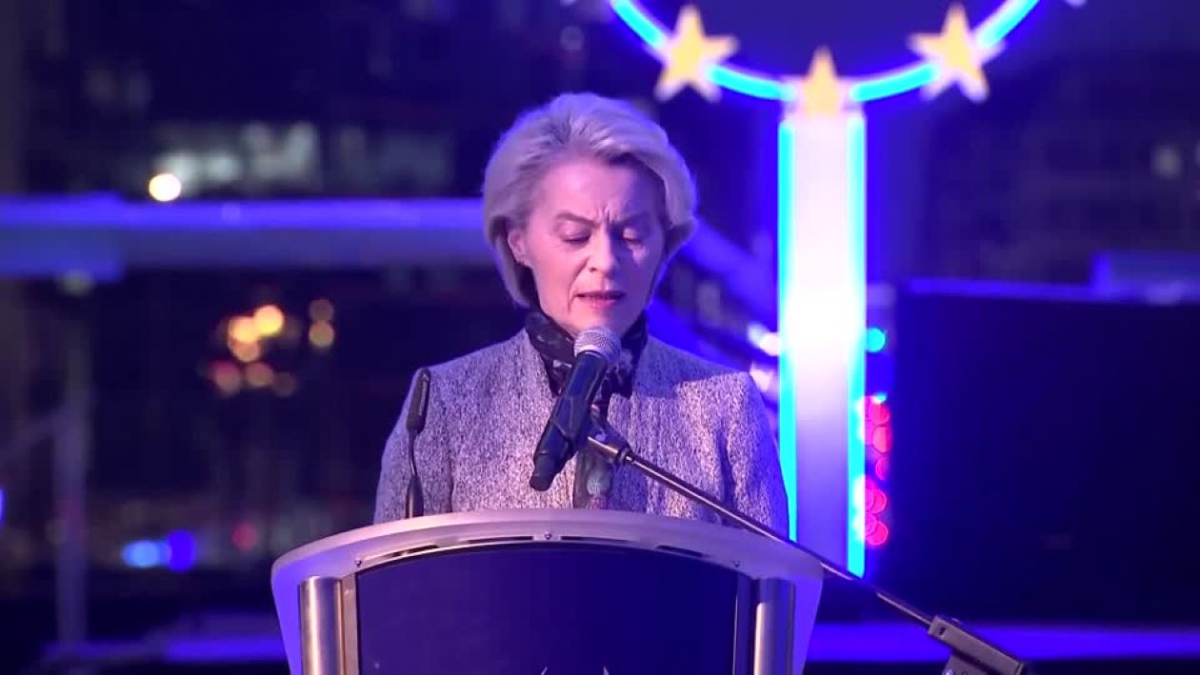
European Commission President Ursula von der Leyen said the EU’s proposed 20th sanctions package would tighten restrictions on Russian energy, finance and trade as Moscow continues its campaign against Ukraine.
“This is the only language Russia understands,” she said while urging member states to endorse the measures.
The sanctions package proposed in February 2026 included coordinated maritime-service bans for Russian crude with the G7 and restrictions on services for LNG carriers and ice-class vessels, including those using the Northern Sea Route and serving Arctic LNG 2.
Efforts to adopt the EU’s proposed 20th sanctions package stalled on Monday 23 February, a day before the fourth anniversary of Russia's full-scale invasion.
"We have not reached an agreement on the 20th sanctions package," EU foreign policy chief Kaja Kallas told reporters. "This is a setback and a message we didn't want to send today, but the work continues."
Trade and export controls
Trade and export controls restricted Russia’s access to advanced technology and industrial inputs.
Early measures banned semiconductors, specialised electronics, sensors, aircraft parts and machine tools.
These controls broadened through 2023–2025 to include additional dual-use items, machinery, chemicals, metals and industrial goods.
Reuters documented diversion routes through Central Asia, the Caucasus, Belarus and the Middle East.
Belarusian imports of Western electronics and machinery increased in 2023–2024, prompting EU sanctions rounds in mid-2023, late 2023 and throughout 2024 targeting Belarusian logistics firms, industrial suppliers and sectors such as potash and timber.
Sanctions also restricted Belarusian banks, including Belinvestbank, Belagroprombank and Bank Dabrabyt.
Ukraine imposed sanctions on Belarus' President Alexander Lukashenko on 18 February 2026, with President Volodymyr Zelenskyy vowing to “significantly intensify countermeasures” over Minsk’s assistance to Russia’s military campaign.
Zelenskyy said Belarus had enabled Russian drone strikes by allowing the deployment of relay stations, adding that “the sanctions send a political signal.”
Proposals in early 2026 outlined further export bans, additional import restrictions, a quota on ammonia shipments and expanded measures addressing circumvention networks.
Transport
Transport restrictions were introduced soon after the 2022 escalation.
The EU, the United States, Canada and the United Kingdom closed their airspace to Russian aircraft, and Russia imposed reciprocal bans.
The EU barred Russian-flagged vessels from its ports in 2022 and later extended restrictions to ships suspected of carrying sanctioned cargo or operating under opaque ownership structures.
Enforcement was strengthened with bans on port services, bunkering and EU-based insurance for vessels tied to circumvention.
Road freight operators from Russia and Belarus were barred from transporting goods within the bloc. Rail links faced increased scrutiny, particularly for dual-use goods, slowing freight across Eurasian corridors.
By 2025, aviation, maritime and road networks were covered by sanctions, with further measures proposed in early 2026.
Military-industry sanctions
Restrictions targeted Russia’s defence sector through bans on microchips, optics, avionics, bearings, composite materials and precision machine tools.
By mid-2024, the U.S. Treasury had designated more than 300 entities and individuals linked to Russia’s military supply chain, with EU and U.S. lists together covering more than 1,000 defence-related actors.
Budget data showed defence spending reaching about 6% of GDP in 2024, up from roughly 3% before 2022, amounting to nearly 40% of federal spending.
Rostec employs more than 600,000 people and estimates place total defence-industrial employment above three million.
Investigations into weapons recovered in Ukraine documented the use of foreign components. Some cruise missiles contained more than 30 Western microchips and over 70% of identifiable electronics in certain drones originated from foreign suppliers.
This led to sanctions on procurement networks operating through third-country transit hubs, where imports of sensitive components increased more than 60% over pre-2022 levels.
Sanctions also extended to suppliers of drones and ammunition following the use of Iranian-made Shahed systems and reports of North Korean artillery shipments.
On 8 February, President Zelenskyy said he had approved new sanctions on foreign companies supplying components for Russian drones and missiles, targeting firms in China, the former Soviet Union, the UAE and Panama.
"Producing this weaponry would be impossible without critical foreign components, which the Russians continue to obtain by circumventing sanctions," he said.
Double-edged sword
According to the Kyiv School of Economics (KSE), foreign companies paid around $1.2 billion in exit taxes in 2023 and a further $1.5 billion by July 2024, bringing total exit-related taxes above $3 billion.
Many firms saw profits frozen and assets transferred to Russian-controlled entities.
Energy firms reported the largest write-offs. BP, ExxonMobil, Fortum, TotalEnergies and Uniper recorded combined losses exceeding $60 billion. Renault incurred losses of about $2.4 billion, while Volkswagen and Nissan also recorded significant write-downs.
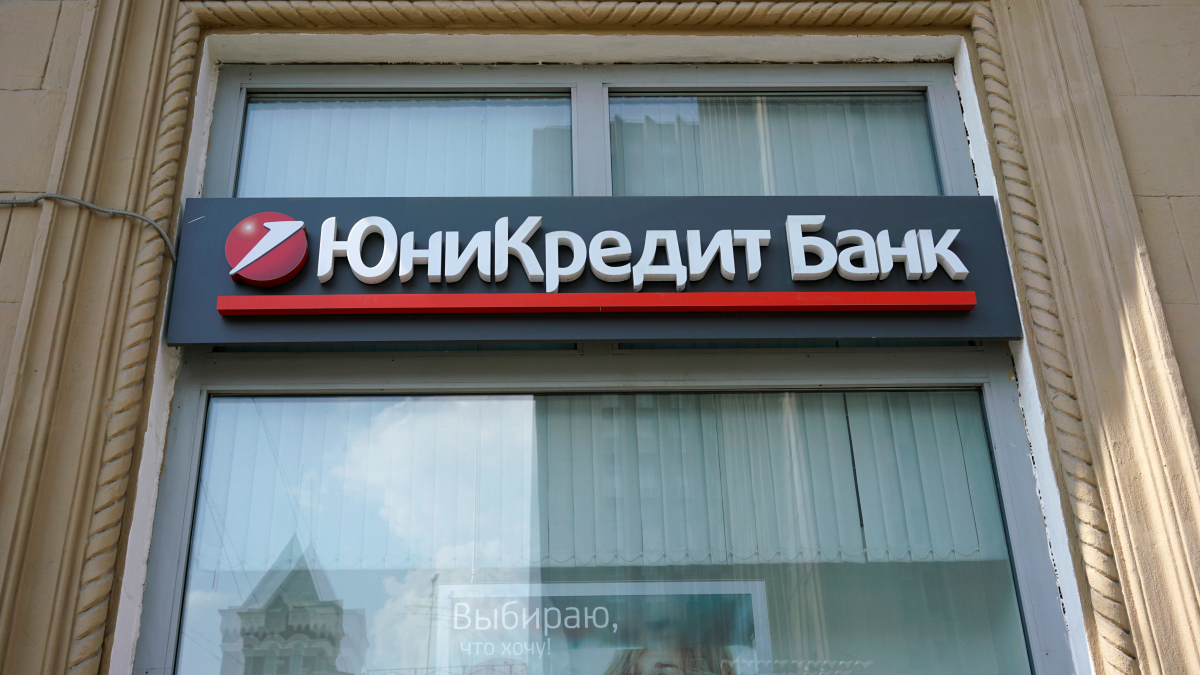
Société Générale exited Russia in 2022 with losses of about $3.3 billion. UniCredit and Raiffeisen Bank reported asset devaluations and legal challenges.
Companies such as McDonald’s, Nestlé, Unilever, Danone and Carlsberg exited or sold assets at reduced valuations.
KSE data indicated that by early March 2025, 481 companies had fully exited, 1,357 had scaled down operations or were withdrawing, and more than 2,260 continued operating without major changes.
Sports and cultural sanctions
Between February and March 2022, the International Olympic Committee, FIFA and UEFA suspended Russian teams and athletes.
World Athletics maintained a ban covering the 2022 and 2023 World Championships and qualification for Paris 2024.
By 2025, Russia had missed three consecutive Champions League seasons and more than 70 international sporting events scheduled to take place in Russia had been cancelled or relocated.
Cultural measures included Russia’s removal from the Eurovision Song Contest in 2022.
Western film studios paused releases, and box-office revenue from foreign titles in Russia fell by more than 80% in 2022, according to Reuters.
International festivals, orchestras and museums suspended cooperation with state-linked Russian institutions.
UEFA moved the 2022 Champions League final from St Petersburg to Paris, and Formula 1 cancelled the Russian Grand Prix.
Restrictions introduced in 2024–2025 allowed limited athlete participation under neutral status.
Twenty athletes from Russia and Belarus competed under the “Individual Neutral Athletes” (AIN) designation after both countries were banned from the 2026 Winter Olympics. The group comprised 13 Russians and seven Belarusians.
Russian and Belarusian athletes will also be allowed to compete at the Winter Paralympics under their flags and with their national anthems, the International Paralympic Committee (IPC) General Assembly has decided, IPC President Andrew Parsons said.
Ukraine’s Sports Minister Matvii Bidnyi vowed that officials would boycott the 2026 Milano Cortina Paralympics over the participation of Russian and Belarusian athletes competing under their national flags.
“No Ukraine official will attend the opening ceremony or any event of the Games,” he said, though Ukrainian athletes will still compete.











What is your opinion on this topic?
Leave the first comment