Four years after Russia launched its full-scale invasion of Ukraine on 24 February 2022, the war is no longer defined by shock but by scale.
What began as a rapid armoured thrust towards Kyiv has evolved into a protracted conflict measured in tens of thousands of deaths, hundreds of thousands of casualties, thousands of square kilometres and hundreds of billions of dollars.
The battlefield has hardened. The front line stretches for more than 1,000 kilometres. Political alliances have shifted. Economies have been restructured. The human toll continues to mount.
Civilian deaths: verified minimums
Civilian casualties remain the clearest measurable indicator of the war’s impact.
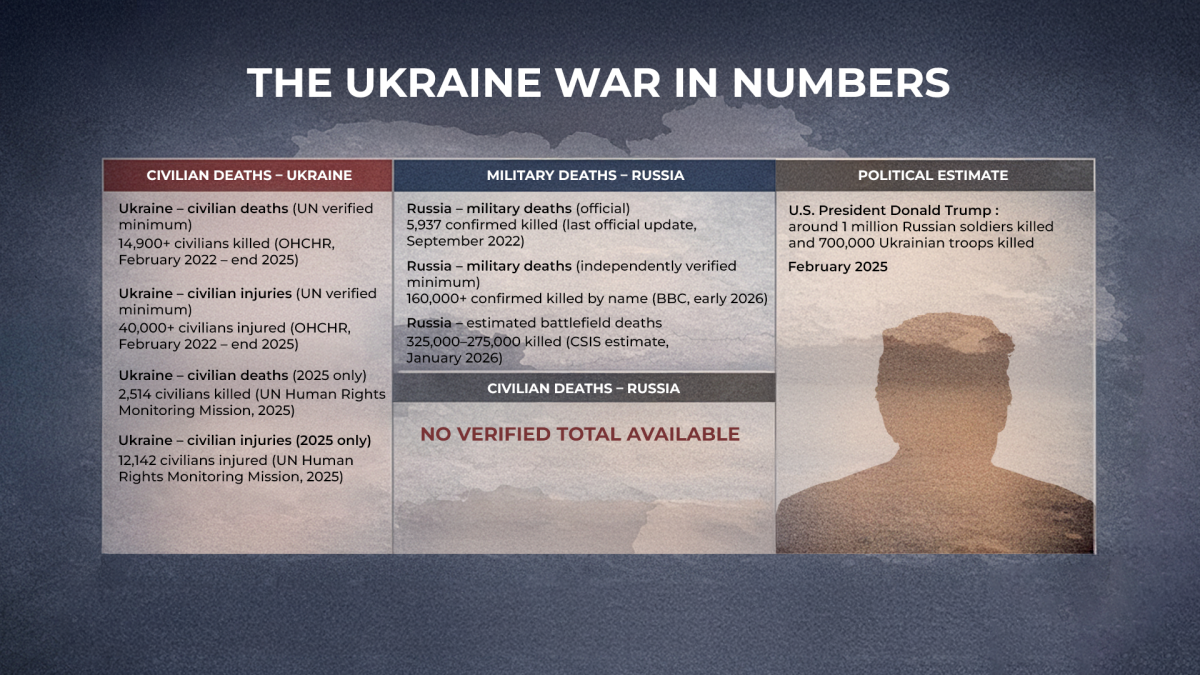
According to the United Nations Human Rights Monitoring Mission in Ukraine, 2,514 civilians were killed and 12,142 injured in 2025 alone. That made 2025 the deadliest year for civilians since 2022. Civilian deaths increased by 31% compared with 2024 and by 70% compared with 2023.
The United Nations reports that nearly all verified casualties in 2025 occurred in Ukrainian government-controlled territory and were the result of Russian attacks.
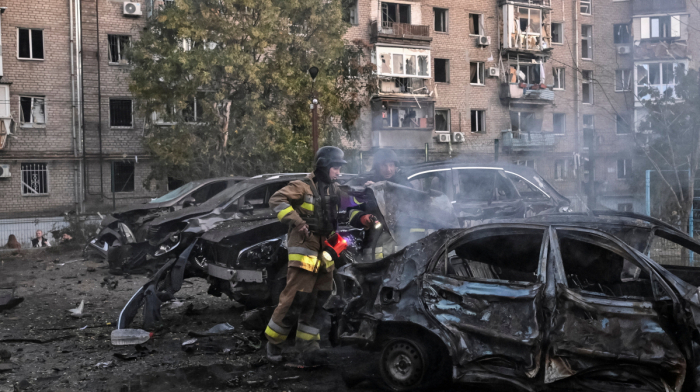
Long-range missile and drone strikes accounted for more than one third of civilian casualties in 2025. This reflects a shift in how the war is being fought. While heavy combat continues along the front, a growing share of civilian injury comes as a result of strikes on cities, residential districts and energy infrastructure far from active battlefield zones.
Across the entire period since February 2022, the Office of the UN High Commissioner for Human Rights has verified more than 14,900 civilian deaths and more than 40,000 injuries.
These figures represent confirmed minimums. The UN stresses that actual totals are likely to be higher, particularly in Russian-controlled areas where access is restricted and independent verification is difficult.
Russian authorities report civilian deaths inside Russia as a result of Ukrainian cross-border strikes. However, the UN says it has been unable to independently verify most of those figures due to limited access and documentation.
The civilian toll, therefore, is both substantial and as yet incomplete.
Military casualties: contested and expanding
Military losses are harder to quantify.
Ukraine’s President Volodymyr Zelenskyy stated in early 2026 that 55,000 Ukrainian soldiers had been killed since the invasion began. He acknowledged a significant number of personnel listed as missing.
Broader estimates suggest Ukraine’s total casualties, including killed, wounded and missing, range from 500,000 to 600,000, according to a January 2026 report by the Center for Strategic and International Studies (CSIS).
Russia has not released a comprehensive breakdown of its battlefield deaths.
Independent Russian outlet Mediazona, working with BBC Russian Service and volunteers, has verified more than 160,000 Russian military deaths by name through open-source documentation, obituaries and official records. Investigators stress that this represents confirmed fatalities only, not total losses.
Western intelligence agencies provide wider casualty estimates that include those killed and wounded. A UK Defence Intelligence update in October 2025 assessed that Russia had suffered approximately 1.1 million total casualties since February 2022. The same January 2026 CSIS report placed Russian total casualties at roughly 1.2 million, including killed, wounded and missing.
Russian officials reject Western casualty estimates and have not published comprehensive alternative accounting.
Political rhetoric has further complicated the picture. U.S. President Donald Trump has claimed that approximately 1 million Russian soldiers and 700,000 Ukrainian troops have been killed. Those figures exceed verified death counts and most published intelligence assessments.
Even allowing for uncertainty, the available data indicates that Russian total casualties exceed 1 million, while Ukrainian total casualties are estimated in the hundreds of thousands, with 55,000 confirmed Ukrainian military deaths publicly acknowledged.
What remains clear is the scale: military losses on both sides are measured not in the thousands, but in the hundreds of thousands.
Thousands missing
Tens of thousands of individuals remain officially listed as missing.
In many cases, those recorded as missing are believed to include prisoners of war or personnel whose bodies have not been recovered from contested or occupied territory. Formal identification requirements mean confirmed fatality totals often lag behind battlefield realities. Russia does not publish comprehensive public data on missing personnel. Independent tracking of missing cases is limited by restricted access to documentation.
The number of missing represents one of the largest uncertainties in the war’s human cost.
Missing children and deportations
Beyond battlefield deaths and missing soldiers, one of the most politically charged and legally significant figures in the war concerns Ukrainian children removed from occupied territories.
Ukrainian authorities state that more than 19,000 Ukrainian children have been forcibly deported or transferred to Russia or Russian-controlled areas since 2022. Kyiv says these cases include children separated from parents during hostilities, taken from state institutions and orphanages, or relocated under so-called evacuation programmes.
The International Criminal Court issued arrest warrants in March 2023 for Russian President Vladimir Putin and Russia’s commissioner for children’s rights, alleging unlawful deportation and transfer of children from occupied Ukrainian territory.
Moscow rejects the accusations and says children were evacuated for their safety from combat zones. Russian officials have acknowledged transferring children to Russia but deny wrongdoing.
Independent verification of the total number is difficult. Ukrainian figures are based on documented cases compiled by state authorities and human rights organisations. International monitoring bodies have confirmed that children were transferred from occupied areas but have not published a comprehensive verified total matching Kyiv’s figure.
Ukraine has reported that several hundred children have been returned through mediation efforts, but thousands remain unaccounted for.
In numerical terms, the issue represents one of the largest documented child displacement cases linked to a single armed conflict in recent European history.
Prisoner exchanges: the numbers so far
Since February 2022, Russia and Ukraine have carried out at least 70 exchange rounds, making prisoner swaps one of the few continuous areas of direct negotiation during the war.
Ukrainian authorities say more than 7,000 Ukrainian prisoners have been returned from Russian captivity through these exchanges. Most were members of the armed forces, though some civilians have also been included.
Russia does not publish a consolidated cumulative figure, but exchanges are typically reciprocal, meaning broadly comparable numbers of Russian prisoners of war have been repatriated.
The largest single swap took place in May 2025, when both sides exchanged 1,000 prisoners each. The most recent confirmed round occurred on 5 February 2026, involving 157 Ukrainians and 157 Russians. Kyiv said 139 of the returned Ukrainians had been held since 2022.
Despite these returns, Ukrainian officials indicated in late 2025 that more than 2,500 Ukrainian prisoners of war were still believed to be in Russian custody. Moscow has not released detailed public data on how many Ukrainians it currently holds or how many Russian prisoners remain in Ukrainian detention.
In total, exchanges have resulted in the repatriation of thousands on both sides, but they have not resolved the broader issue of captivity. Thousands remain detained or officially listed as missing, leaving the prisoner question one of the war’s continuing humanitarian dimensions.
The front line stretches for more than 1,000 kilometres across eastern and southern Ukraine.
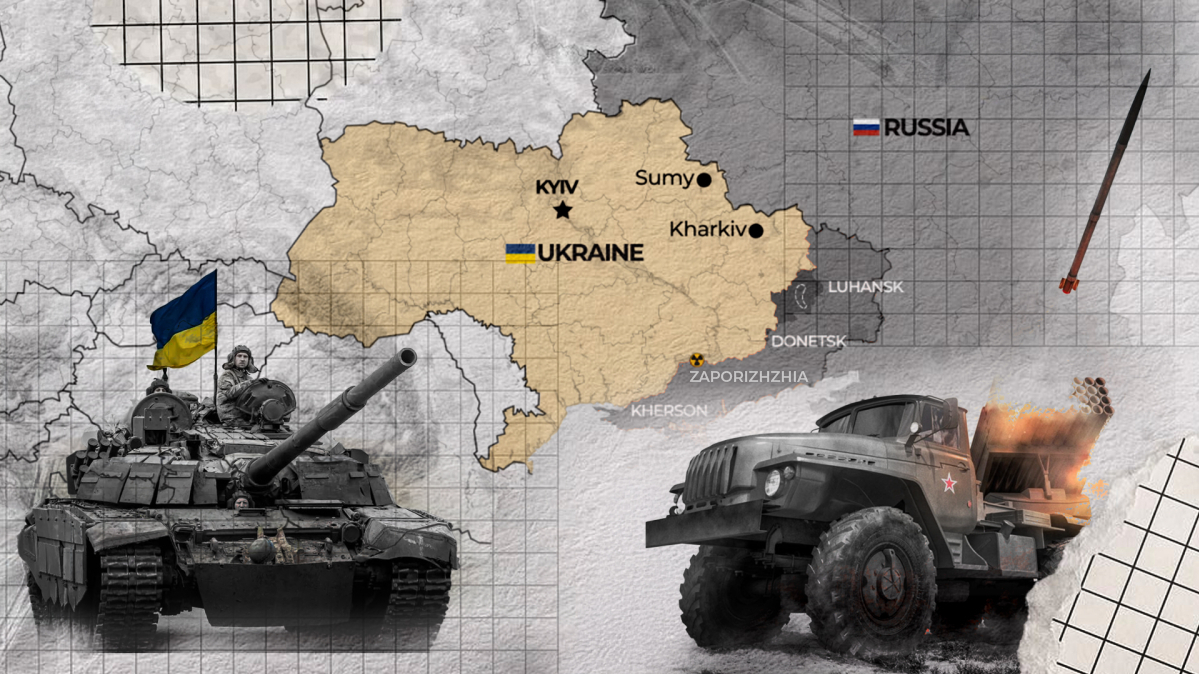
Independent battlefield assessments, including those from the Institute for the Study of War and other open-source mapping projects, indicate that Russia controls approximately 18 to 20% of Ukraine’s internationally-recognised territory.
In absolute terms, that equates to roughly 108,000 to 116,000 square kilometres out of Ukraine’s total land area of 603,628 square kilometres. The range reflects small but ongoing fluctuations along the front.
The territory under Russian military control includes:
- Crimea, annexed in 2014
- Almost all of Luhansk region
- Most of Donetsk region, though not in full
- Significant southern portions of Zaporizhzhia
- The eastern bank of Kherson region, while Ukraine retains Kherson city and the western bank of the Dnipro River
It is essential to distinguish between declared annexation and actual control. In late 2022, Moscow formally declared Luhansk, Donetsk, Zaporizhzhia and Kherson "annexed" following referendums that were rejected by Kyiv and Western governments. However, Russia has never exercised full control over all territory within those regional boundaries. Parts of Donetsk and Zaporizhzhia remain under Ukrainian control as of February 2026.
Peak expansion versus current control
Russia controlled more Ukrainian territory in March and April 2022 than it does today.
At the height of its early advance, Russian forces occupied:
- Large areas north of Kyiv
- Extensive territory in Chernihiv and Sumy regions
- Most of Kherson region west of the Dnipro
- Significant sections of Kharkiv region
Those early gains were measured in tens of thousands of square kilometres.
By late March 2022, Russian forces withdrew entirely from northern Ukraine after logistical failures and sustained Ukrainian resistance.
In September 2022, Ukraine recaptured an estimated 8,000 to 12,000 square kilometres in Kharkiv region during a rapid counteroffensive.
In November 2022, Russia withdrew from the western bank of the Dnipro in Kherson region, allowing Ukraine to retake Kherson city.
These reversals reduced Russia’s territorial footprint compared with its spring 2022 peak. The current figure of roughly one fifth of Ukraine therefore reflects both Russian consolidation in the south and east and substantial Ukrainian recoveries in the north and west.
Territorial movement since 2023
The conflict has shifted into a war of attrition with gradual territorial change.
Independent assessments indicate Russian forces captured approximately 4,000 to 5,000 square kilometres during 2025, while Russian officials claim higher figures approaching 6,000 square kilometres. Even at the higher estimate, this represents less than 1% of Ukraine’s total territory.
Advances have been concentrated primarily in the western Donetsk region, including sectors near Pokrovsk, Chasiv Yar and Kostyantynivka.
Movement has generally been measured in kilometres per month rather than rapid operational breakthroughs.
In Zaporizhzhia and Kherson, front lines have remained relatively stable, with the Dnipro River acting as a natural defensive barrier.
In the north-east, Russian forces have attempted limited advances toward Kupyansk and along the border areas near Belgorod region.
The broader trajectory
As of February 2026:
- Russia controls roughly one fifth of Ukraine.
- Ukraine has reversed significant early territorial losses from 2022.
- Since 2023, changes have been incremental rather than sweeping.
The war’s territorial story is, therefore, not linear. It includes rapid expansion, major reversals and prolonged entrenchment.
The map continues to shift, but slowly.
In the second part of this series on Ukraine's war in numbers we discuss, in more detail, how the war is being financed and who is pledging funds.















What is your opinion on this topic?
Leave the first comment