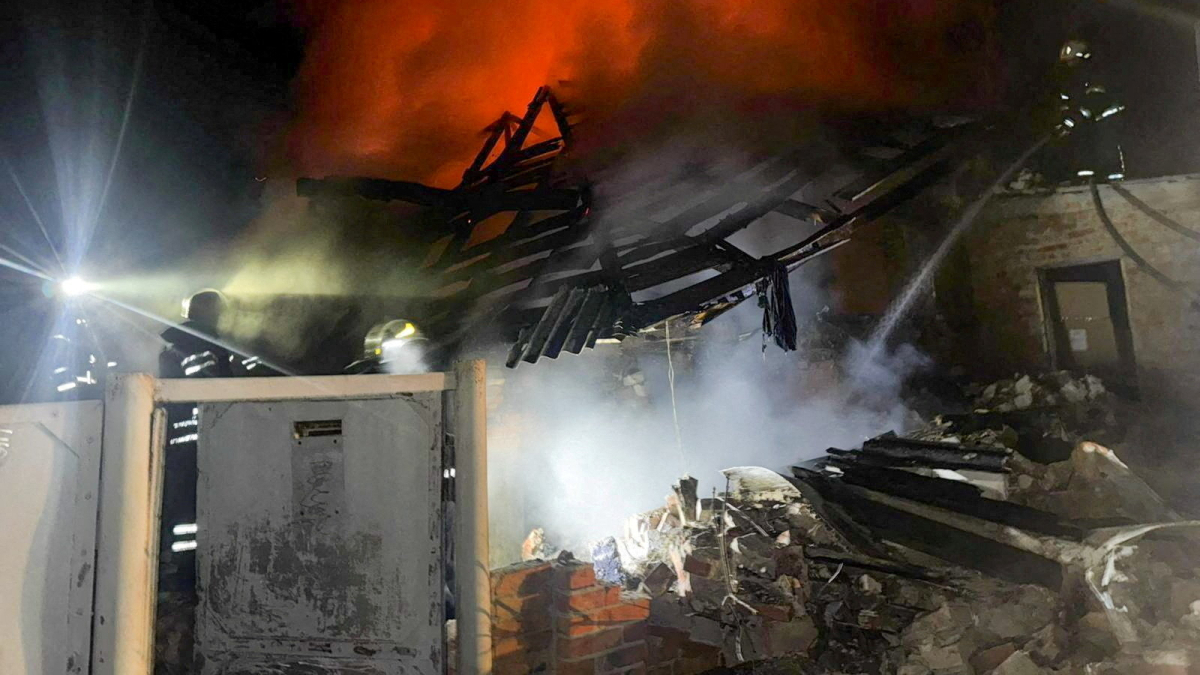
The Ukrainian capital came under a “massive” Russian missile attack early Thursday (12 February), with explosions heard across the capital according to authorities. The assault unfolded as uncertainty lingers over upcoming U.S.-brokered peace talks.
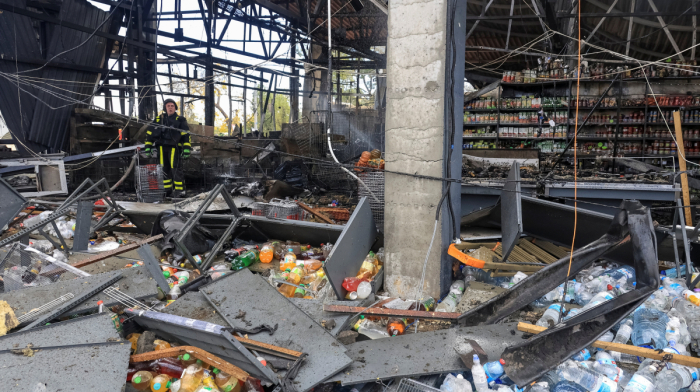
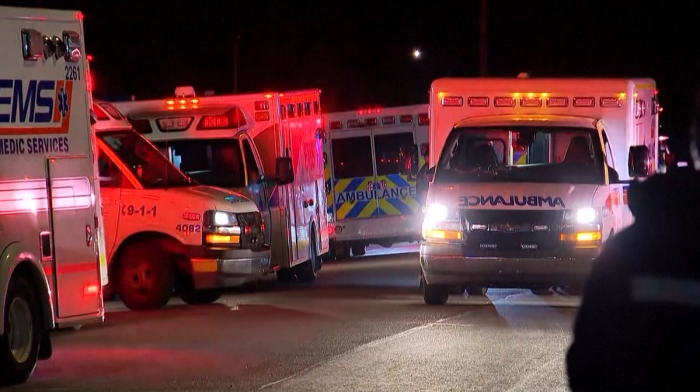
Energy systems were targeted, injuring at least seven people in the capital Kyiv, and the cities of Dnipro and Odesa, officials said.
"Hundreds of drones and ballistic missiles targeted energy systems, depriving people of power, heating, and water," Ukrainian Foreign Minister Andrii Sybiha said in a post on X.
Ukraine air force said that Russia launched 24 ballistic missile, one cruise missile and 219 drones overnight. Air defence units shot down or neutralised 16 missiles and 197 drones, the air force said in a post on Telegram. It added that the cities of Kyiv, Kharkiv, Dnipro and Odesa were the main targets of the strike.
Two people were hurt in Kyiv, which also hit various buildings, Mayor Vitali Klitschko said.
Klitschko said on Telegram there had been hits on both residential and non-residential buildings on both sides of the Dnipro River bisecting the city.
Fragments had fallen near two residential buildings in one district, but no fire had broken out.
Four people, including a baby boy and a four-year-old girl, were hurt in a missile and drone attack on the southeastern city of Dnipro and surrounding district, regional governor Oleksandr Ganzha said on Telegram.
One person was hurt in a drone attack on the southern city of Odesa on the Black Sea, which also damaged an infrastructure facility and an apartment building where a fire broke out at an upper floor, head of the city's military administration, Serhiy Lysak said.
Russia has not commented yet.
Targets on energy sector
Ukraine's major private energy company DTEK said on Thursday that Russia attacked its thermal power plant overnight, causing significant damage to the plant's equipment.
"This is the eleventh massive attack on the company's thermal power plants since October 2025," DTEK said on the Telegram messenger, giving no more details.
Meanwhile, nearly 300,000 people were left without electricity and water supply in Ukraine's southern city of Odesa after a Russian attack, Deputy Prime Minister Oleksiy Kuleba said on Thursday.
He added that close to 200 buildings in the city were left without heating, while 10,000 consumers were also left without heating in the southeastern city of Dnipro.
Zelenskyy calls for greater U.S. pressure
The attack came as Ukrainian President Volodymyr Zelenskyy on Wednesday called on the United States to intensify pressure on Russia if it wants the war to end by summer.
He said it remained unclear whether Moscow would participate in the next round of U.S.-brokered trilateral peace talks expected in Miami, following two rounds of negotiations in Abu Dhabi that produced no breakthrough.
"It depends not only on Ukraine, but also on America, which must exert pressure - excuse me for saying so, but there is no other way - it must exert pressure on Russia," Zelenskyy said.
The Kremlin said no date had been set for the next talks, though discussions were likely soon. Three sources familiar with the matter said U.S. officials had proposed a trilateral meeting in Miami on Monday and Tuesday. The White House declined to comment.
Election debate and peace framework
Zelenskyy rejected a Financial Times report that he planned to announce on 24 February, the anniversary of Russia’s full-scale invasion, a presidential election alongside a referendum on a peace deal.
"Even if there was a goal or appropriate steps were taken to bring certain elections closer, I believe that it would be an absolutely stupid idea to choose such a date to talk about politics," Zelenskyy said.
"First security, then politics," he added.
He reiterated that elections could only be held once security guarantees are secured and a ceasefire is in place.
A source familiar with the matter also said Zelenskyy could not initiate elections or a referendum without first agreeing on the terms of a peace deal with Russia.
"The Russians do not agree to a deal and they're not taking steps to end the war so how could there be ... steps to hold elections?" the source said.
Under martial law imposed after Russia’s 2022 invasion, elections are currently prohibited, and opinion polls indicate a majority of Ukrainians oppose holding a wartime ballot.
No breakthrough in Donbas talks
Negotiations remain stalled over Ukraine’s eastern Donbas region. Russia seeks full control under any settlement, while Ukraine rejects that demand but has signalled openness to alternatives such as a demilitarised or free-trade zone.
Although Washington has pushed for a resolution by summer, officials caution that without a peace agreement in place, any election timetable would be unrealistic.









What is your opinion on this topic?
Leave the first comment