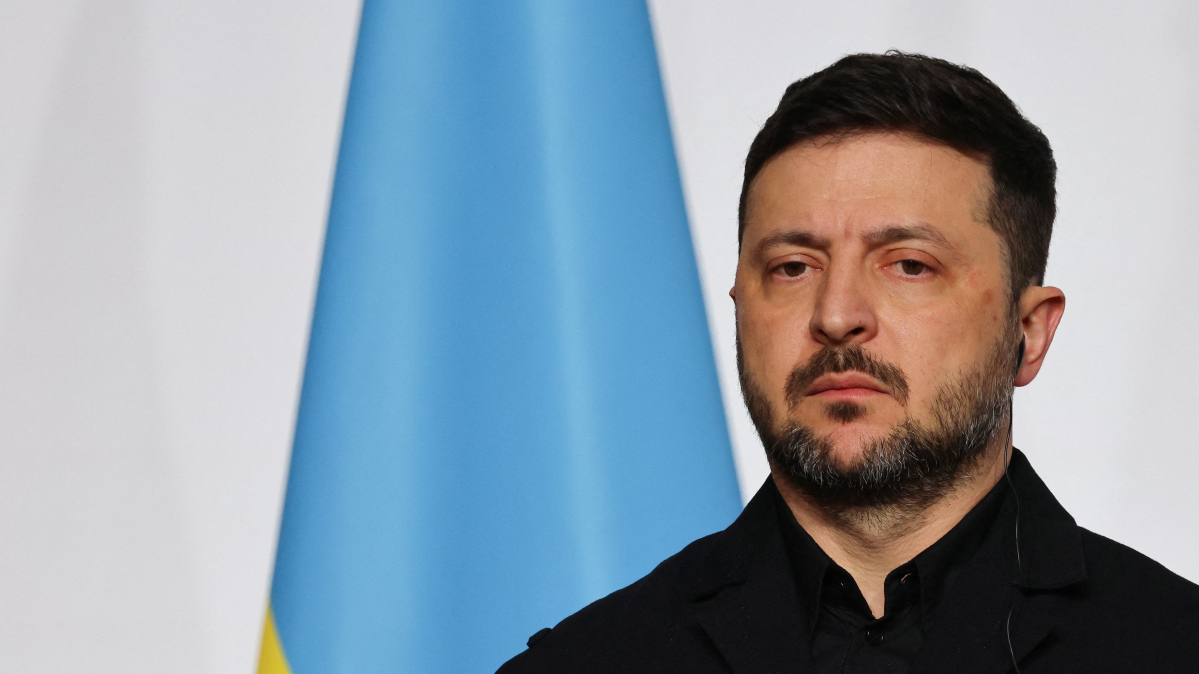
Ukrainian President Volodymyr Zelenskyy said on Wednesday (11 February) that his government will only hold national elections once a ceasefire with Russia is in place and security guarantees are secured, pushing back at suggestions of fresh ballots under pressure from international partners.
“We will move to elections when all the relevant security guarantees are in place. I have always said that the issue of elections is raised by various partners. Ukraine itself has never raised it,” Zelenskyy said in a WhatsApp chat with journalists.
He added, “But of course we are ready for elections. I said it is very simple to do. Make a ceasefire, there will be elections… First comes security, then politics.”
Earlier, the Financial Times reported that Ukrainian officials were planning to hold elections in May 2026.
However, holding elections under current wartime conditions presents substantial legal and logistical hurdles. Under Ukraine’s constitution, parliamentary and presidential elections are prohibited while martial law is in effect but crisis governance has been extended repeatedly since February 2022.
To facilitate a vote in May, the Verkhovna Rada (Ukraine's parliament) would need to amend existing legislation or temporarily lift specific martial law restrictions.
Furthermore, the Central Election Commission faces the challenge of updating voter registries.
Millions of Ukrainian citizens remain displaced, residing as refugees across the European Union or as internally displaced persons (IDPs) within Ukraine. And areas of Ukraine are under Russian control, meaning voting in in any kind of Ukrainian national election or referendum in those regions would be extremely difficult to organise, if not impossible.
Ensuring the security of polling stations and the safety of voters remains a primary concern for organisers. Western and Ukrainian officials involved in the discussions are reportedly examining models to allow diaspora voting and secure electronic or postal voting methods to ensure broad participation.
The legitimacy of the election would depend heavily on voter turnout and the ability of opposition candidates to campaign freely. The Financial Times said this planning is now active, moving beyond theoretical discussions to concrete logistical preparations.
Strategic implications and international diplomacy
The decision to combine the presidential election with a referendum on a peace deal reflects the high stakes of ongoing negotiations. Reuters reported earlier that this framework is being discussed by United States and Ukrainian negotiators. The rationale is that any peace agreement - likely to involve difficult compromises regarding territory or security arrangements - requires a direct mandate from the Ukrainian people rather than just a presidential signature. By holding the votes simultaneously, the administration hopes to validate both the leadership and the trajectory of the nation’s end-of-war strategy.
Western allies have periodically raised the issue of democratic renewal in Kyiv. Zelenskyy’s original five-year term formally concluded in May 2024, but he remained in office under the constitutional provisions of martial law. While opinion polls have historically shown support for postponing elections until the war concludes, the protracted nature of the conflict has shifted the diplomatic calculation. International partners are looking for a refreshed mandate to ensure that any government signing a treaty has indisputable legitimacy.
If the referendum rejects the proposed peace terms, it would signal a public demand to continue military operations, complicating the diplomatic efforts of the U.S. and European partners. A vote in favour would provide the political cover necessary for the government to finalise a deal that might otherwise be viewed as controversial.
The involvement of U.S. officials in these framework discussions suggests the electoral timeline is closely tied to the broader geopolitical schedule for conflict resolution. Observers note that the synchronisation of these events places the ultimate decision on the war’s outcome directly in the hands of the electorate.












What is your opinion on this topic?
Leave the first comment