live Ukraine carries out deepest strikes of war as Zelenskyy visits Canada to discuss air defences
Ukrainian forces struck a Russian oil refinery in Siberia and a seaport in Dagestan in the past 24 hours, President Volodymyr Zelenskyy s...
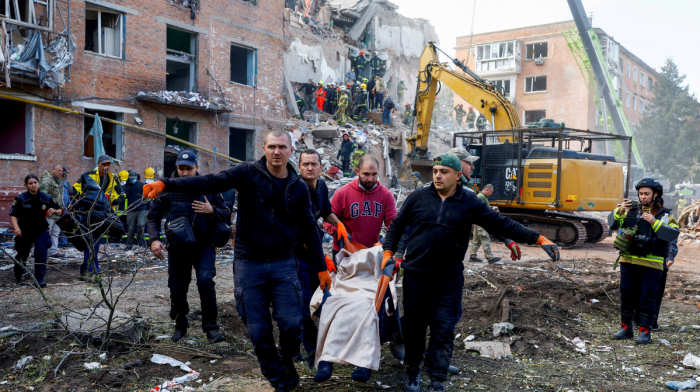
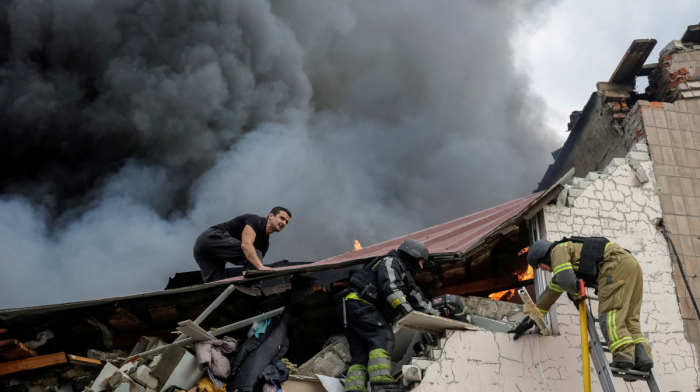
Russian forces have resumed attacks on Ukraine's capital Kyiv, as well as its second largest city Kharkiv and other cities early on Tuesday (3 February), officials said, triggering fires and dealing new blows to energy infrastructure.
The strikes injured four people, officials in the two largest cities said. They came on the eve of the next planned three-sided talks on resolving the nearly four-year-old war in the United Arab Emirates on Wednesday and Thursday.
In Kyiv, as night time temperatures dipped close to -20 degrees Celsius (-4 degrees F), Reuters witnesses reported loud explosions after midnight, saying both missiles and drones were being deployed.
The strikes caused damage in five districts, hitting three apartment blocks and a building housing a kindergarten, Tymur Tkachenko, Head of the city's military administration, said on the Telegram messaging app.
Flames consumed an apartment on the upper floors of a Kyiv block in videos posted on social media. An air raid alert stayed in effect for more than five hours.
A series of massive attacks on the capital since New Year's Day have knocked out power and heating to hundreds of apartment blocks and emergency crews were still trying to restore heating systems on Monday (2 February).
Kharkiv Mayor Ihor Terekhov said the attacks targeted energy infrastructure and called for tough decisions to keep heating systems from freezing. Coolant needed to be drained from 820 apartment buildings supplied by a single thermal plant.
"The goal is obvious: to cause maximum destruction and leave the city without heat in severe cold," Terekhov wrote on Telegram.
Public broadcaster Suspilne also said Russian strikes had knocked out power in two towns in the Kharkiv region, Izium and Balakliia, and struck two apartment buildings in the northern city of Sumy.
The attacks also coincided with talk of a moratorium on strikes on energy infrastructure adopted by both Russia and Ukraine at the request of U.S. President Donald Trump.
Russia said the ceasefire ended on Sunday (1 February), while Ukraine said it was supposed to continue for a week from 30 January.
Volodymyr Zelenskyy said Russia carried out a deliberate overnight air attack on Ukraine’s energy infrastructure, involving a record number of ballistic missiles.

Four people were killed, including a child, in Ukrainian strikes on the Russian port city of Novorossiysk overnight, according to the governor of the Krasnodar region. Ukraine's drone forces commander, Robert Brovdi, said Russian military ships were destroyed in the attacks.
A TV channel was struck during a live broadcast on Tuesday, Ukrainian President Volodymyr Zelenskyy said, as Russian strikes on Kyiv killed at least three people, the city's Mayor Vitali Klitschko said. Meanwhile, drones hit civilian infrastructure in Russia's southwestern Saratov region.
Wildfires have broken out in Türkiye’s Antalya province, forcing hundreds of people to evacuate as strong winds fuelled the flames.
U.S. Central Command (CENTCOM) said its forces destroyed five Iranian crude oil carriers after the Islamic Revolutionary Guard Corps (IRGC) allegedly launched two ballistic missile attacks against a U.S. Navy warship over the past two days.
Iran’s Revolutionary Guards (IRGC) said on Wednesday they attacked two U.S. vessels and eight oil tankers in the Persian Gulf, calling the strikes a response to a U.S. attack on five Iranian tankers.
Ukrainian forces struck a Russian oil refinery in Siberia and a seaport in Dagestan in the past 24 hours, President Volodymyr Zelenskyy said. He will meet Canadian Prime Minister Mark Carney on Thursday to discuss air defences for Ukraine over winter.
U.S. President Donald Trump put himself and the Iran war at the centre of the Republican midterm campaign on Wednesday, rallying voters in Dallas with promises of cash payments and a prediction that the conflict would end after November’s elections.
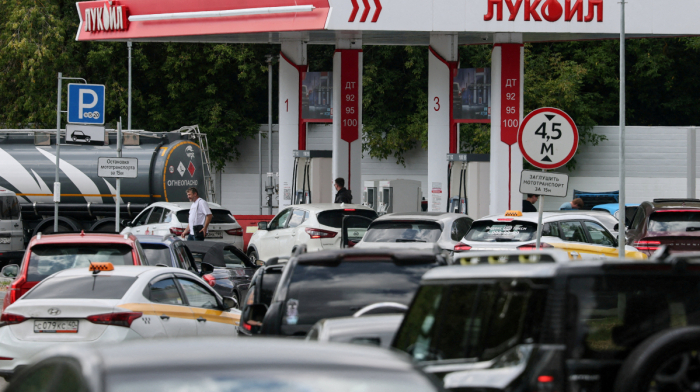
Oil has crossed the $100-a-barrel mark again, but for Gulf countries this is not simply good news. Brent reached about $100.07 on Wednesday, its highest level since July, as the U.S.-Iran war and attacks on Saudi energy facilities raised fresh fears about supplies.
Start your day informed with the AnewZ Daily Brief. Here are the top stories for the 10th of September, covering the latest developments about AI and technology.
U.S. President Donald Trump has pledged to send every American adult a $5,000 payment if the Republicans keep control of the House of Representatives and the Senate in November's midterm elections.
You can download the AnewZ application from Play Store and the App Store.
What is your opinion on this topic?
Leave the first comment