A Russian missile strike killed six people in Ukraine’s Kharkiv region on Monday (4 May), as Kyiv reported fresh attacks on energy infrastructure and a sharp rise in drone strikes on ports.
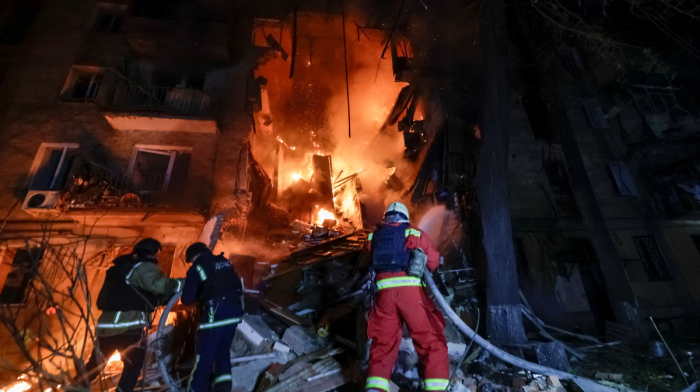
The strike hit the town of Merefa, south of Kharkiv city, at about 9:35 a.m. local time (06:35 GMT), according to regional prosecutors. Governor Oleh Syniehubov said six people were killed and at least 36 injured, including a two-year-old boy.
Emergency services said the blast damaged at least 10 residential houses, an administrative building, four shops, a car repair workshop and a food establishment.
“The strike was of great force - at the centre of the town, practically in the middle of the roads,” Syniehubov said on Telegram. He added that clearing debris would take “another day or two”.
He said two men and three women died at the scene, while another man died later in hospital.
Prosecutors said Russian forces appeared to have used an Iskander-type ballistic missile. There was no immediate comment from Russia.
Residents described the moment of the attack and its aftermath. Ihor Kolodiazhnyi said his wife was killed shortly after leaving home. “I heard an explosion,” the 41-year-old said. “I walked closer, and that was it - my wife was gone…”
Inna Suprun, 51, said the aftermath was more frightening than the blast itself. “I’ve never been so scared in my life. Not so much from the explosion itself, but from the aftermath I witnessed afterwards,” she said.
Energy infrastructure targeted in north-east
Ukraine’s state energy company Naftogaz said five of its facilities were hit over the previous 24 hours. The attacks caused fires and damaged equipment, forcing a halt to production at affected sites.
Chief executive Serhiy Koretskyi said the facilities are located in the Sumy and Kharkiv regions, both of which have been repeatedly targeted during the war.
“The intensity of the enemy attacks is increasing,” he said in a Facebook post, pointing to a rise in strikes on critical energy assets.
Ukraine strikes Russian oil hub in Primorsk
Ukraine also stepped up long-range attacks, launching a wave of drone strikes deep into Russia on Sunday (3 May).
Officials said the Baltic Sea port of Primorsk was hit, with a fire breaking out at the oil terminal. President Volodymyr Zelenskyy said the strikes caused significant damage to the facility.
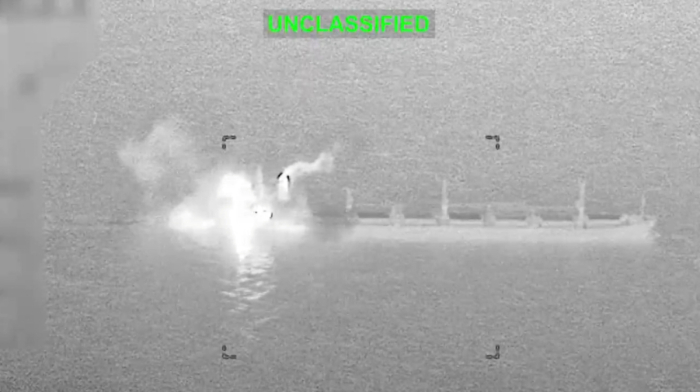
Primorsk is one of Russia’s largest export gateways, with capacity to handle around one million barrels of oil per day. Zelenskyy said Ukrainian forces also struck an oil tanker, a Karakurt-class missile ship and a patrol boat in the Baltic Sea.
The port has been targeted several times in recent months, as Ukraine increases pressure on Russian energy infrastructure while efforts to reach a negotiated end to the war have stalled.
Sharp rise in drone strikes on ports
Kyiv said Russia has significantly increased attacks on Ukraine’s port infrastructure in 2026. More than 800 drones were used in the first four months of the year, compared with 75 in the same period last year.
The southern Odesa region, which handles the bulk of Ukraine’s maritime exports, has faced almost daily strikes in recent months. Officials say port terminals, warehouses and logistical facilities have been repeatedly damaged.
Despite this, operations have continued. Infrastructure Minister Oleksii Kuleba said more than 30 million metric tonnes of cargo have been processed through Ukrainian ports since January.
He added that since the start of Russia’s full-scale invasion in February 2022, more than 900 port facilities have been damaged or partially destroyed, including 177 civilian vessels.
Economic targets increasingly in focus
The latest escalation points to a growing focus on economic infrastructure, according to former diplomat Gustavo de Arístegui.
Speaking to AnewZ, de Arístegui said Ukraine’s strike on Primorsk is part of “an audacious and, I would dare say, courageous strategy” built on expanding long-range capabilities, including systems “capable of flying thousands of kilometres inside Russia.”
He added that Ukraine is “probably the country in the world that has the most advanced anti-drone technology”, underlining its evolving defensive capacity.
He also highlighted the importance of maritime routes, noting that “45% of the oil exports of Russia go out through the Baltic Sea,” making chokepoints a critical factor in the conflict.
“The exchange is very heavy because both sides are very clear” about testing each other’s endurance, he said, adding that energy routes, shipping and infrastructure now sit at the centre of the war’s economic front.
Export growth remains limited
Data from Ukraine’s central bank showed that exports of goods rose by only 0.6% year-on-year in March. The figures reflect continued pressure on logistics and infrastructure despite efforts to keep export routes open.
Seaports in the Odesa region remain central to the economy, particularly for grain exports and smaller volumes of metal, which generate hard currency revenues.
Fico to meet Putin but skip Victory Day parade
Slovak Prime Minister Robert Fico said he will visit Moscow on 9 May to meet Vladimir Putin. He plans to lay flowers at a memorial marking Slovakia’s liberation by the Red Army in 1945, but said he will not attend the Victory Day parade.
Russian state television had earlier reported that he would be among a small number of international leaders attending the event.
On Monday, Ukrainian President Volodymyr Zelenskyy said he had met Fico and discussed Ukraine’s European Union accession ambitions.
“We discussed cooperation across various areas and holding a government meeting in the format of an intergovernmental commission in the near future,” Zelenskyy said on X.












What is your opinion on this topic?
Leave the first comment