The Kremlin said on Friday (30 January) that Russian President had received a personal request from his U.S. counterpart, Donald Trump. The request was to halt strikes on Kyiv until 1 February to create a favourable environment for peace negotiations.
Asked about the request, Kremlin spokesman Dmitry Peskov said Moscow would not provide additional details.
Ukraine said it would reciprocate if Russia refrained from striking the country’s energy infrastructure during a period of bitterly cold weather.
The next round of trilateral peace talks involving Russia, Ukraine and the United States had been scheduled to take place in Abu Dhabi on Sunday.
However, Ukrainian President Volodymyr Zelenskyy said on Friday that the date or location of the talks could still change.
Speaking earlier during a Cabinet meeting at the White House, Trump said he personally raised the issue with Putin during a phone call on Thursday.
“Because of the cold, extreme cold, I personally asked President Putin not to fire into Kyiv and the cities and towns for a week, and he agreed to do that,” Trump said.
Trump described the weather as “record-setting” and said Ukraine was experiencing conditions similar to a severe cold snap in Washington. He added that some advisers had questioned whether making the request would be effective, but said Putin ultimately agreed to the pause.
“A lot of people said, ‘Don’t waste the call. You’re not going to get that.’ And he did it,” Trump said.
There was no immediate confirmation from the Kremlin regarding the reported agreement, and Moscow did not immediately comment.
In his daily remarks on Telegram, Ukrainian President Volodymyr Zelenskyy said Kyiv remained in constant contact with its partners and was ready to take decisions aimed at achieving a lasting peace.
“Almost every hour, our negotiating team is in contact. We are communicating with our partners, with the American side, about truly effective formats and truly necessary results,” Zelenskyy said.
“Ukraine is ready for meetings, Ukraine is ready for decisions, and we expect our partners to be able to act as effectively as possible in Europe, in America, everywhere, exactly as needed for a lasting peace.”
Zelenskyy welcomed U.S. efforts to halt attacks on energy infrastructure, saying Washington’s role would be judged by developments on the ground.
“I thank the American side for its efforts to stop strikes on energy infrastructure at this time,” he said, adding that the situation in the coming days would show whether those efforts had succeeded.
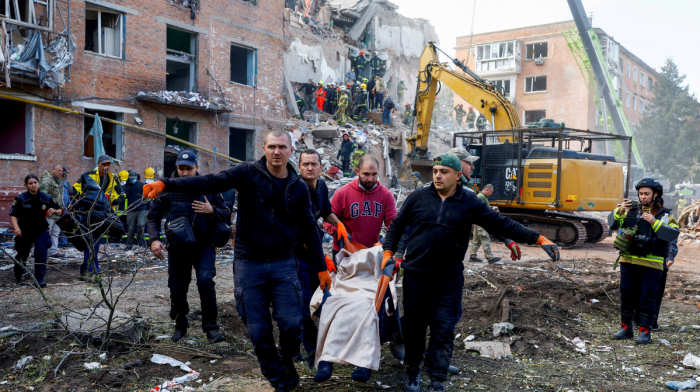
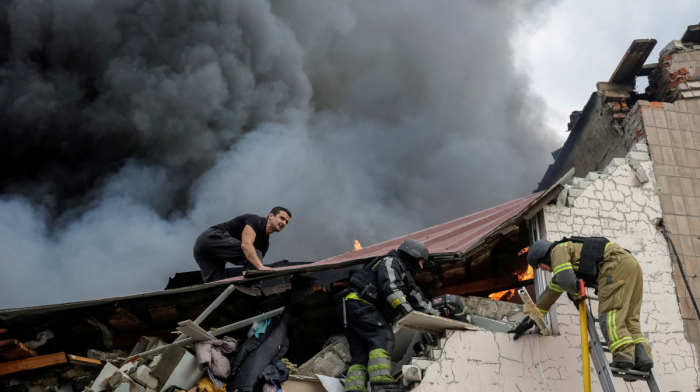
Emergency crews were still restoring heating and electricity in Kyiv following Russian air strikes last Saturday.
Kyiv Mayor Vitaly Klitschko said 454 apartment buildings remained without heat, with overnight temperatures dipping to minus 10 degrees Celsius and expected to fall further next week.
Despite Trump’s comments, Russian attacks killed at least six people in central and southern Ukraine on Thursday, according to regional authorities and emergency services.
Diplomatic talks continue
The United States has been engaged in months of diplomatic activity to secure an accord to end the nearly four-year-old war, the deadliest conflict in Europe since World War Two.
Negotiators from Ukraine, Russia and the United States held unusual three-way contacts last weekend in the United Arab Emirates.
U.S. Special Envoy Steve Witkoff, speaking at the Cabinet meeting, said discussions between Russia and Ukraine were continuing. He said the sides were discussing territorial issues, while talks on security guarantees and post-war economic recovery were nearly complete.
Witkoff noted that negotiations were expected to resume in about a week, with the next meeting scheduled for Sunday.
Ukraine continues to resist Russia’s demand to cede its entire eastern Donbas region, including areas Moscow’s forces have failed to capture. Kremlin aide Yuri Ushakov said the land issue was not the only key matter still under discussion.
Russian Foreign Minister Sergei Lavrov cast doubt on the viability of any U.S.-backed security guarantees for Ukraine, questioning whether they could deliver a lasting peace if they were designed to keep Ukraine’s current leadership in power.
Not a big difference
Rudolf Myhovych, CEO of the Christian Medical Association, joining from Lviv, said the situation remains unclear because Kyiv has not been involved in any ceasefire discussions.
"All Ukrainian officials, including Zelenskyy, informed that they did not communicate with Russians and there's no understanding," he said.
Myhovych pointed to a Russian strike on an energy facility in Zaporizhzhia region just a day earlier, adding: "Let's be honest, just for two days' stop, pause, actually it's not a big help."
He described the halt as a routine operational break rather than a real concession.
"They cannot do a lot every day," he said, noting drone and missile production remains high but not limitless. "Putin is just making a small pause, as usually they do after big attacks."
Myhovych suggested the Kremlin is also considering its relationship with Washington.
"I think it's more about building a relationship with Trump and showing him, yeah, we can listen to you because you're asking," he said.
Yet he stressed that Russian messaging at home shows no sign of preparing for de-escalation. "Propaganda is not preparing for slowing down."
Kyiv, he noted, is approaching the announcement cautiously.
"It's just two or three days. It's not changing the dramatic situation," Myhovych said, recalling that similar arrangements last year failed to prevent strikes on energy facilities in eastern and central regions.
The impact on Ukraine’s armed forces will be limited, he added.
"For the army, it's not a big difference because the army is supported," he said. Civilian areas, however, continue to face severe strain due to energy shortages, as households, small businesses and hospitals rely heavily on generators.
Myhovych said the main issue is not the number of Patriot systems but the availability of interceptor missiles.
"Many times when I'm talking to air defence, they tell me that we just basically don't have rockets to launch," he said.
Myhovych expects hostilities to resume quickly.
"I think they will continue to attack," he said, noting that regional authorities have advised residents to prepare for renewed large-scale strikes as temperatures drop to minus 20 to minus 30 degrees at night.
"We think that the winter is still not finished and the difficult time still goes on."











What is your opinion on this topic?
Leave the first comment