The U.S. military said Washington and Moscow have agreed to reestablish high-level military-to-military dialogue following talks in Abu Dhabi. The move could signal a step toward normalising some ties between the United States and Russia.
In a statement on Thursday (5 February), the U.S. military said maintaining dialogue between armed forces is an important factor in global stability and peace, providing greater transparency and a means for de-escalation.
The United States halted high-level military-to-military communication with Moscow shortly before Russia launched its full-scale invasion of Ukraine in 2022.
The conflict has since become the deadliest war in Europe since World War Two and the most serious confrontation between Russia and the West since the Cold War.
The agreement follows meetings in Abu Dhabi between the commander of U.S. European Command, General Alexus Grynkewich, and senior Russian and Ukrainian military officials.
U.S. European Command said the renewed channel would provide consistent military-to-military contact as efforts continue toward avoiding further escalation.
Although high-level talks were suspended in 2021, the United States and Russia maintained an emergency deconfliction line, particularly to manage risks involving aircraft and military activity near NATO airspace, Syria and the Black Sea.
Signs of cautious rapprochement
The renewed dialogue marks a rare moment of rapprochement between the world’s two largest nuclear powers and comes after U.S. President Donald Trump repeatedly expressed a desire to normalise relations with Moscow.
Trump and Russian President Vladimir Putin have spoken directly on several occasions despite broader diplomatic tensions.
U.S. European Command said the aim of restoring the mechanism was to avoid misunderstanding and escalation by either side, even as the war in Ukraine continues.
Nuclear arms control in focus
The announcement also comes amid uncertainty over the future of nuclear arms control, following the expiry of the New START treaty on 5 February 2026. The agreement, signed in 2010, limited each side to 1,550 strategic nuclear warheads deployed on no more than 700 missiles or bombers.
Russia said it regretted the treaty’s expiry but remained ready to engage in dialogue. Kremlin spokesman Dmitry Peskov said Moscow would respond positively if Washington showed willingness to negotiate.
Trump, however, has criticised New START, writing on social media that instead of extending the treaty, the United States should work on a new and modernised agreement.
The Axios news service reported that negotiations in Abu Dhabi were under way to keep observing key elements of the treaty.
The expiry of New START leaves the United States and Russia without a formal legal framework restraining their nuclear arsenals for the first time in half a century.
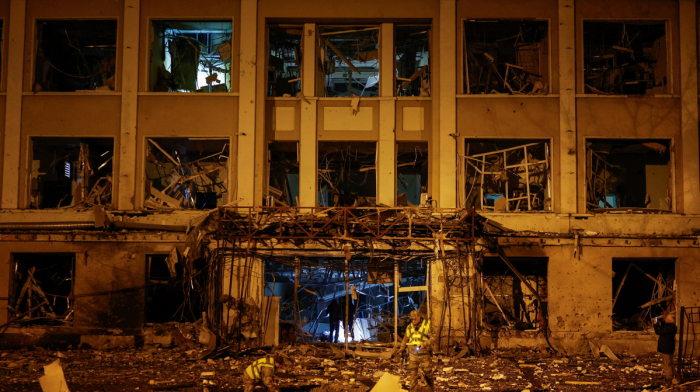
U.S. President Donald Trump has criticised Ukrainian President Volodymyr Zelenskyy for continuing to target Russia's energy infrastructure, while Russian strikes on Kyiv overnight killed at least one person and damaged a metro station.
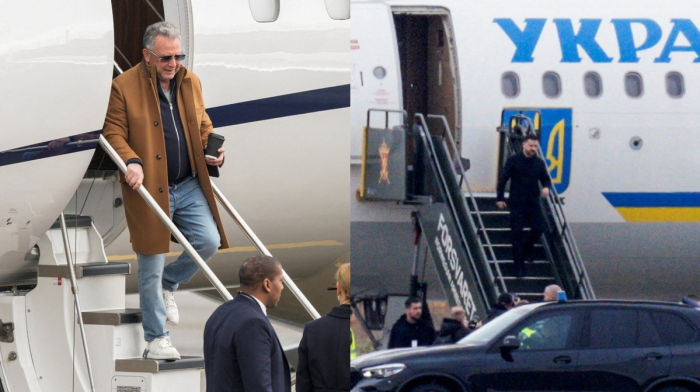
Ukrainian President Volodymyr Zelenskyy has arrived in Norway for talks about the Russia-Ukraine war. He is expected to meet with U.S. President Donald Trump's Special Envoy Steve Witkoff, who arrived in Oslo earlier. Witkoff will also meet European officials.
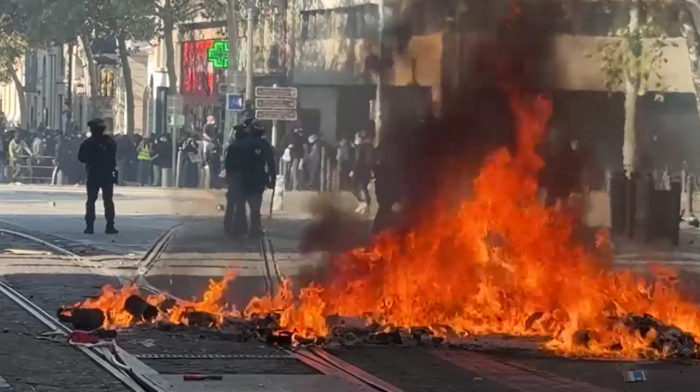
French President Emmanuel Macron has condemned the violence, looting and vandalism that erupted during cost-of-living protests across France. Prime Minister Sébastien Lecornu held crisis talks on Monday, calling for partial curfews and raising the possibility of a state of emergency.
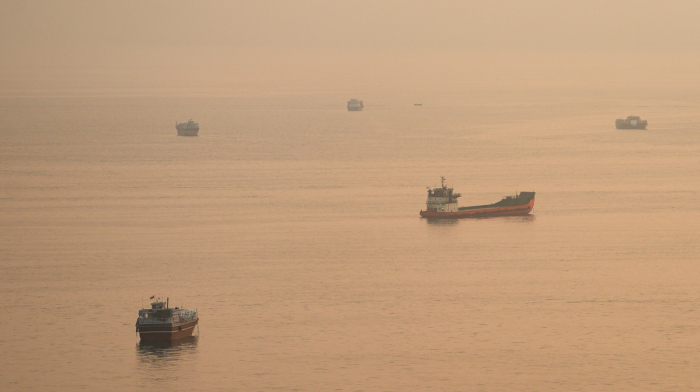
An oil tanker caught fire after striking a naval mine in the southern part of the Strait of Hormuz, Iran’s Islamic Revolutionary Guard Corps (IRGC) Navy said late Sunday.
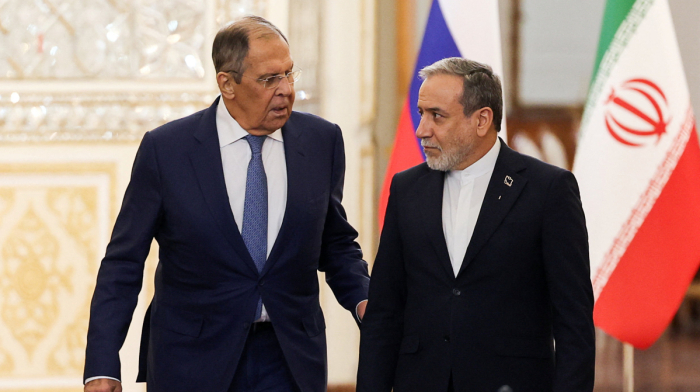
Iranian Foreign Minister Abbas Araghchi said regional issues should be resolved through diplomacy and blamed the United States for insecurity and tensions in the Strait of Hormuz, speaking at a joint news conference with Russian Foreign Minister Sergey Lavrov on Monday.
Ukrainian President Volodymyr Zelenskyy has arrived in Norway for talks about the Russia-Ukraine war. He is expected to meet with U.S. President Donald Trump's Special Envoy Steve Witkoff, who arrived in Oslo earlier. Witkoff will also meet European officials.
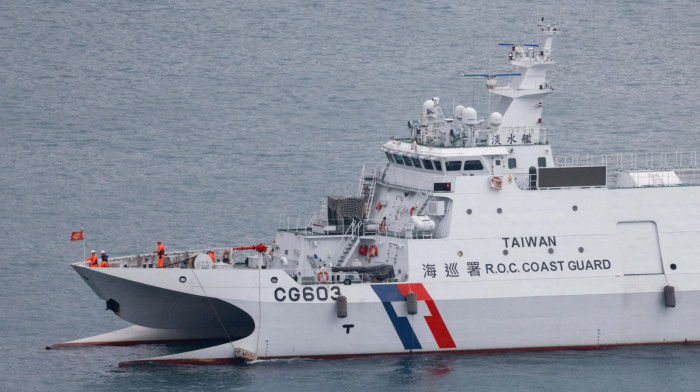
Beijing says it deployed naval forces to monitor a U.S. warship near Sabina Shoal, while Taiwan reports a separate confrontation with a Chinese coast guard vessel near the Pratas Islands.
Tensions are mounting across Asia, with North Korea warning of war, China clashing with the U.S. and the Philippines, and protests gathering pace in Indonesia and India. Military threats, diplomatic disputes and political unrest are fuelling uncertainty across the region.
Canada’s oil-rich province of Alberta voted to remain part of the country in a non-binding referendum on Monday, 19 October, CBC News reports, delivering a much-needed victory for Prime Minister Mark Carney amid an ongoing trade war with the United States.
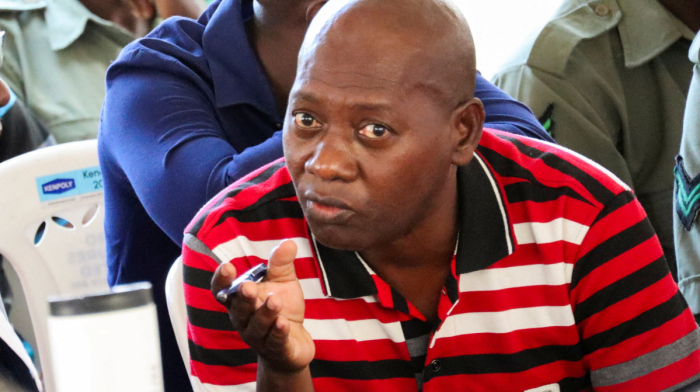
A Kenyan court has convicted cult leader Paul Mackenzie and 28 co-defendants of murder over the deaths of 191 people, including 190 children, in a case that shocked the world and exposed one of the deadliest cult-related tragedies in recent memory.
Download the AnewZ app
You can download the AnewZ application from Play Store and the App Store.











What is your opinion on this topic?
Leave the first comment