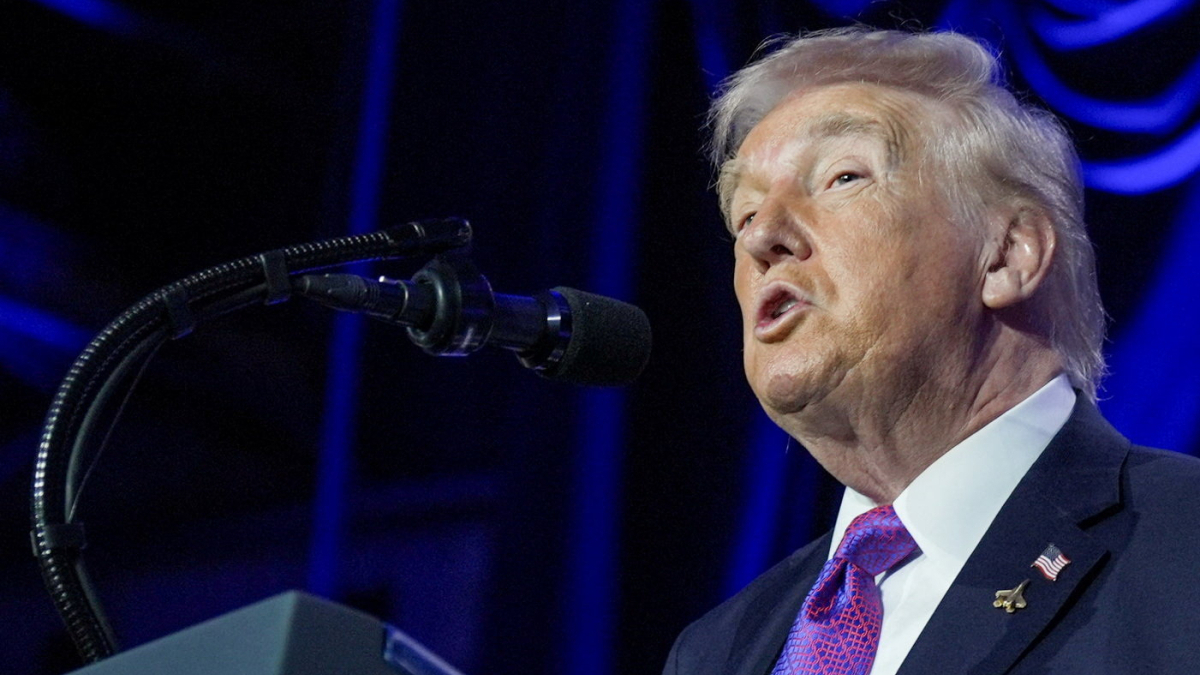
U.S. President Donald Trump says he will not support extending the New START nuclear arms control treaty and wants a new, “improved and modernised” agreement, even as Russia expresses regret over the pact’s expiration and warns of the dangers of an unconstrained nuclear arms race.
Writing on Truth Social, Trump called New START a badly negotiated deal from the U.S. side and claimed it has been repeatedly violated. He said Washington should task its nuclear experts with developing a new treaty that could last “long into the future” and better reflect current strategic realities.
New START formally expired this week, removing the last remaining caps on U.S. and Russian nuclear arsenals for the first time in more than half a century. The end of the treaty has raised concerns among arms control advocates about the risk of an unconstrained build-up of nuclear weapons.
Kremlin spokesman Dmitry Peskov said Moscow views the treaty’s expiration negatively and regrets its end. He said Russia will continue to act in a responsible and balanced manner on nuclear stability, guided by its national interests, and remains open to dialogue if it receives constructive signals from Washington.
Russian President Vladimir Putin had previously proposed that both countries continue observing New START’s limits for another year to allow time to negotiate a successor agreement. The United States has not accepted that proposal.
Trump has said any future arms control pact should include China, arguing that Beijing’s rapidly growing nuclear stockpile makes bilateral agreements outdated. U.S. Secretary of State Marco Rubio echoed that position, saying meaningful arms control in the 21st century is impossible without China’s participation.
China has rejected joining such talks, saying its nuclear forces are not comparable in scale to those of the U.S. and Russia. Beijing has instead urged Washington and Moscow to resume direct dialogue and continue adhering to New START’s core limits for now.
Putin discussed the treaty’s expiration this week with Chinese leader Xi Jinping, according to the Kremlin, as Moscow considers its next steps following the collapse of the pact.
New START was signed in 2010 by then-U.S. President Barack Obama and then-Russian President Dmitry Medvedev. It limited each side to no more than 1,550 deployed nuclear warheads and 700 deployed missiles and bombers. The treaty was extended in 2021 for five years.
On-site inspections under New START were suspended in 2020 because of the COVID-19 pandemic and never resumed. In February 2023, Russia announced it was suspending its participation while pledging to continue respecting the treaty’s limits.
Despite the expiration, U.S. and Russian officials say they have agreed to reestablish high-level military-to-military dialogue, reopening a channel that had been frozen since 2021.
Arms control experts warn that without a replacement agreement, the absence of legally binding limits could deepen mistrust and accelerate nuclear competition among the world’s major powers.












What is your opinion on this topic?
Leave the first comment