Death toll from Brazil floods rises to 46 as rescue efforts continue
The death toll from heavy rains and flooding in Brazil’s Minas Gerais state has risen to 46, authorities said, with 21 people still reported missing...
Russia said on Wednesday that the parties to the New START nuclear arms control treaty are no longer bound by its obligations or related declarations, marking a further erosion of the last remaining legally binding framework limiting U.S. and Russian strategic nuclear forces.
In a statement, Russia’s Foreign Ministry said it now assumes that the provisions of the treaty, including its core limits, no longer apply and that both sides are “in principle free to choose their next steps.”
Moscow said it had sought to extend the treaty and had made a last proposal on 22 September, when President Vladimir Putin publicly suggested keeping the caps on relevant weapons specified in New START in place for at least one year after the treaty’s termination.
The ministry said it had received no formal response from Washington through bilateral channels.
Russia said it intends to act “responsibly and in a balanced manner,” and will shape its policy on strategic offensive arms based on what it described as a thorough analysis of U.S. military policy and the broader strategic environment.
At the same time, the ministry warned it remains ready to take “decisive military-technical measures” to counter what it called potential additional threats to national security.
Moscow said it is still open to political and diplomatic efforts aimed at stabilising the strategic situation, provided conditions for “equal and mutually beneficial dialogue” are created.
New START, which entered into force in 2011, limited the number of deployed strategic nuclear warheads and delivery systems held by the United States and Russia. Its effective collapse has raised concerns among arms control experts about the risk of a new period of unregulated nuclear competition between the world’s two largest nuclear powers.

The Taliban in Kabul has rejected Russian claims that more than 23,000 militants from around 20 international terror groups are currently operating within Afghanistan.
Four years after Russia launched its full-scale invasion of Ukraine on 24 February 2022, the war is no longer defined by shock but by scale.
Seven people were killed after gunmen ambushed a police patrol in Kohat, a district in Pakistan’s north-west near the Afghan border, on Tuesday, in an attack that comes amid rising militant violence and heightened tensions between Pakistan and Afghanistan.
Four years into Russia’s invasion of Ukraine, the war can be measured not only in lives and territory, but in money. In Part One, the war’s cost was measured in casualties and kilometres. In Part Two, it is measured in billions of dollars.
Thailand and the United States, alongside 28 partner nations, began Southeast Asia’s largest and longest-running military exercise, the 45th Cobra Gold, on Tuesday (24 February) in Rayong province, Thailand.
The death toll from heavy rains and flooding in Brazil’s Minas Gerais state has risen to 46, authorities said, with 21 people still reported missing. The storms triggered landslides and widespread flooding, displacing thousands across Juiz de Fora and Uba.
Venezuela’s Attorney General Tarek William Saab and Ombudsman Alfredo Ruiz tendered their resignations to the National Assembly on Wednesday. Neither official has publicly provided reasons for stepping down.
Four people aboard a U.S.-registered speedboat, flagged in Florida, were killed and six others wounded on Wednesday after the vessel entered Cuban territorial waters and fired on Cuban border patrol forces, Cuba’s Ministry of the Interior (MININT) reported.
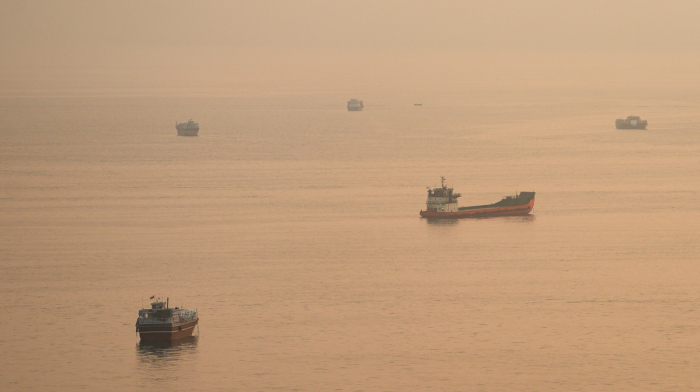
The U.S. Treasury Department imposed sanctions on Wednesday (25 February) on more than 30 individuals, entities and "shadow fleet" vessels it said enabled Iran's illicit petroleum sales, ballistic missiles and weapons production.
U.S. President Donald Trump’s latest State of the Union address set out a second-term agenda built on economic protectionism, military strength and a hard line on Iran, signalling a strategy that pairs diplomatic engagement with firm red lines, Assoc. Prof. Orkhan Valiyev told AnewZ Daybreak.
You can download the AnewZ application from Play Store and the App Store.
What is your opinion on this topic?
Leave the first comment