The imminent expiry of New START, the last major nuclear arms control treaty between the United States and Russia, risks removing transparency, predictability and limits on the world’s two largest nuclear arsenals, political analyst Gregory Mathieu warned.
Speaking to AnewZ, Mathieu said the original purpose of the agreement was to cap nuclear stockpiles and for transparency.
“Well, the original purpose of this kind of agreement is to ensure a cap and to make visible, from both sides, what the other has. So to have a cap means we agree that each of us can have 1,000 warheads, for example. The fact that this will end at the end of this week is not good in terms of predictability, limits and transparency,” Mathieu said.
He added the treaty had also allowed both sides to monitor each other’s nuclear installations, a safeguard that will now disappear.
“Because in the treaty it was also possible for each side to visit and to pay a visit to the other side to control and monitor their installations. This will not be the case anymore. That said, since 2023, Russia has withdrawn from that verification mechanism and it is not allowed anymore for U.S. observers to go and monitor what they have on their side.”
Putin’s extension offer and the erosion of trust
Mathieu described Russian President Vladimir Putin’s offer to extend the treaty as a strategic move that places the burden of rejection on Washington.
“Vladimir Putin, it’s more a strategic move. He has offered to extend it and he left it to the other side to say no. So he made the proposal and said we can extend it without the verification mechanism in place, and he left the U.S. side to say no, we don’t need it anymore.”
He said the breakdown of the treaty reflects a deeper erosion of trust between the two nuclear powers.
“This is a mutual trust mechanism that was in place. And this may imply from the U.S. side that the trust is not there anymore. It may say that we don’t trust you anymore. It may also say we don’t fear you anymore. We know exactly what you have. You know what we have. And we don’t need any kind of paperwork to continue this work,” Mathieu explained.
No limits, China factor and deterrence logic
Mathieu warned that the immediate danger is the disappearance of formal constraints, even if rapid expansion of arsenals is unlikely.
“Well, with the immediate twist, the risk is that there are no more constraints. There are no more limits. But let us also be clear. It doesn’t mean that overnight either side can double or triple its nuclear capacity. But as we speak, there will be no more limits.”
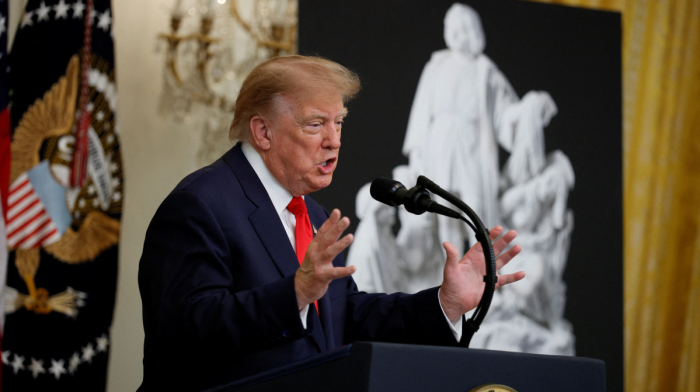
He said President Trump is pushing for any future agreement to include China, while Beijing has shown no interest.
“President Trump has insisted on inviting China into a future mechanism, and for him a no treaty is better than what he considers a bad treaty. China has made it clear that they have no interest in such an agreement as we speak.”
Mathieu stressed that nuclear weapons remain primarily tools of deterrence.
“Let us imagine that each of them has the capacity to destroy and obliterate the planet in a few minutes. So all this is built more about deterrence. The idea behind nuclear capacity is never to have to use it, but to show the others that we have enough to destroy you in return in a few minutes. That’s the point of nuclear capacity.”











What is your opinion on this topic?
Leave the first comment