Moldova's government in Chisinau has initiated the final legal steps to sever its institutional ties with Moscow’s post-Soviet alliance, marking a decisive moment in the small Eastern European nation’s pivot towards the West.
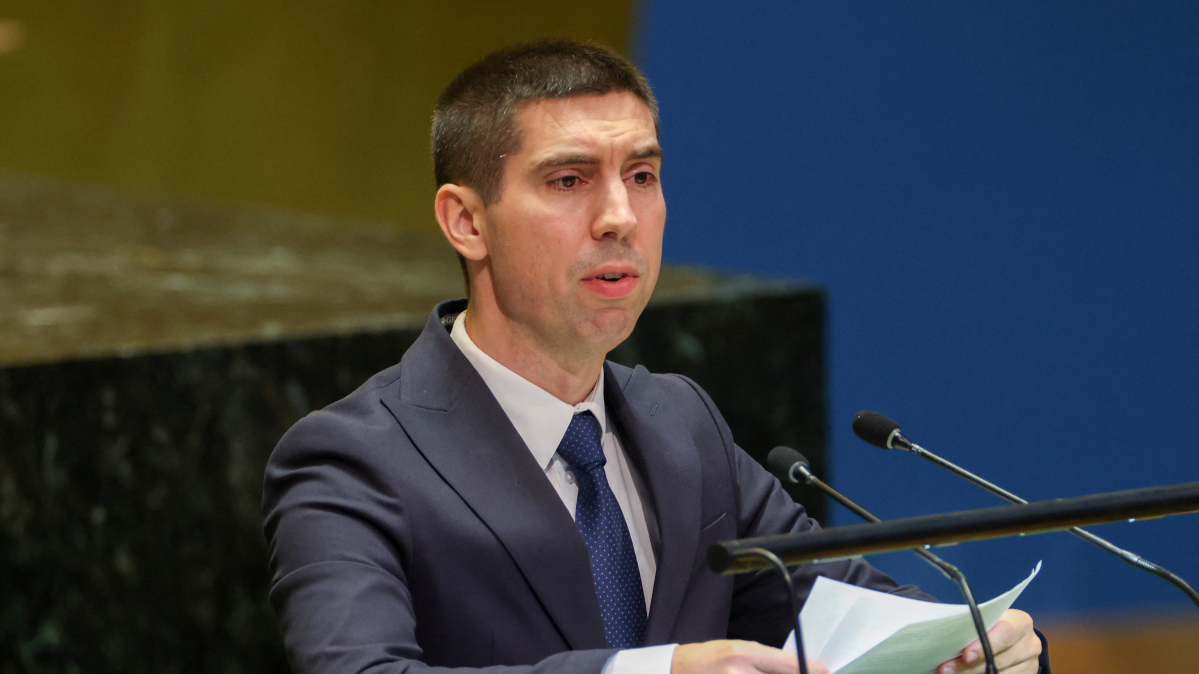
Foreign Minister Mihai Popsoi confirmed on Monday that the country is finalising the denunciation of the founding agreements of the Commonwealth of Independent States (CIS), the organisation established in 1991 following the collapse of the Soviet Union. The move formalises a geopolitical divorce that has been effectively in place since Russia’s full-scale invasion of Ukraine.
“Let me just say that we are in the process of confirming the denunciation of three agreements with the CIS,” Popsoi told Radio Moldova, referring to the accords that underpinned the bloc’s creation.
“The denunciation of these three agreements will mean we can say that from a legal standpoint we are no longer a member. De facto, we suspended our participation for a time, but de jure we are still there.”
The Kremlin said it regrets Moldova's decision to leave the CIS, Kremlin spokesman Dmitry Peskov said on Tuesday.
Peskov said that the decision did not come as a surprise to Moscow, noting that Moldova had effectively stopped participating in CIS activities some time ago.
Moldova, one of Europe's poorest states, located between Ukraine and European Union member Romania, has ceased taking part in all CIS activities since 2023.
This legal separation comes as Moldova accelerates its drive to join the European Union.
President Maia Sandu, a staunch pro-European who secured re-election in 2024, has set a target for EU accession by 2030. Her administration has frequently accused the Kremlin of orchestrating hybrid warfare campaigns designed to destabilise her government and derail the accession process.
Since 2023, Chisinau has ceased participation in CIS summits and military drills. The government has also moved to dismantle the country's historical dependence on Russian energy, integrating its power grids with Romania and the broader European market to escape what officials have termed “energy blackmail” by Gazprom.
Reunification rhetoric
The withdrawal coincides with a notable shift in domestic political rhetoric regarding Romania. Moldova, which was part of Greater Romania before being annexed by the Soviet Union in 1940, shares a language and deep cultural ties with its EU neighbour.
In a radio interview last week, President Sandu stated for the first time that she would vote 'yes' if a referendum on reunification with Romania were held, to help protect Moldova's fragile democracy against Russian pressure. While unification remains a polarising topic, Sandu’s admission signals a confidence bolstered by her party’s retention of a parliamentary majority in the 2025 elections.
However, Russian Foreign Minister Sergei Lavrov said on Tuesday that this move would be destructive to Moldovan statehood.
Romania is an EU and NATO member.
Sandu has repeatedly accused Russia of meddling in Moldova, a former Soviet republic of around 2.4 million with a Romanian-speaking majority and a Russian-speaking minority.
Opposition and analysis
The move to abandon the CIS has drawn sharp criticism from the pro-Russian opposition. Former president Igor Dodon, head of the Socialist Party, branded the withdrawal as “unacceptable,” arguing that it severs vital economic lifelines with traditional eastern markets.
However, political analysts argue that the CIS has become obsolete for Moldova’s modern interests. Vitalii Andrievschii, a Chisinau-based political commentator, told Reuters that the withdrawal does not necessitate a total breakdown of relations with individual post-Soviet states.
“We have to bring this process to a conclusion,” Andrievschii said. “We will develop ties on a bilateral basis. But there is no point in remaining in the CIS, run by Russia.”
Regional Tension
The formal exit is likely to further strain relations with Moscow, which maintains around 1,500 "peacekeeping" troops in Transdniestria, a pro-Russian breakaway region in eastern Moldova.
As Chisinau harmonises its laws with Brussels and untangles itself from Moscow’s sphere of influence, the status of this frozen conflict remains the country’s most volatile security challenge.











What is your opinion on this topic?
Leave the first comment