European countries and the United States presented a united front in support of Ukraine, unveiling security guarantees backed by Washington and a detailed plan for long-term assistance contingent on a ceasefire with Russia.
The announcements came at a summit of the "Coalition of the Willing” hosted at the Élysée Palace on Tuesday (6 January).
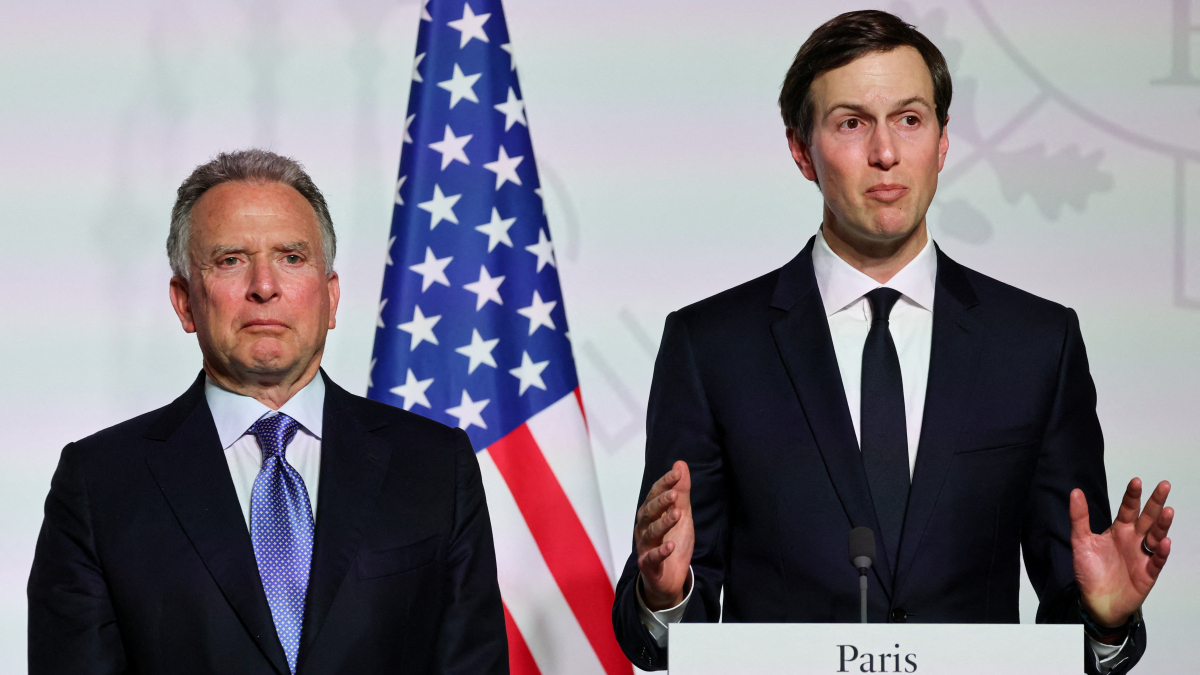
U.S. envoy Steve Witkoff and senior adviser to U.S. President Donald Trump Jared Kushner praised European efforts to finalise a framework for security guarantees. They emphasised the importance of maintaining Ukraine’s defence capabilities and deterring future Russian aggression.
“Those security protocols are meant to deter any attacks … and they will do both,” Witkoff said alongside leaders from France, Germany, the UK and Ukraine.
French President Emmanuel Macron said Europeans, Americans and Ukrainians have agreed on “robust” security guarantees for Kyiv, including a U.S.-led ceasefire monitoring and verification mechanism with contributions from participating nations.
The coalition’s joint declaration outlines plans for sustained military support for Ukraine’s armed forces, a European-led multinational force to assist in reconstruction and deterrence once hostilities cease, and binding commitments to support Ukraine should Russia launch future attacks.
Macron said such guarantees were crucial to ensure that “a peace agreement can never mean a Ukrainian surrender and that a peace agreement can never mean a new threat to Ukraine.”
Earlier drafts of the declaration envisaged a more explicit U.S. role in supporting the proposed multinational force, including intelligence sharing, logistical support and a pledge to assist the force if attacked, according to Politico. That language was removed from the final text, reflecting caution among coalition members over formal U.S. commitments.
While U.S. envoys attended the summit and Trump publicly reaffirmed support for Ukraine, the final declaration was ultimately signed only by the coalition of European countries and Ukraine, rather than formally co-signed by Washington.
Security guarantees
The coalition’s joint declaration also envisages a European-led multinational force for Ukraine that would provide reassurance measures on land, in the air and at sea once a credible ceasefire is established, according to the official website of the European Council.
It also supports the regeneration of Ukraine’s armed forces and deterrence against future threats.
President of Ukraine Volodymyr Zelenskyy said the coalition has already outlined which countries would contribute to different elements of the plan.
Starmer said that after a ceasefire, the UK and France would deploy military hubs across Ukraine and “build protected facilities for weapons and military equipment to support Ukraine’s defence needs.”
German Chancellor Friedrich Merz remarked that Berlin could contribute by deploying German forces to NATO territory adjacent to Ukraine after a ceasefire, subject to approval by the Bundestag and once conditions are clarified.
Swedish Prime Minister Ulf Kristersson said, via an X post, on Wednesday, that Sweden stood ready to contribute to security guarantees for Ukraine and Europe once a peace agreement is reached.
Kristersson outlined Sweden’s potential support, including Gripen fighter jets for air surveillance over Ukraine, maritime resources to clear mines in the Black Sea, and continued training of Ukrainian military officers.
He stressed that contributions would depend on a formal ceasefire, clear rules of engagement for the multinational force, and approval by the Swedish parliament, adding that Sweden was prepared to “do our part for peace in Europe.”
Belgian Prime Minister Bart De Wever echoed Sweden's stance. He said Belgium would take on its share of international efforts to safeguard peace in Ukraine once hostilities end, focusing on air and maritime capabilities and military training.
De Wever emphasised that Belgium’s contribution would be supported by a firm American backstop and U.S.-led monitoring, which he said would provide effective deterrence and help ensure long-term stability. He added that a united Western coalition can deliver results that “shape history and secure peace.”
However, some European governments remain cautious.
Greek Prime Minister Kyriakos Mitsotakis reiterated that Greece would not participate directly in a European military force in Ukraine, though Athens has not ruled out other forms of support, including maritime surveillance.
Zelenskyy stressed that the security guarantees ultimately require backing from the U.S. Congress to be legally binding, saying Ukraine was “counting a lot on that” with legal documents already prepared.
The Paris summit marked a significant step toward formalising a long-term security framework for Ukraine. However, key details, including the scale of future deployments and the exact nature of U.S. involvement, remain subject to further negotiation and domestic approval.
However, Moscow has yet to signal willingness to make concessions after Kyiv pushed for changes to a U.S. proposal that initially backed Russia's main demands.
Moscow has also given no public sign that it would accept a peace deal with the security guarantees envisaged by Ukraine's allies. Russia has previously rejected any NATO members having troops inside Ukraine.










What is your opinion on this topic?
Leave the first comment