Renewed U.S. engagement puts South Caucasus higher on Washington’s agenda
A renewed wave of U.S. diplomatic activity in the South Caucasus highlights Washington’s growing focus on regional connectivity, trade and security,...
Israel has joined U.S. President Donald Trump's 'Board of Peace' initiative, Prime Minister Benjamin Netanyahu said on Wednesday (11 February) during his visit to Washington where he met Trump and Secretary of State Marco Rubio.
Netanyahu said on X he "signed Israel's accession as a member of the 'Board of Peace.'
He later discussed Iran with Trump.
A United Nation Security Council resolution, adopted in mid-November, authorised the board and countries working with it to establish an international stabilisation force in Gaza, where a fragile ceasefire began in October under a Trump plan on which Israel and Hamas signed off.
Under Trump's Gaza plan, the board was initially meant to supervise Gaza's temporary governance. Trump thereafter said the board, with him as chair, would be expanded to tackle global conflicts.
The board will hold its first meeting on 19 February in Washington to discuss Gaza's reconstruction. However, Israel's presence on the board is expected to bring further criticism as the board does not include a Palestinian.
Countries have reacted cautiously to Trump's invitation to join after it was launched in late January. Many experts are concerned it could undermine the United Nations.
While some of Washington's Middle Eastern allies have joined, many of its traditional Western allies have stayed away.
The ceasefire in Gaza has been repeatedly violated, with at least 580 Palestinians and four Israeli soldiers reported killed since it began in October, according to Palestinian and Israeli tallies, respectively.
The next phase of Trump's Gaza plan calls for resolving complex issues such as Hamas' disarmament, which the group has long rejected, further Israeli withdrawal from Gaza and the deployment of an international peacekeeping force.

The U.S. and Iran have reportedly reached a preliminary 60-day ceasefire and nuclear talks deal, pending Donald Trump’s approval, Axios reports. Meanwhile, the GCC condemned Iran’s missile strike on a U.S. airbase in Kuwait, which Tehran said was retaliation for a U.S. strike near Bandar Abbas.
The World Health Organization (WHO) says ongoing conflict, funding pressures and international travel restrictions are complicating efforts to contain a fast-growing Ebola outbreak in the Democratic Republic of Congo (DRC).
Bolivia’s President Rodrigo Paz has taken steps towards potentially declaring a state of emergency as anti-government protests intensify in the early months of his administration.
A group of Azerbaijani civil society organisations has called for increased scrutiny of Swiss building materials giant Holcim, citing court rulings and ongoing investigations linked to its subsidiary Lafarge's activities during the Syrian conflict.
Russia and Kazakhstan signed 15 agreements during President Vladimir Putin’s state visit to Astana on Thursday (28 May), including deals on Kazakhstan’s first nuclear power plant and expanded oil cooperation with Russia.
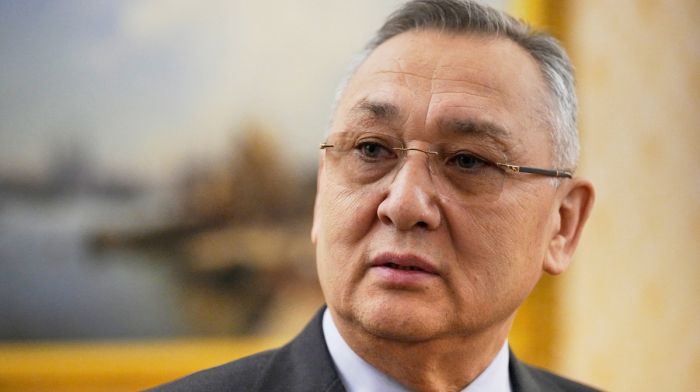
A renewed wave of U.S. diplomatic activity in the South Caucasus highlights Washington’s growing focus on regional connectivity, trade and security, according to Associate Professor George Mchedlishvili of European University in Tbilisi.
Kyrgyzstan has signed a series of cooperation agreements with China and Belarus at the Fifth Forum of Regional Leaders of Shanghai Cooperation Organisation (SCO) member states, underlining the country's growing economic engagement within the regional bloc.
A group of Azerbaijani civil society organisations has called for increased scrutiny of Swiss building materials giant Holcim, citing court rulings and ongoing investigations linked to its subsidiary Lafarge's activities during the Syrian conflict.
Kazakhstan has reiterated that no existing route can replace the Caspian Pipeline Consortium (CPC), which carries more than 80% of the country's crude oil exports through Russia to the Black Sea.
Russia and Kazakhstan signed 15 agreements during President Vladimir Putin’s state visit to Astana on Thursday (28 May), including deals on Kazakhstan’s first nuclear power plant and expanded oil cooperation with Russia.
You can download the AnewZ application from Play Store and the App Store.
What is your opinion on this topic?
Leave the first comment