The United Kingdom has said it will not yet join U.S. President Donald Trump’s proposed Board of Peace, citing concerns over the potential involvement of Russia, the country’s foreign secretary said on Thursday.
The United Kingdom will hold off on signing up to U.S. President Donald Trump’s proposed Board of Peace, with Foreign Secretary Yvette Cooper raising concerns about Russia’s possible participation in the initiative.
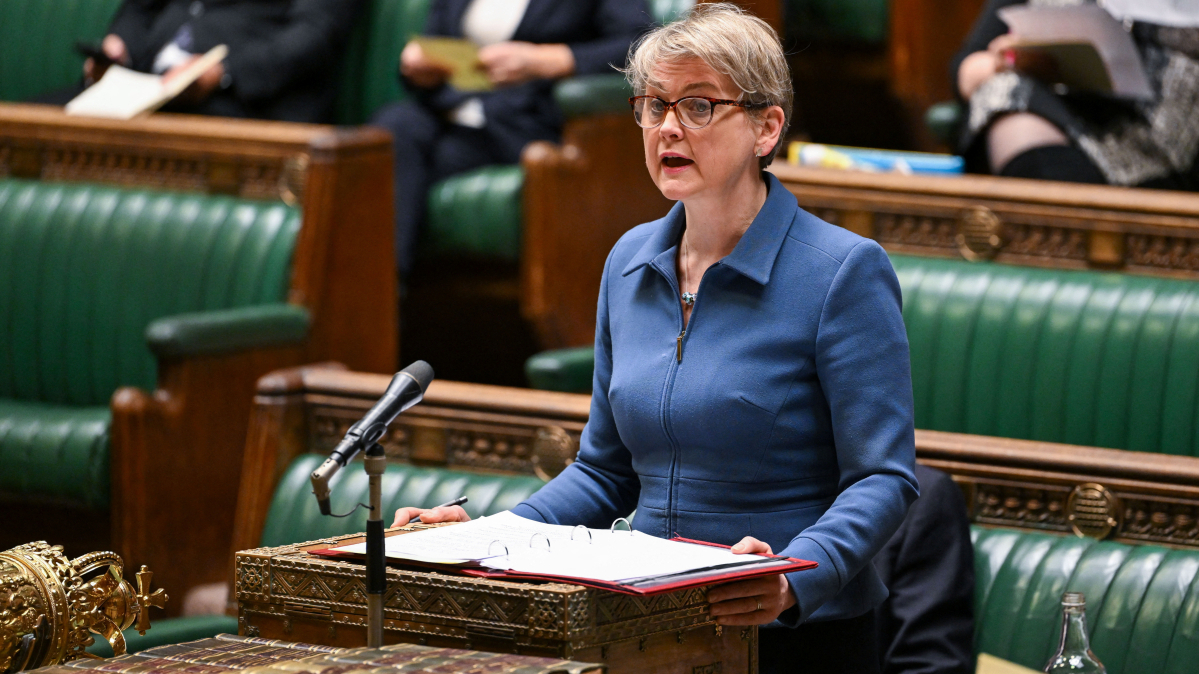
Speaking to the BBC on Thursday, Cooper confirmed that the UK had been invited to join the board but would not be among the signatories at a formal ceremony taking place on the sidelines of the World Economic Forum in Davos.
“We won’t be one of the signatories today,” Cooper said, adding that the proposal raised broader legal and political questions for London.
The White House has described the Board of Peace as part of a wider 20-point plan on Gaza, endorsed by the United Nations Security Council in November 2025 under Resolution 2803. The initiative was initially conceived as a mechanism to oversee a Gaza ceasefire and coordinate post-war reconstruction.
However, Cooper said the scope of the board had since expanded significantly.
“This is a legal treaty that raises much broader issues than the original focus on the Gaza ceasefire,” she said.
Russia’s Role a Key Sticking Point
A central concern for London is the potential inclusion of Russia. Earlier this week, Cooper told parliament that Moscow’s participation would be incompatible with the board’s stated purpose.
“President Vladimir Putin is not a man of peace, and I don’t think he belongs in any organisation with peace in the name,” she said.
Trump confirmed on Tuesday that he had invited Putin to join the Board of Peace, describing the body as “one of the most consequential organisations ever created.”
The proposal comes amid continued international efforts to address multiple conflicts, including the wars in Gaza and Ukraine, and has prompted mixed reactions among U.S. allies.
Growing Membership Despite UK Hesitation
Despite the UK’s decision to delay participation, a number of countries have already accepted invitations to join the board. According to U.S. officials, those include Azerbaijan, Argentina, Saudi Arabia, the United Arab Emirates, Bahrain, Jordan, Qatar and Egypt, as well as NATO members Türkiye and Hungary.
The initiative has evolved into a broader international conflict-mediation platform, with dozens of states invited to take part, reflecting Washington’s push to create a new diplomatic mechanism alongside existing international institutions.
Cautious Approach from London
British officials have not ruled out joining the board at a later stage, but Cooper indicated that further clarity would be needed on the initiative’s legal framework, mandate and membership before the UK could commit.
The decision underscores London’s continued caution in multilateral initiatives that may include Russia, particularly as the war in Ukraine continues and relations between Moscow and Western governments remain deeply strained.












What is your opinion on this topic?
Leave the first comment