The UN Human Rights Council has condemned Iran for rights abuses and ordered an expanded investigation into a crackdown on anti-government protests that killed thousands, as Tehran warned any military attack would be treated as an all-out war.
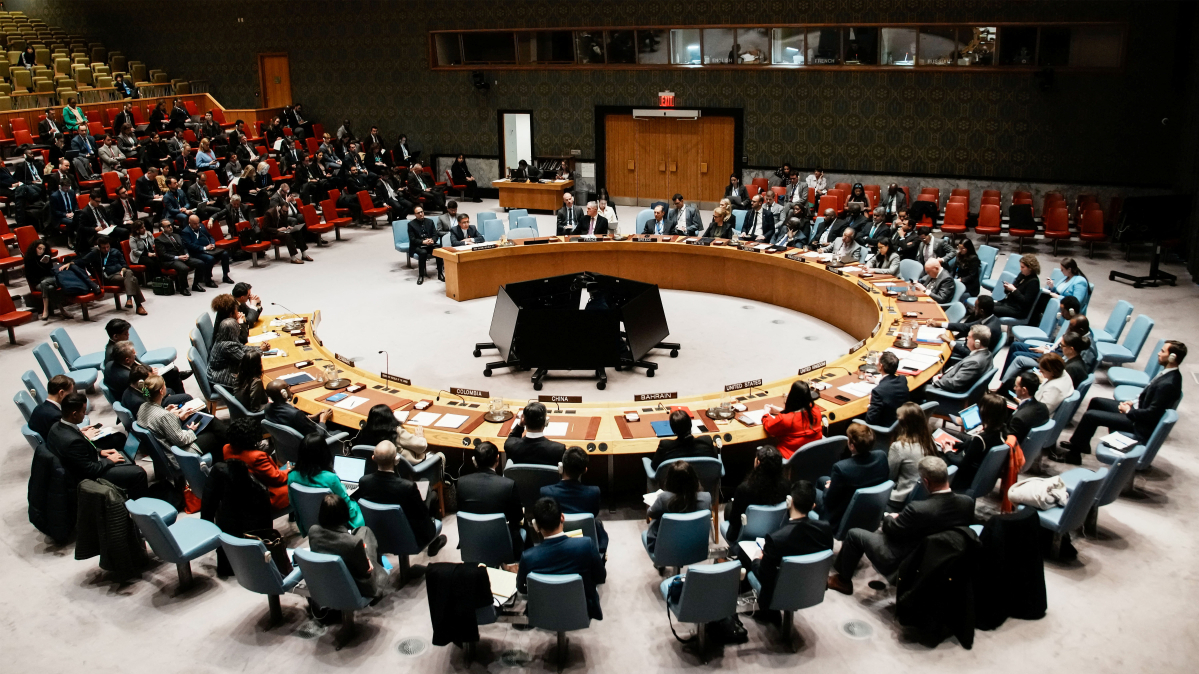
Addressing an emergency session of the UN Human Rights Council in Geneva, High Commissioner Volker Turk urged Iranian authorities to halt their response to the unrest.
“I call on the Iranian authorities to reconsider, to pull back, and to end their brutal repression,” Turk said, voicing concern for detainees.
The council passed a motion extending a previous inquiry established in 2022, allowing UN investigators to document the latest unrest for potential future legal proceedings.
Rights groups say bystanders were among those killed during the deadliest crackdown since Shi’ite Muslim clerics took power in Iran’s 1979 revolution. Tehran has blamed the violence on what it described as terrorists and rioters backed by exiled opposition groups and foreign enemies, including the United States and Israel.
Iran’s mission to the UN rejected the resolution as politicised and dismissed what it called external interference, saying it had independent and robust accountability mechanisms to examine the root causes of the unrest.
Twenty-five countries, including France, Mexico and South Korea, voted in favour of the motion. Seven, including China and India, voted against, while 14 abstained.
“This is the worst mass murder in the contemporary history of Iran,” Payam Akhavan, a former UN prosecutor of Iranian-Canadian nationality, told the council, calling for a “Nuremberg moment”.
Iran’s ambassador to the UN in Geneva, Ali Bahreini, said the emergency session was invalid and put the death toll at about 3,000. One Iranian official, however, told Reuters that at least 5,000 people had been killed, including 500 members of the security forces.
The US-based HRANA rights group said it had so far verified 4,519 protest-related deaths, with a further 9,049 under review.
China, Pakistan, Cuba and Ethiopia also questioned the value of the emergency session, with China’s ambassador calling the unrest an internal matter.
Military tensions rise
The diplomatic confrontation comes as regional tensions escalate, with a senior Iranian official warning on Friday that any military attack on Iran would be treated as an all-out war.
Speaking on condition of anonymity, the official said Iran’s armed forces were on high alert ahead of the arrival of a U.S. aircraft carrier strike group and other military reinforcements in the region.
“This military buildup, we hope it is not intended for real confrontation, but our military is ready for the worst-case scenario,” the official said.
“Any attack, limited or otherwise, will be treated as an all-out war against us, and we will respond in the hardest way possible.”
The warning followed remarks by U.S. President Donald Trump, who said on Thursday that an American “armada” was heading to the Middle East, citing concerns over instability in Iran.
“We’re watching them very closely,” Trump said earlier this week, adding that he would prefer to avoid a military confrontation.
The escalating standoff has begun to affect civilian aviation, with airlines rerouting and cancelling some flights across the Middle East. Europe’s aviation regulator has advised carriers to avoid Iranian airspace, citing heightened security risks amid regional tensions.
Several airlines have already adjusted operations. “As a precaution, given the geopolitical situation, we will not fly through the airspace of Iran, Iraq and Israel,” a KLM spokesperson said in January.
Lufthansa said it was bypassing Iranian and Iraqi airspace “until further notice,” while British Airways said it was keeping the situation “under close review.”
Tensions have intensified as Iran faces its deadliest unrest in decades, with rights groups reporting more than 5,000 deaths during a sweeping crackdown on protests that erupted in late December following a sharp economic downturn.
U.S. officials say the military buildup is defensive, while Iranian authorities argue the pressure campaign, including sanctions and force posture, risks provoking escalation rather than encouraging diplomacy.
Iranian military commanders have previously warned that any strike on Iranian territory would make U.S. bases across the region “legitimate targets,” raising concerns among regional allies about a broader conflict.
Despite the rhetoric, both Washington and Tehran say diplomatic channels remain open, though neither side has outlined concrete steps towards de-escalation.










What is your opinion on this topic?
Leave the first comment