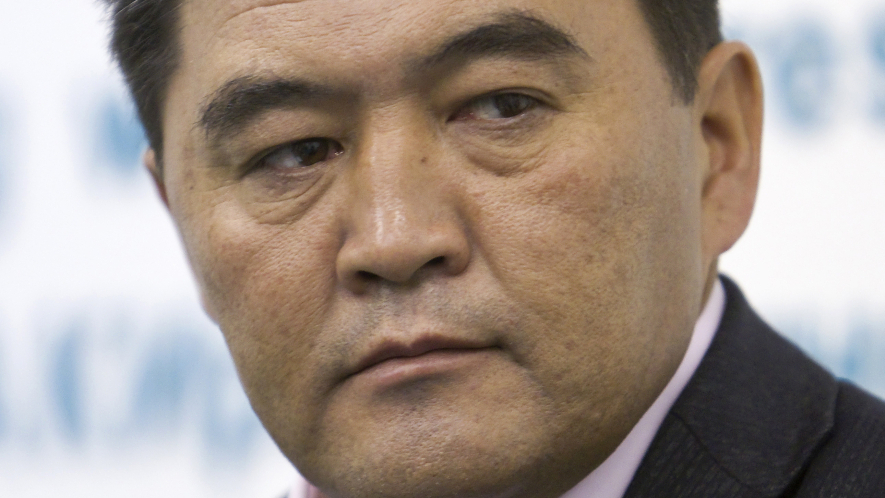
A Kyrgyz investigation has linked more than $45m in losses at state oil firm Kyrgyzneftegaz between 2021 and 2025 to intermediary schemes allegedly tied to the circle of former security chief Kamchybek Tashiev.
A state-affiliated investigative unit under Kyrgyzstan’s State Tax Service has published a report alleging systemic financial losses at the state-owned Kyrgyzneftegaz, outlining mechanisms through which public resources were redirected into private hands over a five-year period.
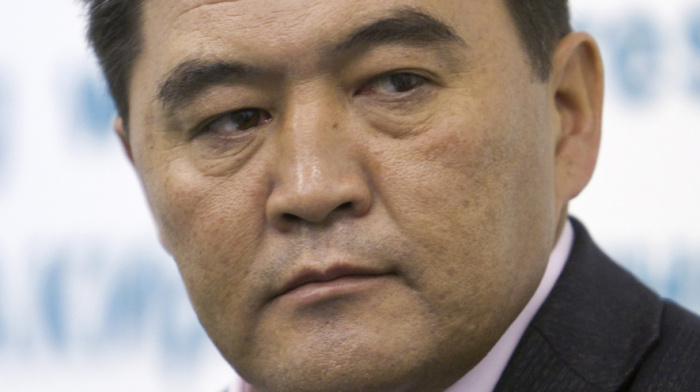
The investigation, released by the government institution “Salyk Service” as part of its “Schemes” programme, claims that proceeds from state oil production were channelled to entities allegedly connected to relatives and close associates of Kamchybek Tashiev, the former head of the State Committee for National Security.
According to the findings, investigators identified three primary schemes that together point to a structured system of profit extraction operating alongside the official production chain.
While the report does not constitute a legal judgment, it situates the alleged schemes within a broader political context shaped by Tashiev’s influence during his time in office, when he was widely regarded as one of the most powerful figures in the country.
Inflated production losses raise concerns
The first scheme centres on what investigators describe as artificially inflated production losses. Between 2021 and 2025, Kyrgyzneftegaz reportedly extracted around 879,000 tonnes of crude oil, of which nearly 29,000 tonnes were written off as production losses.
However, testimony from company specialists cited in the report suggests that actual losses should not exceed 1% of output, or roughly 9,000 tonnes. The discrepancy of about 20,000 tonnes, valued at approximately $6.3m, raises questions about unaccounted volumes of raw material that may have been diverted outside official records.
Intermediaries embedded in processing chain
The second scheme highlights the use of intermediaries in oil processing. Investigators found that roughly 30% of total production, or 262,000 tonnes, was sold to private firms rather than being supplied directly to the state-owned refinery, Kyrgyz Petroleum Company.
Instead, crude oil was channelled through intermediary entities, which then resold it to a subsidiary of the refinery under their own names. This arrangement effectively embedded private actors within the state production chain, allowing them to capture a significant share of profits. As a result, the report estimates that the state company failed to receive more than $34m in potential revenue.
Profitable fuel distribution controlled by private firms
The third scheme concerns the distribution of refined products, particularly diesel and fuel oil, which are considered the most profitable outputs. According to the investigation, these products were selectively sold through a limited group of private companies, which then resold them to other buyers, including overseas traders.
In some cases, fuel oil reportedly returned to the same refinery, suggesting a circular flow of commodities that further obscured profit allocation. This selective distribution ensured that the most lucrative segments of the value chain remained in private hands.
Political context and fallout
The political dimension of the investigation is central to its significance. Tashiev, who until February headed the State Committee for National Security, was long regarded as a key figure in Kyrgyzstan’s power structure and was seen as governing alongside President Sadyr Japarov following their rise to prominence in 2020. His sudden removal from office marked a notable shift in the country’s political balance.
Since his departure, Tashiev is reported to have left the country and has not publicly commented on the allegations.
At the same time, several officials and lawmakers previously associated with him have stepped down or withdrawn from public life, including his younger brother, Shairbek Tashiev, who recently relinquished his parliamentary mandate.















What is your opinion on this topic?
Leave the first comment