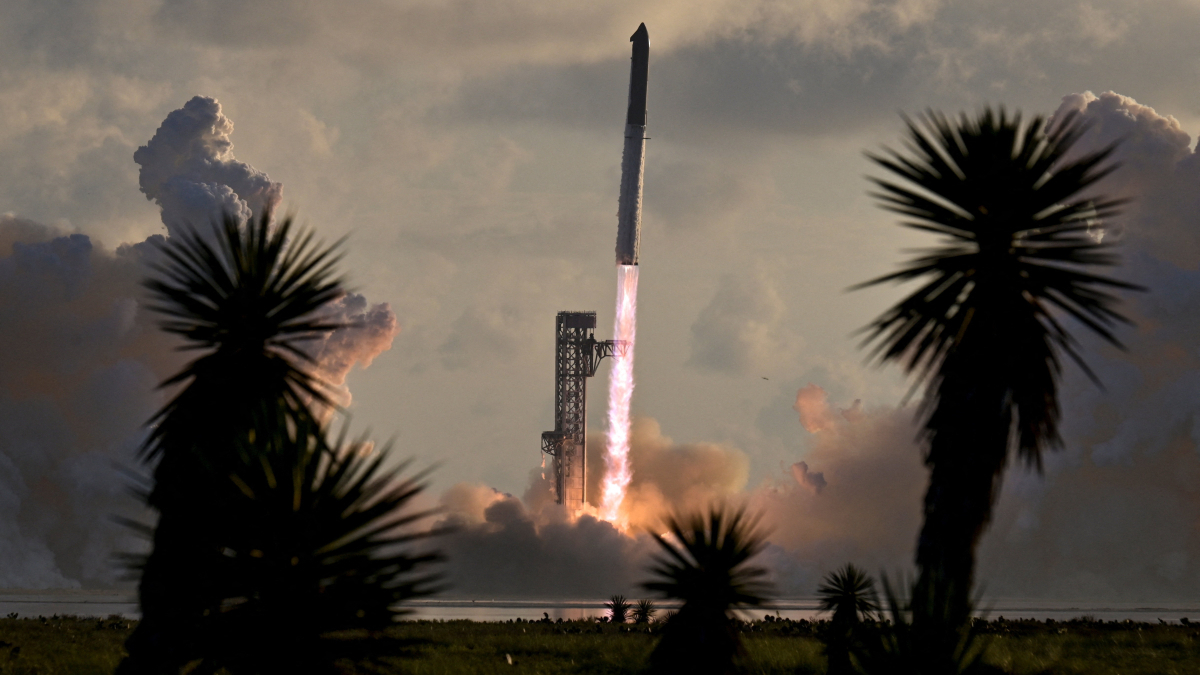
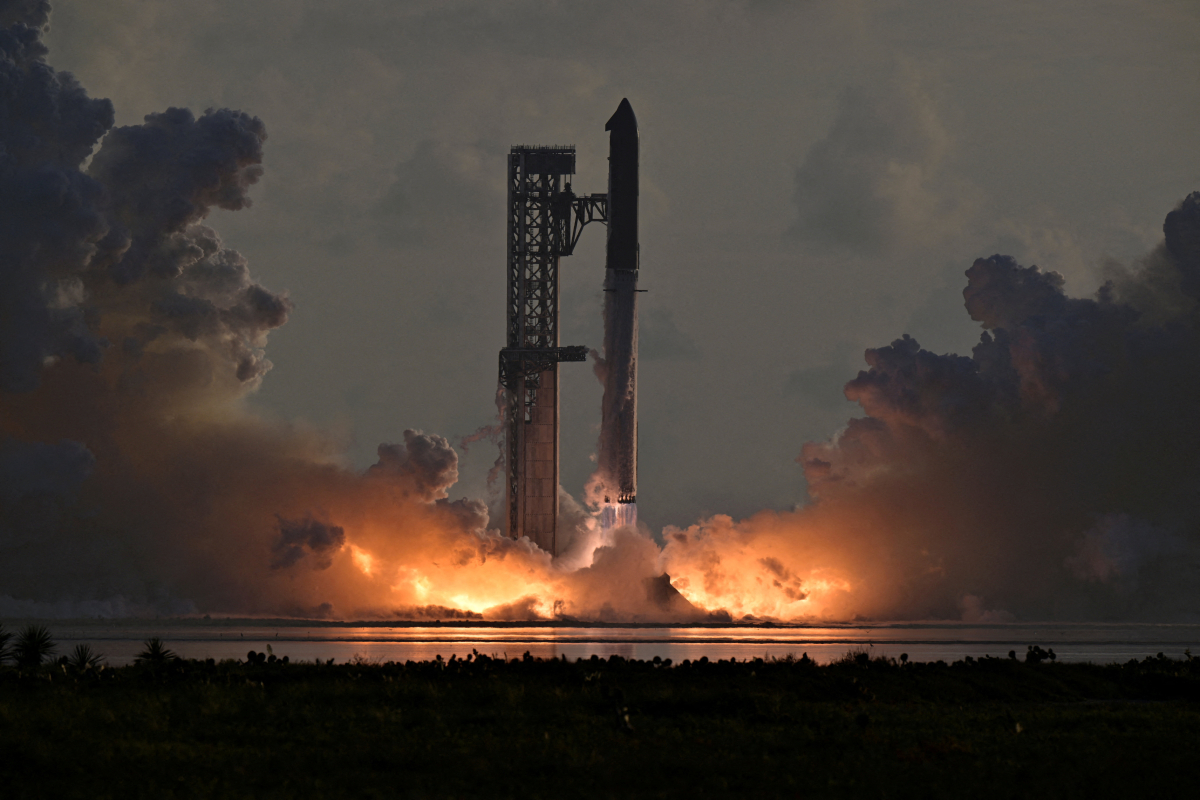
SpaceX’s next-generation Starship rocket reached orbit for the first time on Monday despite an unexpected engine shutdown, deploying 26 new Starlink satellites before ending its shortened test flight with a controlled touchdown in the Pacific.
The uncrewed 40-storey vehicle launched from SpaceX’s Starbase facility in Texas on its 14th flight since 2023, marking a major milestone for the rocket after 13 previous missions remained suborbital.
Engine shutdown cuts mission short
One of Starship’s three main engines shut down unexpectedly after the spacecraft reached space, initially prompting SpaceX to say it would not attempt to reach orbit.
Engineers later determined that Starship could still perform an engine firing needed to enter orbit. The manoeuvre was successful, allowing the spacecraft to reach its planned orbital trajectory.
The engine problem forced SpaceX to shorten the mission from its planned 10 hours to around three hours.
The Super Heavy booster also experienced engine problems during its descent before completing a controlled splashdown in the Gulf of Mexico.
26 new Starlink satellites deployed
Once in orbit, Starship deployed 26 next-generation Starlink V3 satellites at an altitude of roughly 269 kilometres.
SpaceX founder Elon Musk said all 26 satellites had been deployed and were operating normally.
The V3 satellites are designed to provide substantially greater data capacity than the previous generation and are intended to help SpaceX expand its broadband network more rapidly.
Starship was designed to eventually carry much larger batches of Starlink satellites than SpaceX’s existing Falcon 9 rockets.
Key test for SpaceX and NASA
Reaching orbit represents a major development for Starship, which SpaceX intends to use for frequent satellite launches and future crewed missions. The rocket is also central to NASA’s Artemis programme, which aims to return astronauts to the Moon and establish a longer-term lunar presence.
Monday’s flight remained a test mission despite carrying operational satellites. SpaceX did not plan to recover the Starship spacecraft after its controlled descent into the Pacific.
The successful orbital flight comes after years of development and a series of test missions that demonstrated individual capabilities but did not previously achieve a full orbital mission.
SpaceX aims to eventually make Starship fully reusable and operate it at a much higher launch frequency than conventional rockets.
Read more:




















What is your opinion on this topic?
Leave the first comment