Iran's Islamic Revolutionary Guard Corps (IRGC) dismissed a new U.S. military operation targeting the movement of weapons and sanctioned materials on Sunday, 8 November, saying Washington would fail to isolate the Iranian economy despite expanding restrictions on maritime and land routes.
IRGC spokesperson Hossein Mohebbi said Tehran had prepared for further economic pressure and maintained close communication with neighbouring countries.
His comments followed the launch of Task Force Iron Gate, a U.S. initiative targeting the movement of advanced weapons and sanctioned materials across Iran's land borders and through the Caspian Sea.
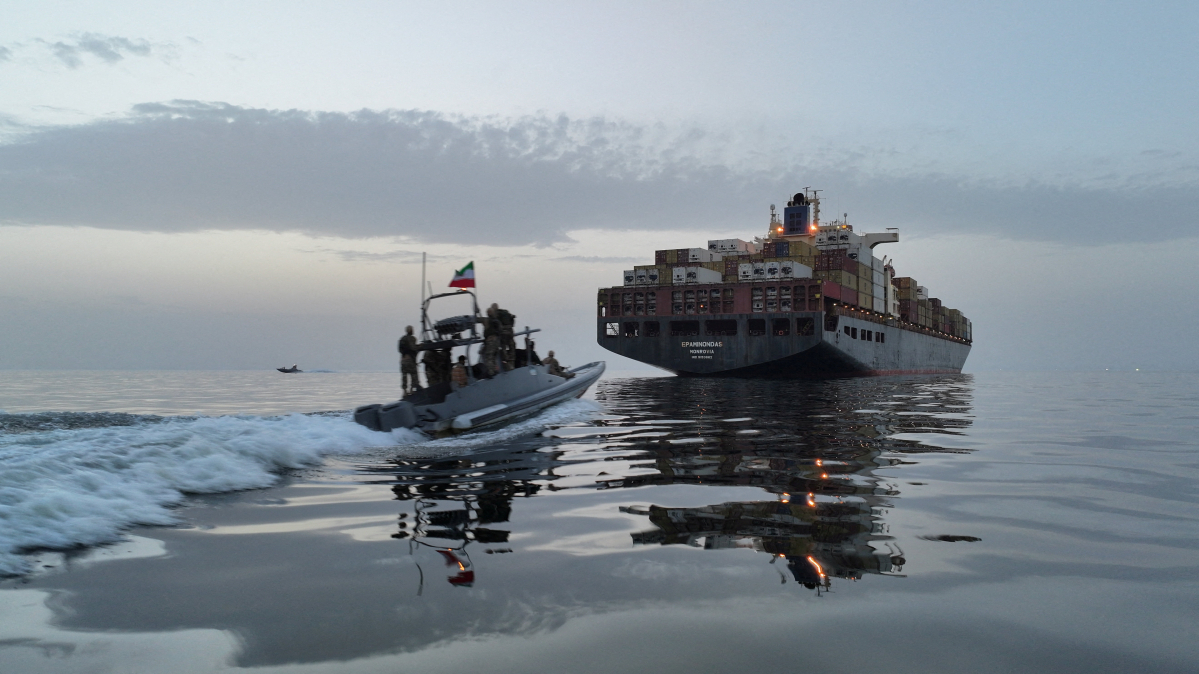
The dispute comes amid heightened military tensions after U.S. forces fired on a commercial cargo vessel on Saturday (7 November), disabling it as it attempted to break Washington's naval blockade of Iran.
Tehran challenges U.S. economic strategy
Mohebbi rejected the effectiveness of the new task force, arguing that Iran's preparations and close communication with neighbouring countries would prevent Washington from achieving its objectives.
“The Iron Gate plan is merely a wordplay,” he told Iran's semi-official Fars news agency.
He said the U.S. would be unable to impose sufficient economic pressure through the operation to cause Iran's economy to collapse.
Task Force Iron Gate adds land borders and Caspian Sea routes to Washington's existing maritime enforcement efforts, focusing on the movement of advanced weapons and other sanctioned materials.
U.S. forces disable cargo vessel
The latest confrontation followed an incident on Saturday involving a St. Kitts-flagged commercial vessel that had visited an Iranian port.
U.S. Central Command said the vessel attempted to break the U.S. blockade after visiting an Iranian port.
According to the U.S. military, an American aircraft fired precision munitions at the vessel's stern after forces instructed its crew to leave the areas being targeted.
U.S. Central Command said the strike disabled the vessel.
Washington says its months-long naval blockade has prevented Iran from exporting more than $25 billion worth of crude oil. The figure is a U.S. military estimate.
Pressure extends beyond the Persian Gulf
The new task force adds land borders and Caspian Sea routes to Washington's existing maritime enforcement efforts.
The move comes as President Donald Trump has threatened further military action against Iran.
Tehran has warned that any new U.S. offensive could trigger retaliation against infrastructure across the Persian Gulf, raising concerns about the consequences of further escalation for neighbouring countries.
Iran maintains that its preparations and communication with neighbouring countries will allow it to withstand the latest U.S. restrictions, while Washington continues efforts to limit Tehran's trade in sanctioned materials.
Read more:










What is your opinion on this topic?
Leave the first comment