live Netanyahu to visit Trump as U.S. pauses strikes on Iran
U.S. President Donald Trump says Israeli Prime Minister Benjamin Netanyahu will visit Washington next week as tensions continue to rise across the Mid...
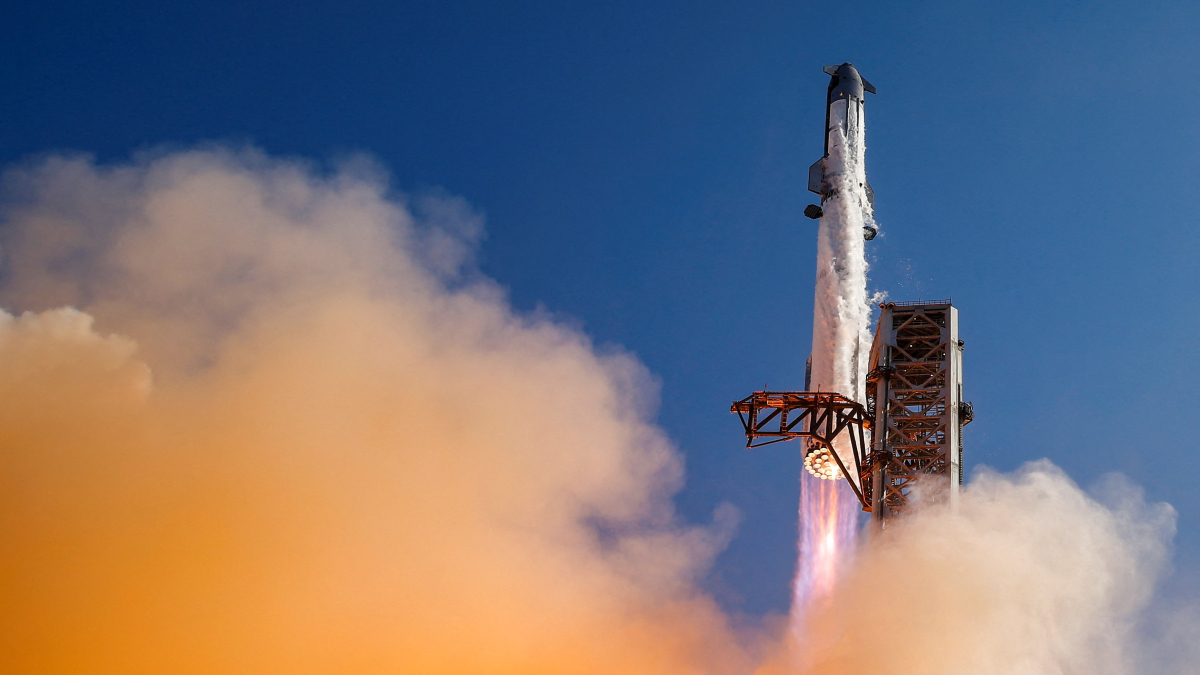
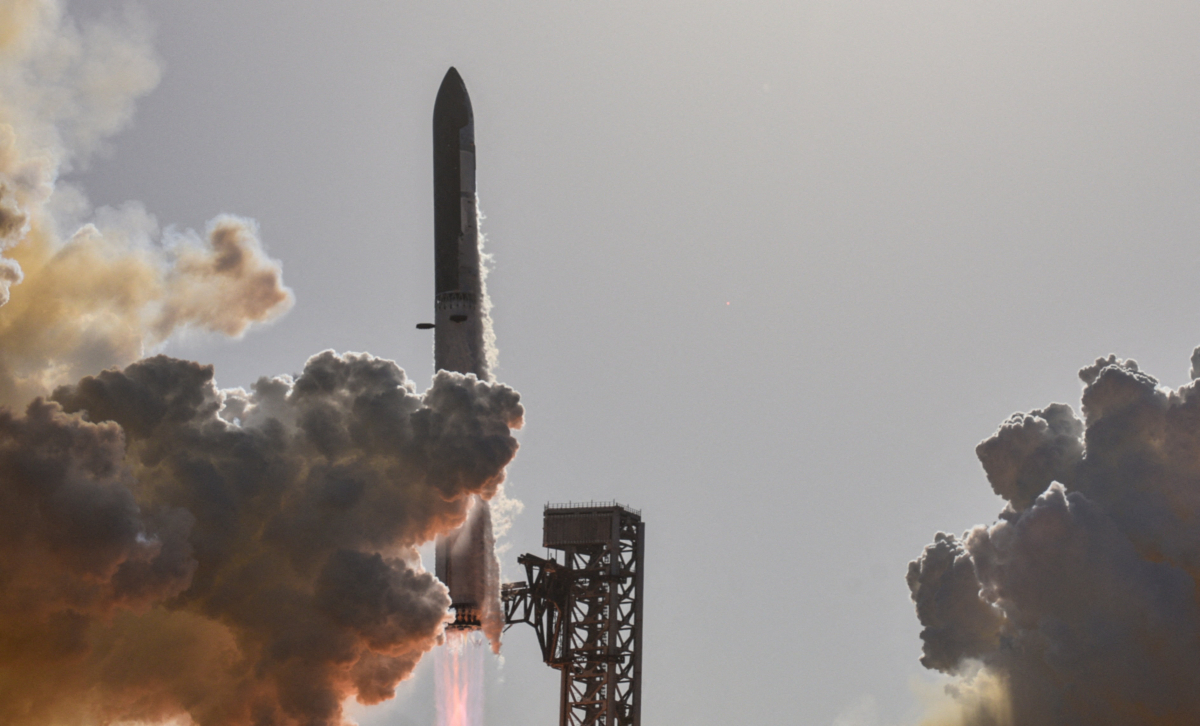
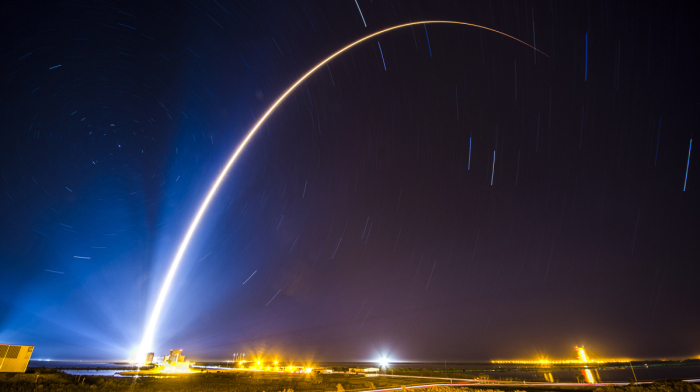
SpaceX successfully launched its Starship megarocket on its 13th flight test Friday, deploying 20 next-generation Starlink V3 satellites and completing a soft splashdown of the spacecraft in the Indian Ocean.
According to a statement by the company, Starship lifted off at 5.51 pm Central Time (2251 GMT) from SpaceX’s Starbase facility in Texas, marking the second flight of the Starship and Super Heavy V3 vehicles.
The launch began with Super Heavy igniting all 33 Raptor 3 engines and ascending over the Gulf of America, the company said.
The Starship's upper stage then ignited its six Raptor engines following a hot-staging maneuver and continued its planned ascent into space.
"Following stage separation, the Super Heavy booster performed a directional flip maneuver," the statement said, noting that the rocket completed the high-thrust portion of its "boostback burn using all 33 engines for the first time" with the V3 vehicle.
However, the burn ended early, and the booster later experienced a hard splashdown- rough water landing- in the Gulf after an attempted landing burn in which some engines successfully reignited.
Starship completed its full-duration ascent burn and reached its planned velocity and trajectory before deploying all 20 Starlink V3 satellites.
SpaceX said engineers successfully communicated with every satellite through radio frequency and laser links and downloaded key telemetry.
After relighting all three Raptor engines, Starship completed its landing flip and landing burn before making a soft splashdown and coming to rest intact in the Indian Ocean, providing SpaceX with its first views of an intact heatshield after splashdown.
Sharing an image of Flight 13's launch, NASA Administrator Jared Isaacman said on X: "Pretty clear from this shot that SpaceX knows where we are going! Congrats on getting Flight 13 underway."

Start your day informed with AnewZ Morning Brief. Here are the top news stories for the 24th July, covering the latest developments you need to know.
U.S. strikes on Iran entered a 12th consecutive night, while Yemen's Houthis said they attacked two Saudi oil tankers in the Red Sea, urging President Donald Trump to warn Tehran it would be held responsible for any future Houthi attacks.
The U.S. military said it completed a fresh wave of strikes on Iran late on Thursday, marking the 13th consecutive night of American attacks. The latest operation lasted more than two hours, according to U.S. Central Command.
Aleksandar Vučić's visit to Kyiv on 15 July appeared to send a geopolitical signal. But the significance of the trip lies less in the journey itself than in the limits Serbia carefully observed.
Spain has declared a national emergency and evacuated more than 10,000 people after uncontrolled wildfires reached the outskirts of Madrid. Emergency crews have rescued residents as multiple blazes continue to spread across the region.
Britain's new Prime Minister Andy Burnham has appointed Kanishka Narayan as Minister for Artificial Intelligence, making it the first time the role has held cabinet-level status. The move signals a stronger government focus on AI as the UK seeks to strengthen its position in the sector.
Scientists have identified a planetary system in the Milky Way unlike anything seen before, leaving astronomers debating how to classify one of its unusual worlds. The discovery challenges long-held definitions of planets, moons and stars.
A U.S. federal judge has approved Anthropic's $1.5 billion settlement with authors and publishers over the company's acquisition and use of pirated books to train its Claude artificial intelligence chatbot, marking the first major resolution in the growing wave of AI copyright litigation.
More than 1,100 companies are presenting their latest artificial intelligence technologies at the 2026 World AI Conference (WAIC) in Shanghai, where innovation, international cooperation and AI governance are taking centre stage.
A humanoid robot demonstrated its ability to prepare regional dishes during a live cooking show in northwest China’s Xinjiang Uygur Autonomous Region, highlighting advances in embodied artificial intelligence (AI) and dexterous robotics.
You can download the AnewZ application from Play Store and the App Store.
What is your opinion on this topic?
Leave the first comment