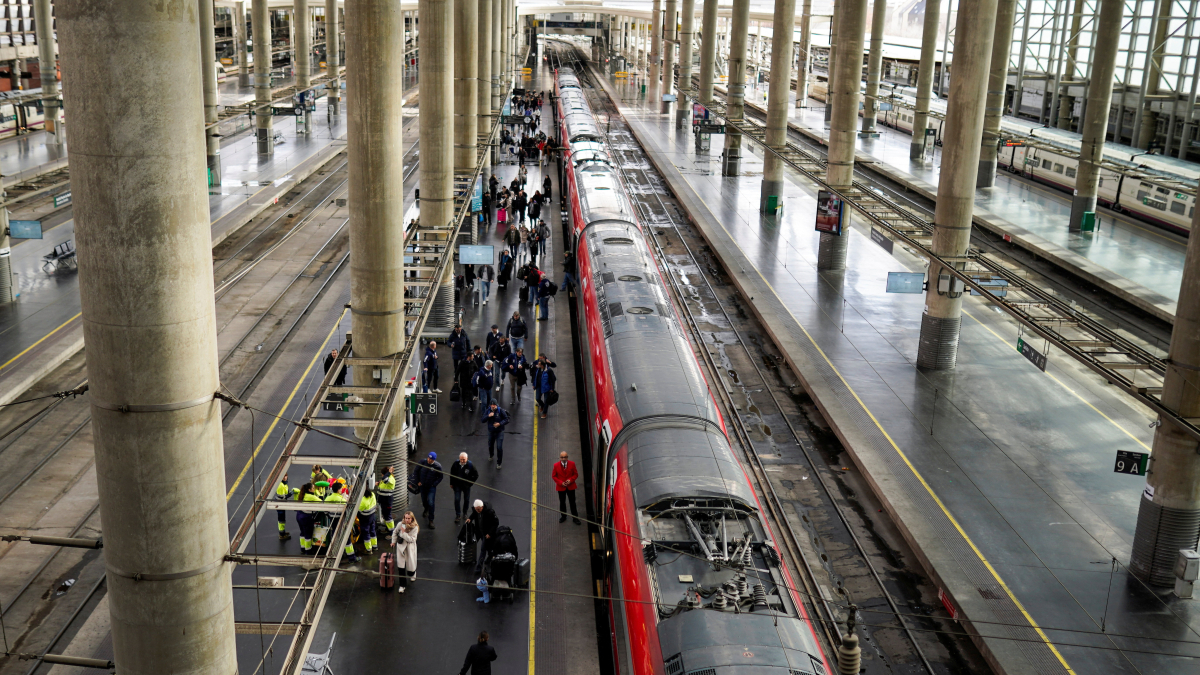
Spain has faced a string of railway accidents in one week, including one of Europe’s deadliest in recent years, raising questions about whether maintenance investment is keeping pace with soaring passenger demand on the world’s largest high-speed rail network.
Spain’s rail network has experienced record passenger numbers, with nearly 40 million people using high-speed trains in 2024, almost double the 2019 figure. Overall rail use also hit a record 549 million passengers, according to the competition authority. But the surge in demand has placed unprecedented strain on infrastructure, and critics argue that maintenance investment has not kept up.
The week’s accidents included a high-speed collision in Andalusia that killed 45 people, followed by a series of incidents near Barcelona and in southeastern Spain, including a commuter train derailment after a containment wall collapsed. Preliminary findings from the Andalusia crash suggest a rail fracture may have occurred before the train derailed, according to Spain’s rail accident investigation body CIAF.
Transport Minister Oscar Puente acknowledged that maintenance funding should be debated, but stressed that the accident occurred on a section of track renovated last May and inspected earlier this month.
Despite being Europe’s largest high-speed network, Spain’s maintenance spending lags behind other major European rail systems. European Commission data shows Spain invested heavily in building new lines, but only around 16% of high-speed spending from 2018-2022 was directed towards maintenance and upgrades, compared with 34-39% in France, Germany and Italy.
Experts argue spending must increase. Jose Trigueros, president of the Association of Roads and Civil Engineers, estimates maintenance investment should rise to €150,000 per kilometre from the current €110,000. The issue extends beyond high-speed lines to the wider conventional network as well.
Rail union SEMAF has called a three-day nationwide strike, citing “constant deterioration” of the system and warning that safety is at risk. In an August letter to infrastructure operator Adif, the union flagged severe wear and tear on several lines, including the stretch involved in the fatal crash.
Official data shows a sharp rise in reported track problems, increasing from 440 in 2015 to 716 in 2024. Accidents, including derailments, also rose from 42 to 57 over the same period. The government maintains that Spain’s accident rates remain below the EU average and comparable to countries such as Germany and France.
It also points to increased investment under Prime Minister Pedro Sánchez, with infrastructure spending tripling and maintenance per kilometre rising by 58% to €71,000 since 2018. Yet a 2024 report by Fundacion BBVA and Ivie found overall rail investment remains far below pre-2008 crisis levels, with gross investment in 2024 less than a third of the 2009 peak.
Researchers argue the long-term decline in investment means spending has only recently returned to a steady increase. As one expert put it, Spain’s world-class rail system is like a Ferrari, the cost is not just buying it, but maintaining it.
















What is your opinion on this topic?
Leave the first comment