Venezuelan oil exports under a flagship $2 billion supply deal with the U.S. reached about 7.8 million barrels on Wednesday, vessel-tracking data and documents from state-run PDVSA showed.
Oil shipments are accelerating after the U.S. eased its blockade but not enough for PDVSA to fully reverse output cuts.
Following the U.S. capture of President Nicolas Maduro on 3 January, Caracas and Washington agreed to a deal to sell up to 50 million barrels of Venezuelan crude stored in tanks and vessels. Trading houses Vitol and Trafigura obtained the first U.S. licenses to load and export cargoes from the OPEC country.
But the supply has yet to significantly ease PDVSA's swollen inventories, which grew during a U.S. blockade on exports that lasted nearly a month and left Venezuela with tens of millions of barrels of oil in storage on land, and on loaded tankers stranded in Venezuela's waters.
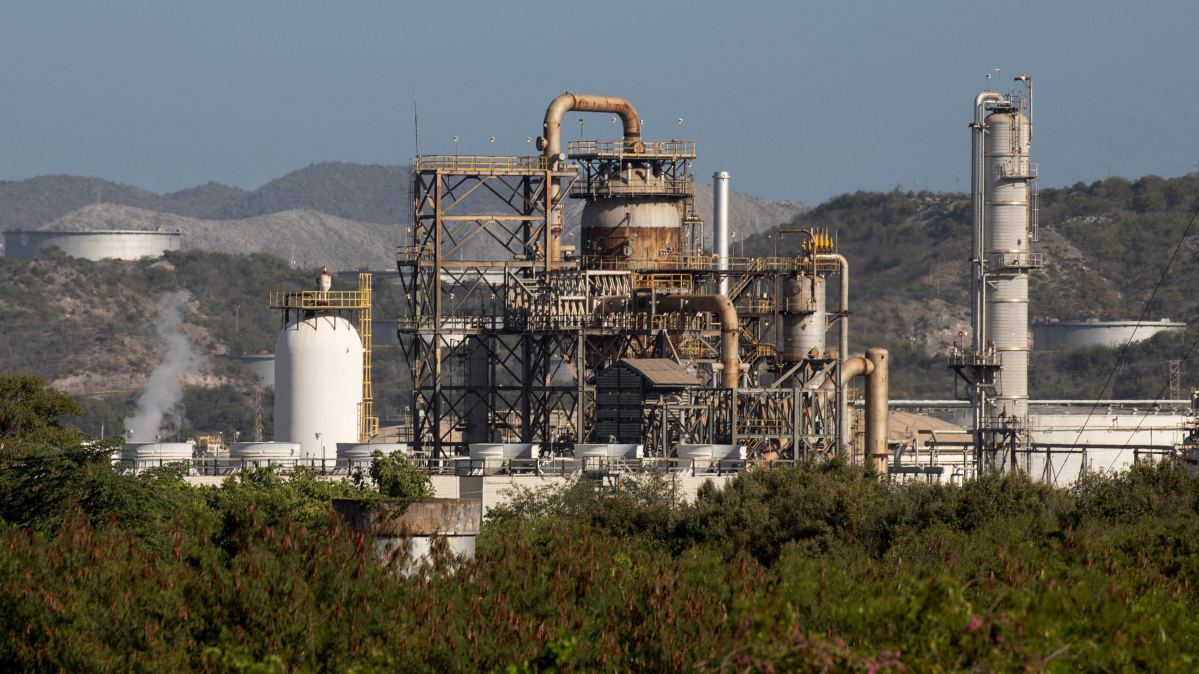
Energy giant PDVSA, which in early January cut production because it had nowhere left to store the oil, has yet to fully reverse those cuts as it waits for storage levels to fall, according to the documents and company sources.
Sales have been slow because refiners have refused to pay prices the trading companies want for the oil, sources familiar with negotiations said. Difficulties in transferring and storing the stranded oil elsewhere have also slowed the flow of oil, they said.
Offers of Venezuelan flagship Merey heavy crude to U.S. refiners began last week at a discount of between $6 and $7.50 per barrel below Brent. That was above Canadian crude prices, which is a similar quality oil and readily available, giving refiners no incentive to switch to Venezuelan oil.
Vitol and Trafigura also made offers to Indian refiners at $8-8.50 per barrel below Brent. This also elicited little interest. The traders have recently deepened discounts to around $9 per barrel, but have yet to see much interest from buyers, trading sources said.
The U.S. has continued seizing Venezuela-linked tankers in the Caribbean, so shipowners have been reluctant to get involved in the trade, the trading sources added.
Vitol and Trafigura declined to comment. PDVSA did not immediately reply to requests for comment. Curacao's government last week confirmed Venezuelan oil was being stored there.
Last week, U.S. officials said some $500 million in proceeds from the first oil sales would be deposited in a fund controlled by the U.S. government.
U.S. Secretary of Energy Chris Wright told Reuters on Friday those initial sales had been negotiated at a "fair price" of around $45 per barrel for Venezuela, which represents some 11 million to 12 million barrels to be allocated through the trading firms.
It was unclear which mechanism Washington will use for future sales to reach the announced 50-million-barrel supply, but many PDVSA partners and customers are waiting for U.S. licenses to resume or expand exports.
Slow departures
Since the first two tankers departed from Venezuelan waters on 12 January heading to storage terminals in the Bahamas and St. Lucia in the Caribbean, five other vessels have followed, carrying Venezuelan crude to those ports and to the Bullen Bay terminal in Curacao, the shipping data showed.
Besides cargoes chartered by the trading houses, the only other company currently exporting Venezuelan crude is Chevron, PDVSA's main joint venture partner, which has accelerated shipments to some 221,000 barrels per day (bpd) so far this month from 100,000 bpd in December, according to the data.
Export volumes from traders have reached around 780,000 bpd since 12 January, when they started moving cargoes under U.S. licenses. That has taken exports to around 1 million bpd, close to normal levels but far from decongesting accumulated stocks.
Oil prices rose on Wednesday on optimism around tighter supply after a temporary shutdown at two large fields in Kazakhstan and as Venezuelan oil export volumes highlighted slow progress in reversing PDVSA's output cuts.
Venezuela's crude output fell to some 880,000 bpd in early January from 1.16 million bpd in late November following PDVSA's production cuts, which were mostly in the country's main oil region, the Orinoco Belt.
Some oilfields have begun restoring production in recent days, but most areas remain below capacity, company sources said.













What is your opinion on this topic?
Leave the first comment