U.S. President Donald Trump has linked his push to take control of Greenland to his failure to win the Nobel Peace Prize, as tensions with Europe escalate and the European Union considers retaliatory measures that could reignite a transatlantic trade war.
In an interview with NBC News, Trump declined to say whether he would use force to seize Greenland but repeated his threat to impose tariffs on European countries if a deal is not reached. The remarks come as the EU weighs countermeasures in response to Washington’s pressure on Denmark, a fellow NATO member.
Trump intensified his rhetoric in a text message to Norwegian Prime Minister Jonas Gahr Stoere, released by Norway’s government on Monday, saying that after not receiving the Nobel Peace Prize he no longer felt obliged to think “purely of peace”.
The 2025 Nobel Peace Prize was awarded to Venezuelan opposition leader Maria Corina Machado, not Trump - a decision that has publicly irritated the U.S. president.
Trump has accused Denmark of being unable to protect Greenland from Russia or China, questioning Copenhagen’s sovereignty over the Arctic island and saying global security required “complete and total control” of the territory by the United States.
On Saturday, Trump said he would impose escalating tariffs from 1 February on Denmark, Sweden, France, Germany, the Netherlands and Finland, as well as Britain and Norway, until the U.S. is allowed to buy Greenland.
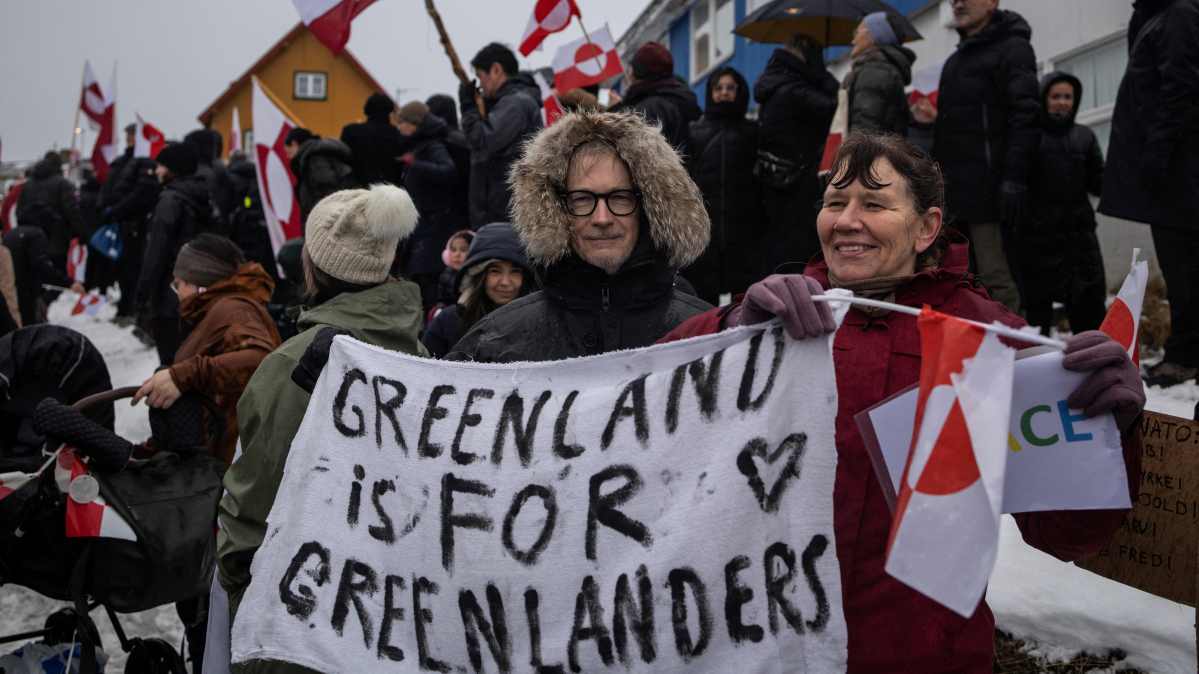
Denmark rejected the threat, with Foreign Minister Lars Lokke Rasmussen saying countries cannot be traded like commodities. Greenland’s Prime Minister Jens-Frederik Nielsen said the territory must decide its own future and would not bow to pressure.
The dispute has unsettled European markets and industry, reviving fears of a repeat of 2025’s trade war. EU leaders are set to discuss their response at an emergency summit in Brussels on Thursday, including potential tariffs on €93 billion worth of U.S. imports or use of the bloc’s Anti-Coercion Instrument.
Several European leaders said they would seek talks with Trump at the World Economic Forum in Davos, though Germany and Norway warned they were prepared to respond if tariffs were imposed. Britain called for calm dialogue between allies.
U.S. Treasury Secretary Scott Bessent cautioned Europe against retaliation, saying Trump’s interest in Greenland was driven by strategic considerations rather than resentment over the Nobel Prize.










What is your opinion on this topic?
Leave the first comment