Munich Security Conference final day focuses on Europe’s global role
The Munich Security Conference concludes on Sunday (15 February) with discussions centred on Europe’s role in an increasingly unstable global landsc...
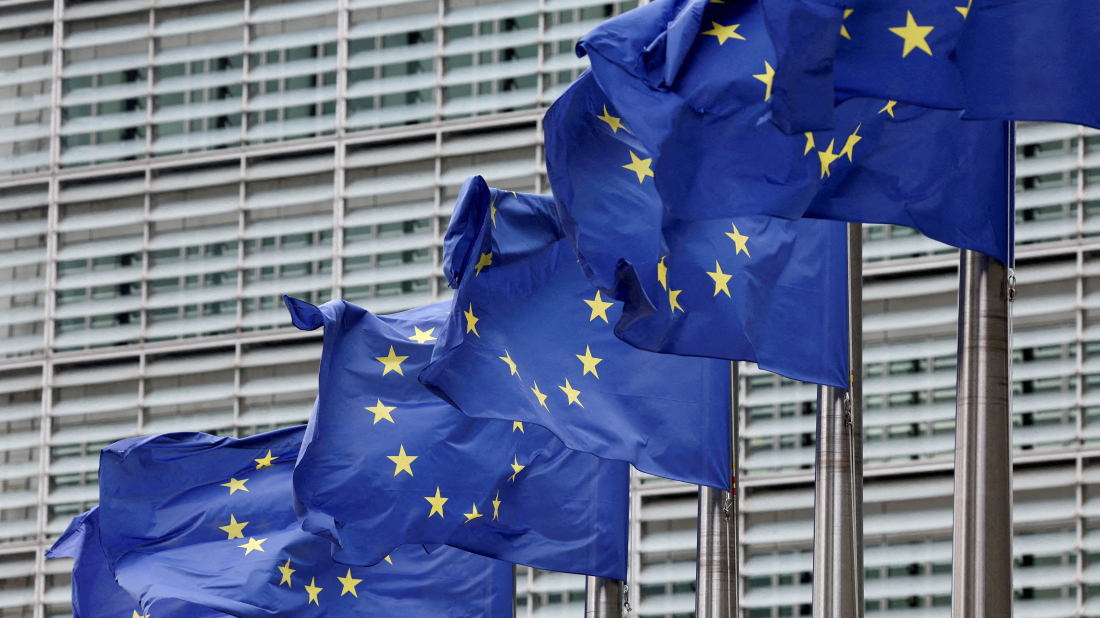
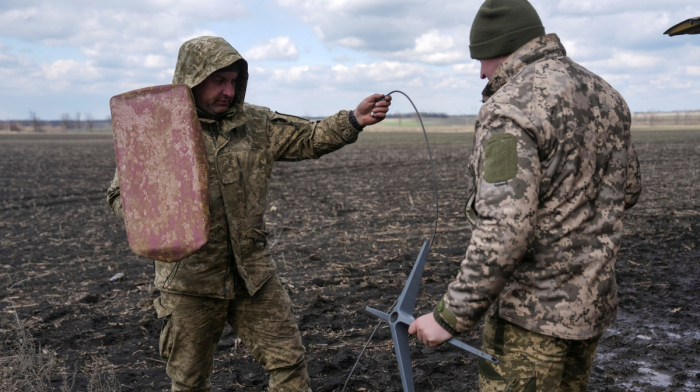
The European Union plans to make its “drone wall” fully operational by 2027 under a new Defence Readiness Roadmap, which outlines ambitious military capability goals but offers little on how they will be financed.
A leaked copy of the Defence Readiness Roadmap 2030, obtained by Euronews, reveals the EU’s detailed timeline for boosting its military capabilities as it faces a more aggressive Russia. The European Commission will officially present the plan on Thursday after months of coordination with member states to reshape the bloc’s defence policy.
The roadmap outlines nine priority areas for investment, including ammunition, drone and anti-drone systems. It identifies four major joint projects: the Eastern Flank Watch, the European Drone Wall, the Air Defence Shield, and the Defence Space Shield. The document marks the drone wall and eastern flank as the most urgent projects, setting a goal for the drone network to be integrated within a “network-based drone capability” by the end of 2027, with the eastern flank becoming functional by 2028.
According to the document, the counter-drone system will feature multi-layered and interoperable technologies for detecting, tracking, and neutralising aerial threats, as well as precision strike capabilities for ground targets. It will connect member states’ defence networks to enhance situational awareness and safeguard critical infrastructure in coordination with NATO.
The roadmap also provides new details on military mobility, aiming to establish an “EU-wide military mobility area” by 2027. This would include harmonised procedures and corridors through land, air, and sea to allow for faster movement of troops and equipment within the bloc. Currently, it can take up to 45 days for a country to approve such movements.
The Commission hopes its defence initiatives, including the proposed SAFE loan scheme, will encourage joint procurement and support the European Defence Technological and Industrial Base. Member states are urged to organise 40 percent of defence procurement jointly by 2027 and to allocate 60 percent of their defence budgets to the EDTIB and Ukraine by 2030.

American figure skating star Ilia Malinin endured a dramatic collapse in the men’s free skate on Friday night, falling twice and tumbling out of medal contention at the Milan Cortina Winter Olympics as Kazakhstan’s Mikhail Shaidorov surged to a surprise gold medal.
“Respected and feared globally,” U.S. President Donald Trump told troops at Fort Bragg on Friday (13 February), framing America’s renewed strength against to mounting pressure on Iran amid stalled nuclear talks.
U.S. Ambassador to NATO Matthew Whitaker said China has the power to bring an end to Russia’s war in Ukraine, arguing that Beijing is enabling Moscow’s military campaign.
Dubai-based global ports operator DP World said on Friday that its long-serving chairman and chief executive, Sultan Ahmed Bin Sulayem, has stepped down following mounting pressure linked to alleged ties to disgraced financier Jeffrey Epstein.
Speaking at Munich Security Conference, Ukrainian foreign minister Andrii Sybiha calls for decisive steps ahead of expected Geneva talks
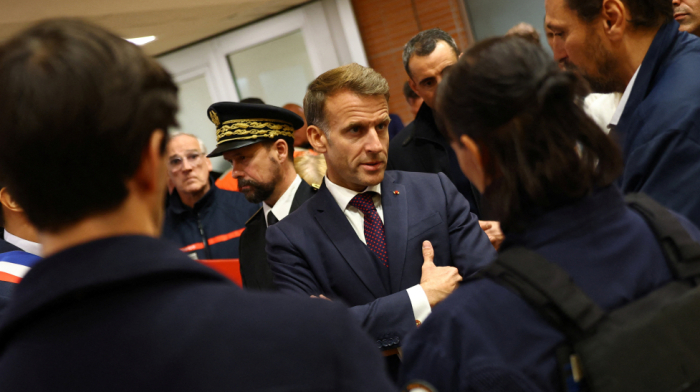
The Munich Security Conference concludes on Sunday (15 February) with discussions centred on Europe’s role in an increasingly unstable global landscape, including security coordination, economic competitiveness and the protection of democratic values.
Start your day informed with AnewZ Morning Brief: here are the top news stories for the 15th of February, covering the latest developments you need to know.
Australia will spend A$3.9bn to build a new shipyard for AUKUS nuclear-powered submarines, Prime Minister Anthony Albanese has announced, marking a major step in the trilateral defence pact with the U.S. and Britain.
Britain, France, Germany, Sweden and the Netherlands said on Saturday (14 February) they are convinced that late Kremlin critic Alexei Navalny was poisoned with a lethal toxin in a Russian penal colony two years ago.
Ukrainian President Volodymyr Zelenskyy said on Saturday that Russia’s decision to change the leadership of its delegation for upcoming peace talks in Geneva appeared to be an attempt to delay progress.
You can download the AnewZ application from Play Store and the App Store.
What is your opinion on this topic?
Leave the first comment