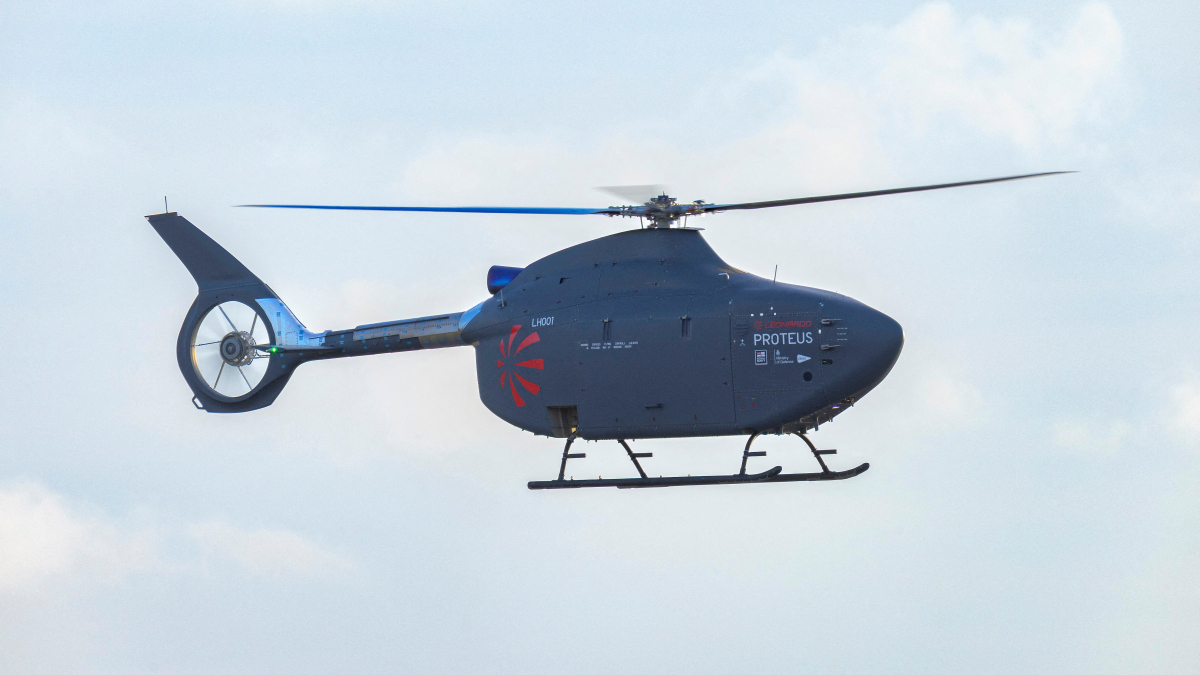
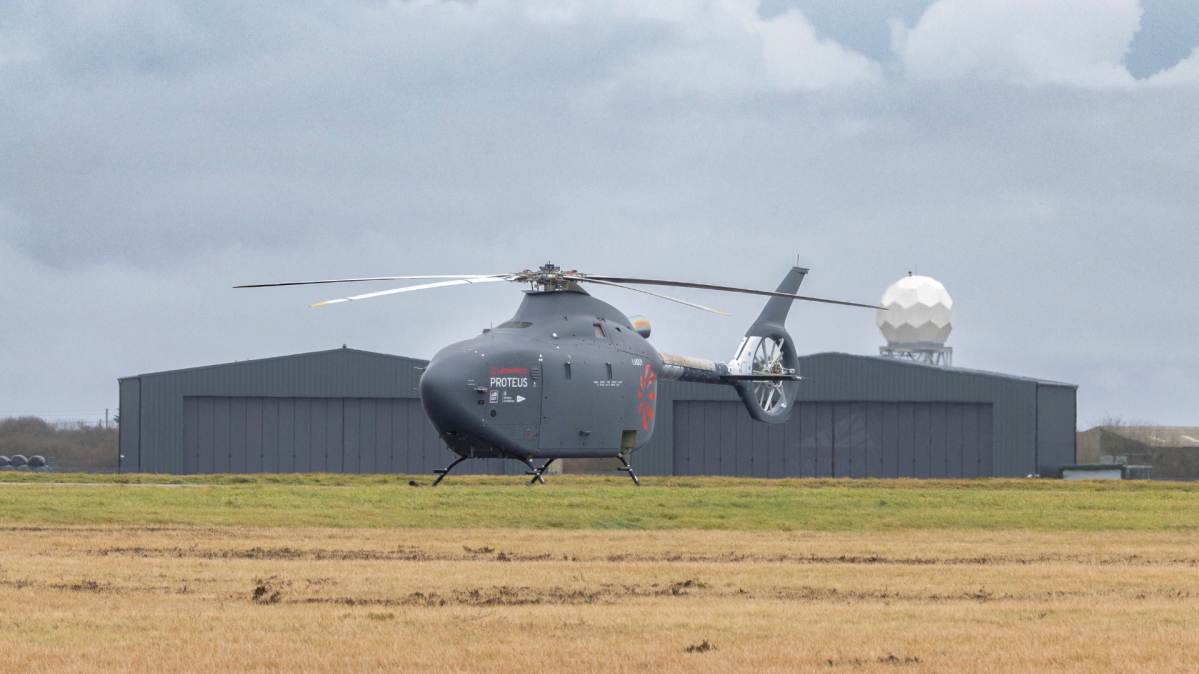
Britain’s Royal Navy has successfully conducted the maiden flight of its first full-sized autonomous helicopter, designed to track submarines and carry out high-risk maritime missions amid rising tensions in the North Atlantic.
Named Proteus, the helicopter was developed under a $80.5 million (£60 million) programme by defence and aerospace company Leonardo.
It is equipped with advanced sensors and computer systems that allow it to interpret its surroundings and make operational decisions without a human pilot on board.
Proteus is intended for anti-submarine warfare, maritime patrol, and underwater vessel tracking, providing the navy with capabilities to monitor strategic waters, including those between Greenland, Iceland, and Britain.
The aircraft is part of broader efforts to strengthen NATO and UK defence amid increased Russian naval activity in the North Atlantic.
Nigel Colman, UK managing director of Leonardo Helicopters, said, “Proteus represents a step-change in how maritime aviation can deliver persistence, adaptability and reach."
According to him, Proteus is capable of conducting "the dull, dirty and dangerous missions in challenging environments without putting human operators at risk.”
The maiden flight was a short test routine, marking the first step in the helicopter’s operational deployment.
The Royal Navy already operates smaller unmanned drones, but Proteus is larger and more sophisticated, capable of handling long-duration missions that were previously too risky for human crews.
Europe’s defence sector has undergone significant changes since Russia’s full-scale invasion of Ukraine in February 2022, according to experts, with governments boosting military spending and expanding capabilities.
Proteus is expected to enhance the UK’s ability to defend its waters and support NATO allies against evolving North Atlantic threats.



























What is your opinion on this topic?
Leave the first comment