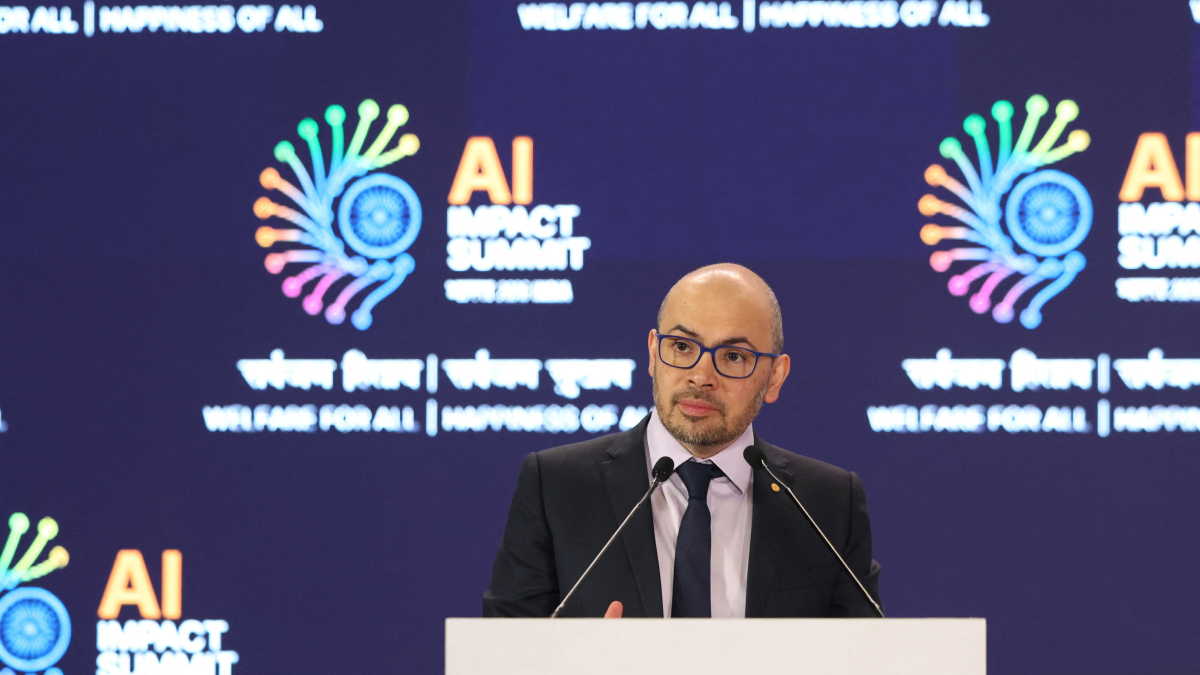
The chief executive of Google DeepMind, Demis Hassabis, has called for more urgent research into the risks posed by artificial intelligence, warning that stronger safeguards are needed as systems become more advanced.
Speaking at the India AI Impact Summit 2026 in New Delhi, Hassabis said the technology sector supports “smart regulation” to address the genuine risks associated with rapidly advancing artificial intelligence.
He warned that AI could be exploited by malicious actors and that the growth of highly autonomous systems raises concerns about maintaining effective human control over future technologies.
Hassabis said stronger safety frameworks are necessary but emphasised that his organisation is only one participant in the global AI landscape and cannot independently shape the overall speed of technological development.
The remarks were made during high-level international discussions at the summit, where political leaders and technology executives examined possible models for governing artificial intelligence.
The debate reflected global disagreement over regulatory approaches. The United States delegation opposed proposals for internationalised AI governance. White House technology adviser Michael Kratsios argued that AI progress should not be constrained by centralised global administrative structures.
Some governments and technology companies favour coordinated international oversight, while others support regulatory authority remaining primarily at the national level.
Sam Altman, chief executive of OpenAI, also called for urgent regulatory action during the summit.
Indian Prime Minister Narendra Modi said global collaboration is essential to ensure artificial intelligence development benefits society while maintaining security and public safety.
Hassabis said Western countries currently hold a modest lead over China in AI capability development, though technological competition could narrow quickly.
He predicted that artificial intelligence could emerge as a dominant technological force within the next decade, expanding opportunities for application development while increasing the importance of creativity, critical judgement and design-oriented skills.
He also stressed that science and technology education will remain strategically important in an AI-driven economy.
India AI Impact Summit 2026
The five-day summit concluded in New Delhi with an international appeal to harness artificial intelligence for human benefit while respecting national sovereignty in technology policy.
More than 100 countries, international organisations and technology companies participated in the forum.
The summit adopted the Artificial Intelligence Impact Summit Declaration, which received endorsement from 88 countries and global institutions.
High-level attendees included Brazilian President Luiz Inácio Lula da Silva, French President Emmanuel Macron, Serbian President Aleksandar Vučić, Spanish Prime Minister Pedro Sánchez, UN Secretary-General António Guterres, Greek Prime Minister Kyriakos Mitsotakis and other leaders.
French President Emmanuel Macron said France and India must work together to shape global AI rules, warning that the technology has become a central arena of geopolitical competition.
He noted that rapid advances have strengthened major technology firms, saying “AI has become a major field of strategic competition, and big tech got even bigger.”
Macron added that “hegemony from any quarter is not a fatality,” calling for sovereign, values-based AI development grounded in partnership and strategic autonomy.
The declaration promotes cooperation across seven priority areas: developing human capital, widening access to AI for social empowerment, strengthening trustworthy AI systems, improving energy efficiency in AI technologies, advancing AI use in scientific research, democratising access to technological resources, and supporting AI-driven economic and social development.
The voluntary framework is intended to complement existing international technology initiatives while encouraging shared understanding of AI development pathways.
Delegates also supported expanding access to foundational AI tools, encouraging local innovation, reinforcing resilient AI ecosystems and creating platforms to scale successful AI applications across regions.
The summit further outlined guidance on workforce adaptation, including reskilling strategies and knowledge-sharing programmes to prepare labour markets for the impact of artificial intelligence.





















What is your opinion on this topic?
Leave the first comment