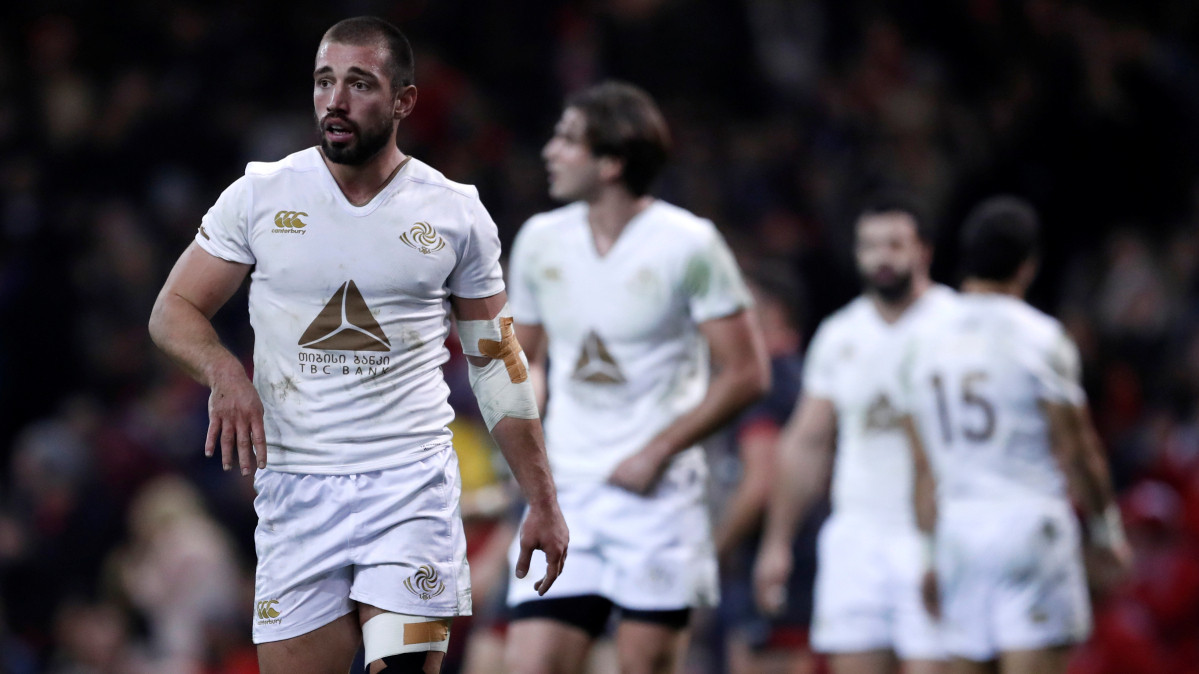
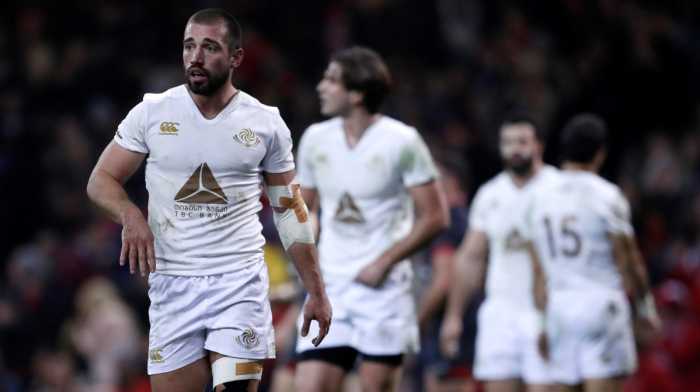
Former Georgia rugby captain Merab Sharikadze has been banned for 11 years after an anti-doping probe uncovered sample swapping in the national team. Several other players and the Georgian Rugby Union were also sanctioned
The investigation, codenamed Operation Obsidian, was launched by World Rugby and the World Anti-Doping Agency (WADA) ahead of the 2023 Rugby World Cup in France, after scientists flagged biological anomalies in samples taken from Georgian players. What followed was four years of detailed forensic work that uncovered five instances of sample substitution dating back to 2019.
The scheme worked like this: Georgia's national testing authority would tip off team doctor Nutsa Shamatava about upcoming doping tests. Shamatava would then alert players through a team group chat, organising swaps so that clean urine, largely provided by Sharikadze, could be submitted in place of the players' own samples. Shamatava has been banned for nine years.
Sharikadze, who earned more than 100 caps for Georgia and was captain when the Lelos produced one of their finest results, a 13-12 win over Wales in Cardiff in 2022, received the harshest sanction because his urine was used on three separate occasions by team-mates.
Hooker Giorgi Chkoidze was handed a six-year ban. Lasha Khmaladze, Otar Lashkhi and Miriani Modebadze each received three-year suspensions, while back-row forward Lasha Lomidze was banned for nine months.
Not about performance enhancement
Perhaps the most striking aspect of the case is what the investigation did not find. World Rugby's operating assumption was that the sample swaps were concealing the use of performance-enhancing drugs. After four years of forensic analysis, that theory was not supported by the evidence.
"World Rugby's extensive investigation has revealed no evidence to support this," the governing body said. "There was credible evidence to support the players' assertions that the urine sample substitutions occurred to conceal the use of non-performance-enhancing substances, namely cannabis and tramadol."
Cannabis is prohibited by WADA only during competition, not out of competition. Tramadol, a painkiller, was not banned at all at the time of the offences. All five instances of sample swapping took place outside of competition windows.
In short, players appear to have gone to elaborate, career-ending lengths to hide recreational habits that were, at best, only marginally regulated.
Captain's silence, and a story full of pain
Sharikadze, now 32, had stayed publicly silent for nearly two years after the case first emerged. When he finally spoke to Setanta Sports ahead of his Mixed Martial Arts (MMA) debut in November 2025, what came through was not defiance but a kind of quiet devastation.
He described the moment he was told about the urine swaps as one of total shock. He said he had been asked by a team-mate he trusted to provide a sample because he was well known within the squad as a clean athlete. He complied without imagining it would end the way it did.
"Rugby was equal to life for me," he said. "My story shouldn't have ended like that."
He spoke about not returning home for days after learning of his suspension, unable to face his family. He spoke about asking his mother to take down the framed pictures and rugby shirts that lined her wall. And he spoke about his mother, who passed away during the period of the scandal, and who had written him a letter he still carries in his wallet, asking for him to return to the field as captain.
It is a deeply human story behind the regulatory language, and one that does not fit neatly into the usual narrative of doping in sport.
Georgia at the 2023 World Cup
Several of the banned players were part of the squad that travelled to France for the 2023 tournament. Sharikadze appeared in three pool matches. Modebadze started the opening defeat by Australia at the Stade de France before being replaced in the squad by Lashkhi. Khmaladze started at full-back in the loss to Wales. Georgia finished bottom of their pool, drawing with Portugal and losing the other three games.
Chkoidze, notably, withdrew from the tournament just before it began, citing an injury sustained in a warm-up match.
What happens now
The Georgian Rugby Union has accepted World Rugby's findings and will pay a fine, the exact amount of which has not been disclosed. The union has also committed to overhauling its anti-doping education and prevention programmes. Georgia's place in future competitions, including the 2027 Rugby World Cup in Australia, remains unaffected.
The Georgian government has since begun working with WADA to establish an entirely new national anti-doping authority, replacing the body that was found to have alerted players to forthcoming tests.
World Rugby Chief Executive Alan Gilpin said the case "sends a clear message that World Rugby takes all anti-doping matters extremely seriously and is an unwavering champion of clean sport."
WADA President Witold Banka added that the sanctions were significant and would serve as a deterrent to others tempted to subvert the testing process.
Sharikadze, meanwhile, has moved on to a new chapter. He won his MMA debut in November 2025 and continues to compete. Whether the 11-year ban will define how he is remembered in Georgian rugby is another question. For a generation of supporters who watched him lead the Lelos for years, the answer is probably more complicated than the ban itself.
Read more:











What is your opinion on this topic?
Leave the first comment