An opposition politician in Georgia has been sentenced to 18 months in prison for defacing an election banner, prompting strong reactions at home and abroad.
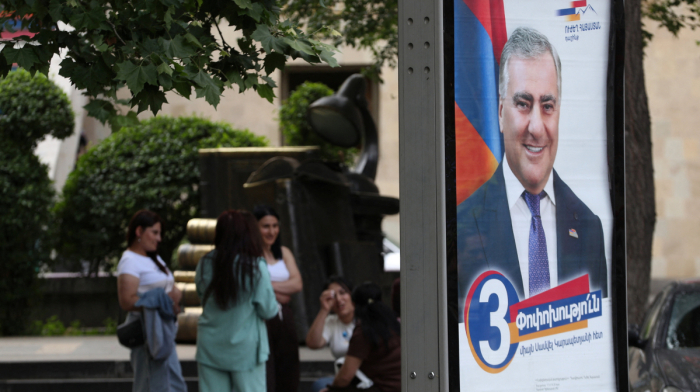
A court in Tbilisi sentenced Elene Khoshtaria, founder of the Droa party, after she wrote “Russian Dream” on a campaign banner belonging to Tbilisi mayor Kakha Kaladze in September 2024. She was arrested on 15 September 2025.
Where the law stands
Under Georgia’s Criminal Code, damaging another person’s property can be punished by a fine, house arrest or imprisonment of between one and five years, depending on the severity of the offence.
In practice, legal observers note that prison sentences for minor vandalism - such as writing on a banner - are uncommon. In comparable cases, courts tend to impose fines or other non-custodial penalties, particularly where the damage is limited and non-violent.
Legal analysts say cases involving minor property damage are routinely prosecuted but rarely result in custodial sentences, making the length of Khoshtaria’s term unusual by recent standards.
However, the authorities argue that Khoshtaria’s case differs. Government representatives say she is a repeat offender and describe her actions as part of broader unlawful political activity. Vice-Speaker Nino Tsilosani stated that the sentence reflects repeated violations and an alleged refusal to comply with legal procedures.
Political reactions at home
The ruling has sharply divided opinion in Georgia. Opposition parties and civil society groups have condemned the verdict, accusing the ruling Georgian Dream party of targeting critics and undermining democratic standards.
Opposition leader Tamar Chergoleishvili described the sentence as politically motivated, while Tina Khidasheli argued that imprisonment for such an act is disproportionate and indicative of deeper problems within the justice system.
Government officials reject these claims. Parliament Speaker Shalva Papuashvili has defended the court’s decision, insisting that legal accountability should not be framed as political persecution.
International pressure and EU response
The case has also attracted significant attention from European institutions. On 12 March, the European Parliament adopted a resolution calling for Khoshtaria’s immediate release and expressing concern about democratic backsliding in Georgia.
The resolution criticised the treatment of opposition figures, called for legal reforms, and raised broader concerns about human rights, media freedom and political pluralism. It also urged investigations into alleged abuses and called for sanctions against those responsible for politically motivated prosecutions.
Despite these calls, the Georgian authorities have so far shown no sign of changing course.
A wider test for democracy
Khoshtaria, who has been in detention since 15 September 2025, says her actions were a form of political protest. Her supporters view the case as a warning to the opposition, while officials maintain it is a straightforward legal matter.
The outcome places Georgia under increasing international scrutiny, with the case widely seen as a test of the country’s commitment to democratic standards and the rule of law.











What is your opinion on this topic?
Leave the first comment