Georgia’s ruling party, Georgian Dream, is moving to criminalise what it calls “extremism against the constitutional order”, introducing a new article to the Criminal Code that could lead to prison sentences of up to three years.
The initiative follows disputed parliamentary elections in 2024, ongoing street protests and mounting criticism from parts of Georgian society and several Western partners who question the government’s democratic trajectory. Supporters say the law is necessary to protect the constitutional system; critics argue it risks silencing dissent and further isolating the country.
What the new law would do
The draft introduces Article 316-I to the Criminal Code, titled “Extremism against the Constitutional Order”. It would criminalise systematic public calls to:
- Massively violate legislation,
- Disobey state authorities,
- Create alternative governing bodies, or
- Present oneself or others as representatives of state authorities in a manner that promotes the perception that the constitutional order is illegitimate.
Penalties would include fines, 400–600 hours of community service, or imprisonment for up to three years. Legal entities could face fines or liquidation. If an offence is classified as aggravated and directed against the constitutional order, prison terms could be increased.
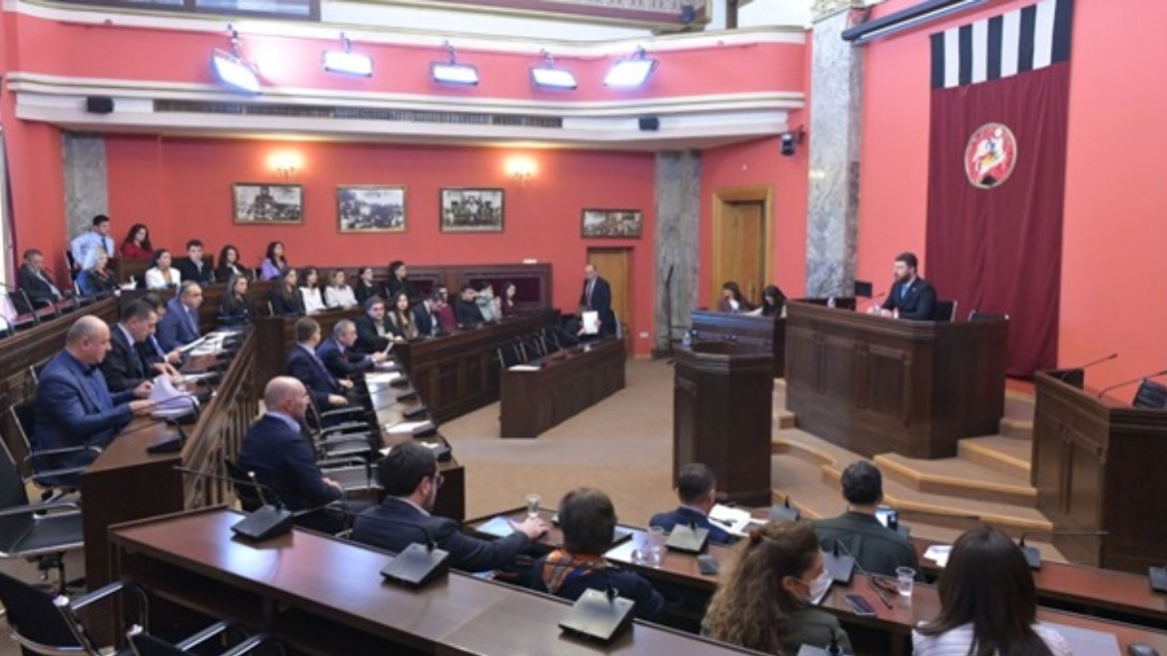
The amendments are part of a broader legislative package already adopted in the first reading and now being discussed article by article in parliament.
Who is behind the initiative
The proposal was presented by Archil Gorduladze, chair of parliament’s Legal Affairs Committee and a member of Georgian Dream. Prime Minister Irakli Kobakhidze has publicly defended the initiative, arguing that the state must respond when individuals or groups question the legitimacy of constitutional institutions without presenting evidence.
The government insists the law does not target freedom of expression and says a clear line will remain between speech and criminal conduct.
Why now?
The timing is politically sensitive. Since the 2024 parliamentary elections, opposition groups and segments of civil society have argued that the vote was flawed and continue to describe both the results and the government as illegitimate. Several legal complaints alleging violations - including concerns over ballot secrecy - remain under review.
Government officials argue that persistent claims of illegitimacy amount to sabotage of the constitutional order. Critics counter that introducing criminal liability in response to “non-recognition” signals insecurity rather than strength.
Tamara Chergoleishvili, leader of the opposition Federalists party, said the law reflects a crisis of legitimacy. “When you need to force people to recognise you, it means you know your legitimacy has been undermined,” she stated.
Concerns over vagueness and scope
Legal experts and rights groups say the draft’s wording is broad and could allow for wide interpretation of what constitutes a “constitutional threat”. The Public Defender of Georgia has warned that the amendments may conflict with international standards on freedom of expression and with Georgia’s own constitution.
In a formal statement, the Ombudsman’s Office said it will assess the final version of the law and may challenge it before the Constitutional Court if grounds exist.
Critics argue that vague language could enable authorities to classify political speech or protest activity as criminal extremism, depending on how the law is enforced.
Broader political context
Georgia formally holds EU candidate status and has long declared European integration a strategic goal. However, relations with several Western partners have become strained over concerns about the rule of law, media freedom and recent legislative initiatives.
Opposition parties accuse Georgian Dream of drifting away from democratic standards while using European examples selectively to justify controversial reforms. The government rejects these claims and says it is acting to protect stability and sovereignty.
What happens next
The bill is still under parliamentary consideration. If adopted, it would mark a significant expansion of criminal liability in the political sphere.
Much will depend on how the law is implemented in practice. The Ombudsman’s potential appeal to the Constitutional Court, and reactions from European institutions, could shape the next phase.
For now, the debate over “extremism” reflects a deeper struggle in Georgia - not only over legal definitions, but over trust, legitimacy and the country’s political direction.















What is your opinion on this topic?
Leave the first comment