




11:16 CET
Nuclear security
Georgia arrests man over attempted $700,000 uranium sale
Georgia has detained a man ...


A freight train carrying with Russian grain has departed from Bilajari station in Azerbaijan, heading to Armenia via transit routes through Georgia.
The 25-wagon train is transporting 1,746 tonnes of grain and will cross Georgian territory before arriving at Armenia’s Dalarik station.
Since the start of these shipments, 285 wagons carrying about 19,900 tonnes of Russian grain have been delivered to Armenia through Azerbaijani transit corridors.
The latest delivery forms part of a steady flow of Russian agricultural cargo moving to Armenia via Azerbaijan.
The move follows President Ilham Aliyev’s October 2025 decision to lift transit restrictions on cargo destined for Armenia, which had been in place during the period of Armenian occupation of Azerbaijani territories. Since then, both direct and transit rail shipments along the route have been operating smoothly.
The expanding grain corridor highlights deeper economic interaction between Azerbaijan and Armenia, even as political relations remain complex. Analysts note that increased transit traffic raises broader questions about Georgia’s traditional role as a regional transit hub.
At the same time, trade links between Baku and Yerevan are gradually diversifying. In 2025, Azerbaijan exported $788,000 worth of fuel to Armenia with no recorded reciprocal imports, highlighting Azerbaijan’s growing importance as a supplier and transit partner.
Energy cooperation is also expanding, with Russian liquefied gas transit through Azerbaijan increasingly viewed as strategically significant for Armenia.
Economists say rising trade and transit volumes could serve as a practical confidence-building mechanism between the two South Caucasus neighbours.
With grain, energy and other commodities increasingly moving across Azerbaijani territory, Baku is positioning itself as a central logistics hub in the region, while Armenia gains additional supply routes and Russia secures alternative pathways for its exports.
Political analyst Fuad Karimli told AnewZ that the latest shipment highlights a long-standing vulnerability in Armenia’s supply chains. "In terms of Armenia's food security, this is kind of a reliability issue," he said, noting that repeated disruptions at the Upper Lars crossing have exposed how weather and traffic bottlenecks can interrupt essential imports. The new corridor through Azerbaijan, he added, helps Armenia "sustain that reliable supply of essential goods."
Karimli argues that the broader significance goes beyond the commodities themselves. "It's not really just about economic trade. It's more of a symbolic act," he said. The fact that Russian goods are moving through Azerbaijan to Armenia shows, in his words, that "although we've had this whole three-decade conflict, now we can move past it" and open the door for wider regional trade, including participation by third countries.
He says the potential economic effects for Armenia are twofold. "Increased trade will increase economic activity within Armenia," especially as communication lines expand not only with Azerbaijan but "possibly in the future with Turkey as well." But Karimli emphasises the second dimension: symbolism. It signals to global investors that "the South Caucasus is no more a region of conflict, but a region of opportunity," raising the question, "why not invest?"
On the political dynamics behind these exchanges, Karimli describes a blend of pragmatism and political intent. "There is a pragmatic side to all trade deals," he said. Still, without political will from both sides, this trade deal wouldn't have happened." Combined, he believes these factors strengthen economic interdependence and "show to the world that the situation is really changing."
Karimli also warns of risks that could slow progress. The most immediate, he says, stems from Armenia's domestic political debate. Constitutional changes related to territorial references remain unresolved, and "this is one of the risks that can pose to the peace process right now." He adds that some regional actors "sadly wouldn't want to see a peaceful and prosperous South Caucasus" and may prefer a frozen conflict to linger.
Looking ahead, Karimli points to diversification as the key indicator. Current shipments are largely essential goods such as grain and petroleum products, which he says are "beneficial for Armenia in terms of decreasing prices locally." But he notes that attention should also turn to the Türkiye-Armenia land crossing, where there are "talks that it might open soon," calling it a potentially significant step for regional connectivity.

Georgia has detained a man ...
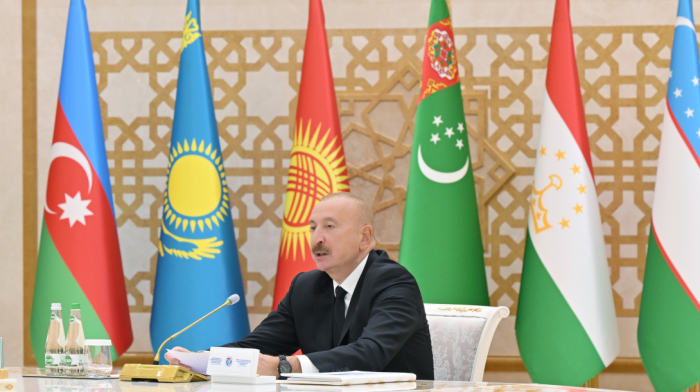
Azerbaijan and the five Central Asian states have signed two key documents at the 8th Consultative Meeting of Heads of State in Turkmenbashi, forma...
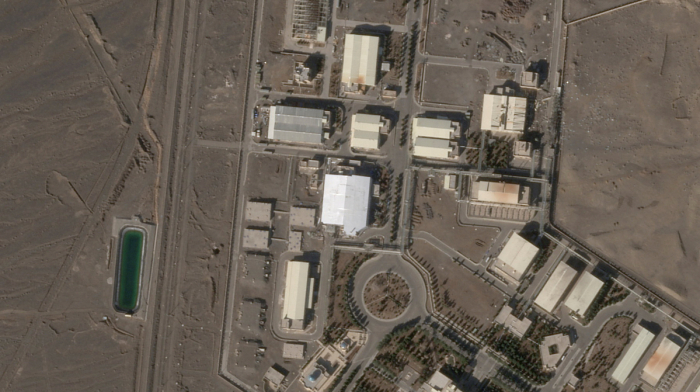
U.S. Vice President JD Vance told Reuters on Monday (5 October) that ...

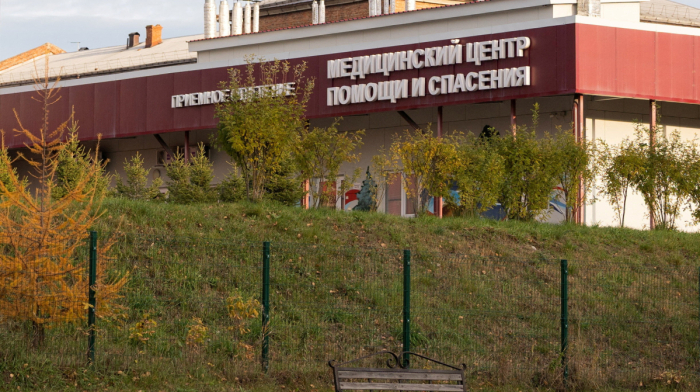
Russia's health watchdog said on Tuesday that no cases of plague had been detected among anyone who had come into contact with a Siberian plague institute laboratory worker who died last week, and locals said their lives had barely been disrupted.

Russia struck Ukraine overnight in one of the biggest attacks of the conflict, killing at least 19 people, Kyiv's Foreign Ministry said on Wednesday. Around 70 missiles were fired at Ukraine during the attack, as well as drones, the Ministry said.
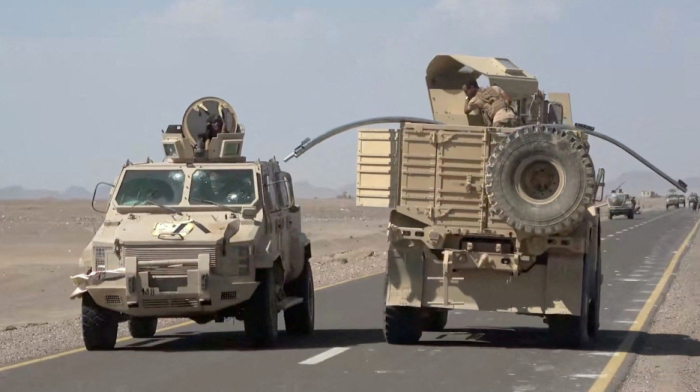
The Saudi-led coalition says it has carried out a series of military operations against Houthi targets in Yemen after attacks on two Saudi airports left three people dead and dozens injured.
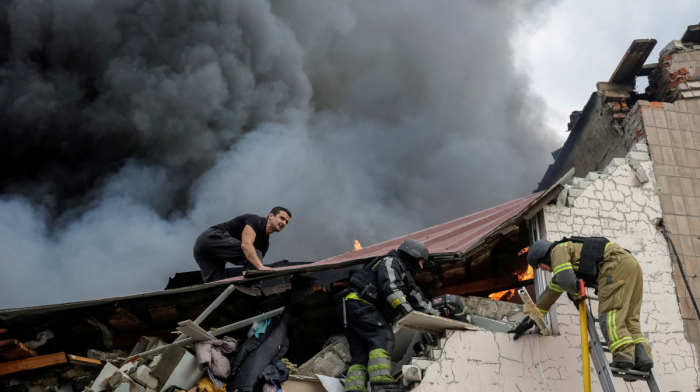
A large Ukrainian drone attack on Moscow and the surrounding region has killed two people, damaged homes and sparked a major fire at a key fuel facility, according to Russian officials and military bloggers.
Azerbaijan and the five Central Asian states have signed two key documents at the 8th Consultative Meeting of Heads of State in Turkmenbashi, formalising a broader framework for regional cooperation in transport, trade, energy, digitalisation and security.
Georgia has detained a man who planned to sell uranium-238 to a foreign national for $700,000, the national security service said on Wednesday.
Azerbaijan and the five Central Asian states have signed two key documents at the 8th Consultative Meeting of Heads of State in Turkmenbashi, formalising a broader framework for regional cooperation in transport, trade, energy, digitalisation and security.
U.S. Vice President JD Vance told Reuters on Monday (5 October) that Iran must make a “meaningful” reduction in its uranium enrichment capacity to satisfy U.S. demands and end the countries' seven-month war.
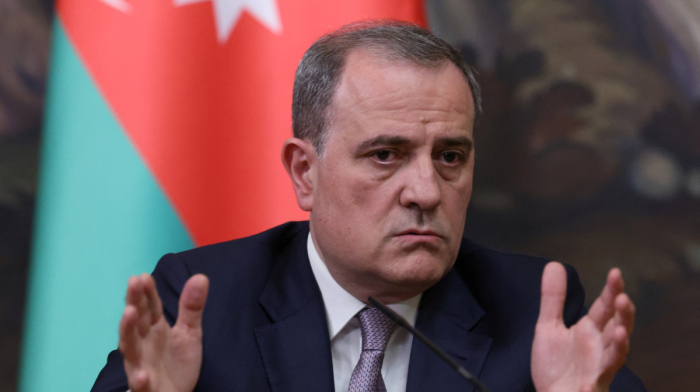
Azerbaijan’s Foreign Minister Jeyhun Bayramov has called for further integration of infrastructure between regional countries to bolster the Middle Corridor trade and logistics network.
The Saudi-led coalition says it has carried out a series of military operations against Houthi targets in Yemen after attacks on two Saudi airports left three people dead and dozens injured.
You can download the AnewZ application from Play Store and the App Store.




What is your opinion on this topic?
Leave the first comment