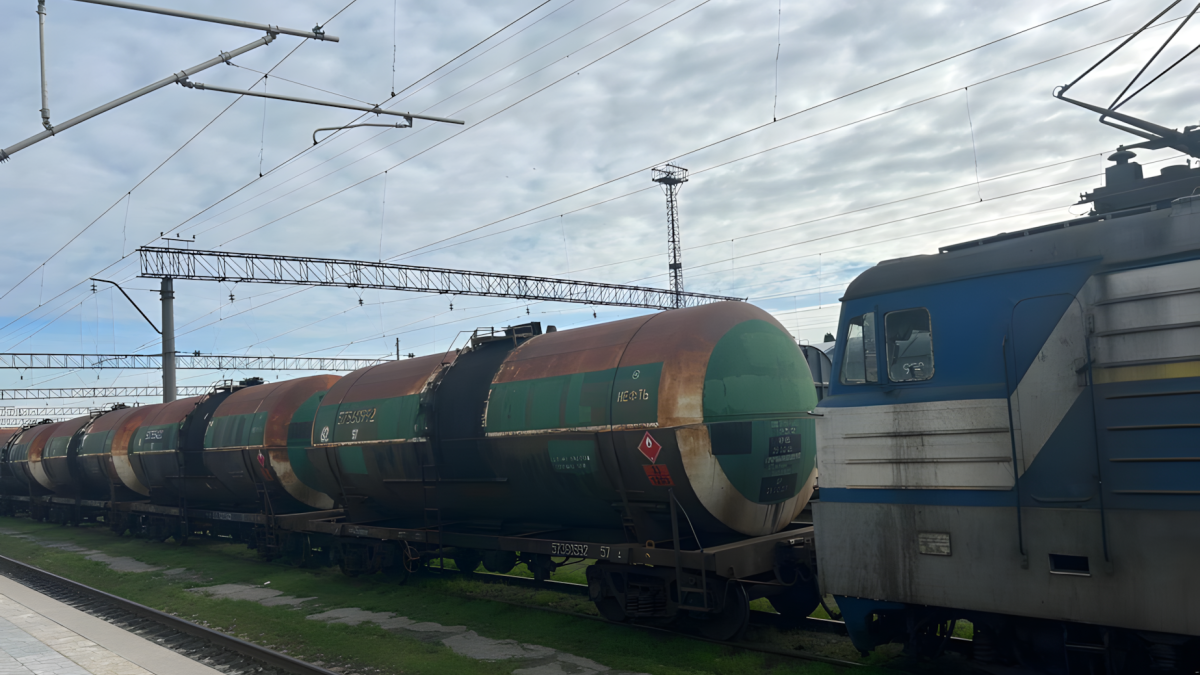
Azerbaijan has commenced direct energy transfers to Armenia, shipping 1,220 tons of AI-95 gasoline in late December. The flow intensified in January 2026 with the delivery of a further 3,677 tons of petrol and diesel, signaling a historic resumption of energy trade.
According to the State Customs Committee of Azerbaijan, the country exported goods worth $788,800 to Armenia in 2025.
The trade, which is comprised entirely of fuel supplies, represents the first acknowledged commercial interaction of this scale between Baku and Yerevan since the collapse of the Soviet Union.
The data highlights a strictly one-way economic channel, with the Committee noting that "in 2025, no exports were made from Armenia to Azerbaijan," underscoring Baku's dominant position as the region's energy supplier.
The release of these specific trade figures provides a rare glimpse into the practical implementation of the "opening of communications" that has been discussed in abstract terms since the end of the Second Karabakh War.
The shipments began late last year, with the first significant tranche recorded on December 18, 2025. On this date, Azerbaijan sent 1,220 tons of AI-95 grade motor fuel across the border.
This specific grade of gasoline, often used for higher-performance vehicles, suggests that the supply is intended for general civilian consumption or specific logistical hubs that are being reconnected to the regional grid.
On January 9, Armenia imported a further 1,742 tons of AI-95 grade gasoline, alongside 956 tons of diesel fuel. Diesel is particularly critical for industrial transport, heavy machinery, and agricultural use, suggesting that
Azerbaijani energy is now playing a role in the infrastructure or economic activities of its neighbour. Two days later, on January 11, another shipment of 979 tons of AI-92 grade motor fuel—the standard fuel used by the majority of vehicles in the post-Soviet space—was dispatched.
While the total monetary value of approximately $788,000 is modest by global energy trading standards, its symbolic weight is immense.
It requires agreed-upon transit routes, customs protocols, and safety guarantees between two militaries that were engaging in skirmishes only a few years ago.
The acceptance of Azerbaijani fuel by Yerevan also signals a shift in Armenia's energy diversification strategy.
Historically reliant on Russian gas and fuel imported via Georgia or Iran, Armenia's decision to purchase directly from Azerbaijan—likely due to lower logistics costs and geographic proximity—validates Baku's long-standing argument that economic integration offers the fastest route to stability.
The State Customs Committee did not specify the exact border crossing used, but analysts speculate these supplies may be facilitating transport along restored corridors in the border regions.
Geopolitical implications: From conflict to co-dependency
The resumption of trade comes against the backdrop of intense diplomatic efforts to finalise a peace treaty between Baku and Yerevan.
For decades, the relationship was defined by the occupation of Azerbaijani territories and a total economic blockade imposed by Azerbaijan and Türkiye on Armenia.
The reversal of this dynamic, where Azerbaijan is now a supplier rather than an adversary enforcing a blockade, demonstrates the new reality established after Azerbaijan restored full sovereignty over its territories in 2023.
This trade fits into President Ilham Aliyev's broader vision of the South Caucasus as an integrated economic zone, where peace is cemented not just by signatures on a treaty, but by pipelines, roads, and trade ledgers.
This development is likely to be welcomed by international mediators, including the United States and the European Union, who have long argued that economic interdependence reduces the likelihood of renewed military conflict.
By establishing a commercial dependency, however small initially, the risks of escalation are mitigated. For the Armenian government led by Nikol Pashinyan, accepting these imports is a politically sensitive but pragmatic calculation.
It acknowledges the geopolitical reality that Azerbaijan is the region's economic engine. Refusing cheaper, accessible fuel from a neighbour solely on political grounds becomes difficult for a landlocked nation facing economic challenges.
Furthermore, these exports serve as a confidence-building measure. If Azerbaijani tanker trucks or rail cars can safely deliver fuel to Armenian buyers, it proves that the security situation on the ground has stabilised significantly.
It also sets a precedent for future transit fees and customs duties, potentially paving the way for the activation of the Zangezur Corridor or other transport links that would connect Azerbaijan proper to its exclave of Nakhchivan via Armenia.
This fuel trade could be the pilot project for the much larger concept of turning the South Caucasus into a transit hub between East and West, a role Baku has aggressively pursued.
Shifting the regional energy map
Azerbaijan’s emergence as a fuel supplier to Armenia fundamentally alters the energy map of the South Caucasus.
For thirty years, Armenia’s energy security was almost entirely dependent on Russia, which owns much of Armenia’s energy infrastructure, including the gas distribution network and the Metsamor nuclear power plant.
By diversifying its import sources to include Azerbaijan, Yerevan is taking a small but significant step toward reducing that monolithic dependence.
While the current volumes are too low to displace Russian influence, the precedent is critical.
For Azerbaijan, this expands its role as a pan-regional energy guarantor. Already a critical supplier of oil and gas to Europe, Israel, Türkiye and Georgia, adding Armenia to its client list—even in a minor capacity, completes its dominance of the South Caucasus energy sector.
It reinforces the narrative that Azerbaijan is not merely a resource-rich state, but a stabilising force capable of powering the entire region.
The State Oil Company of Azerbaijan (SOCAR), which produces the AI-92, AI-95, and diesel fuels at its modernised Heydar Aliyev Oil Refinery in Baku, is effectively expanding its market reach into the last remaining "closed" market in the neighbourhood.
This trade also highlights the disparity between the two economies. The fact that the trade is entirely one-sided ($788,000 in exports from Azerbaijan, zero from Armenia) reflects the differing economic structures.
Azerbaijan is an export-oriented industrial economy, while Armenia has fewer commodities to offer its neighbour.
Future economic relations will likely continue to be defined by this asymmetry, with Azerbaijan supplying energy and capital, and Armenia potentially offering transit routes.


















What is your opinion on this topic?
Leave the first comment