The AnewZ Opinion section provides a platform for independent voices to share expert perspectives on global and regional issues. The views expressed are solely those of the authors and do not represent the official position of AnewZ
Speaking on Armenian public radio on 9 January, Armenia’s Minister of Economy Gevorg Papoyan made some important announcements for 2026. Among them, discussions between Yerevan and Baku over the range of products Armenia can potentially export to Azerbaijan.
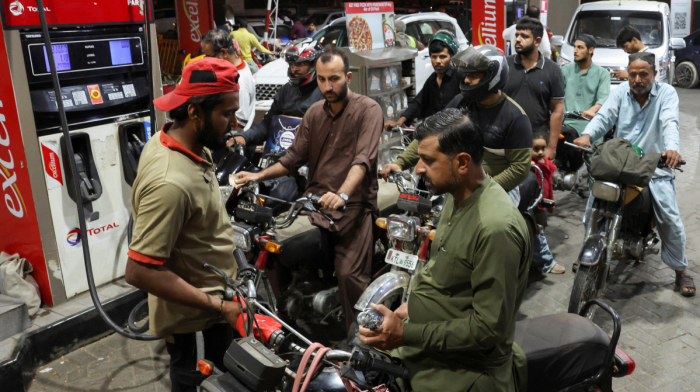
Papoyan also reiterated the historic significance of the start of petrol imports from Azerbaijan. He emphasised that it is a long-term initiative and that these imports are set to save about $40 million for Armenia by the end of the year, thanks to anticipated price declines. The minister’s comments were followed by news that another 2,700 tons of fuel (premium petrol and diesel) had been dispatched from Azerbaijan to Armenia.
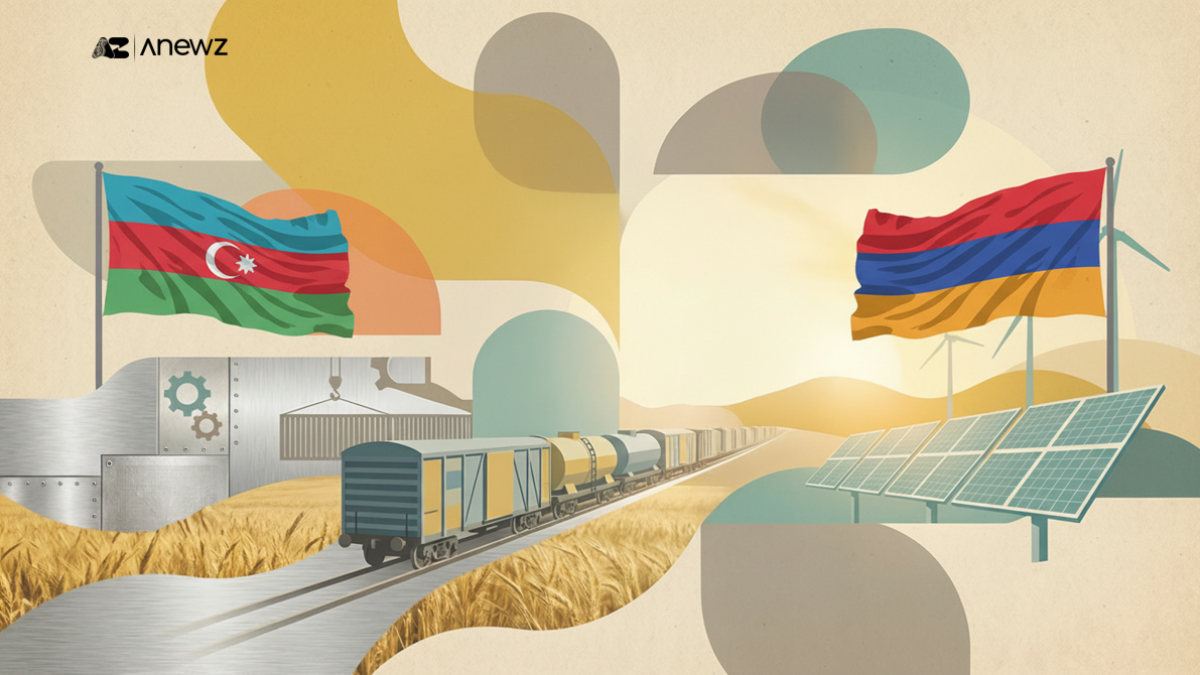
Oil products became, quite symbolically, the first goods Armenia imported directly from its decades-long opponent. A little earlier, in November 2025, Baku exploded an information bomb when it announced its decision to allow transit of wheat through its territory to Armenia. Since then, more than 3,000 tons of wheat from Russia and Kazakhstan have been transported through Azerbaijani territory. This is highly significant for Armenia, which relies almost entirely on imports for its wheat supply. Logistics through Georgia are often disrupted in winter by harsh weather or, occasionally, political tensions, making food security a recurring challenge.
To add a historic perspective, in 1992, Armenia, experiencing a severe shortage of critical goods, received vital supplies of bread from Türkiye, discontinued by Ankara after the intensification of Armenian aggression against Azerbaijan in 1993. From then on, Baku and Ankara completely shut their borders with Yerevan, which, despite its unwillingness to de-occupy Azerbaijani territories, had been referring to it as an “illegal blockade.”
Over time, this factor added to the deep-seated sense of hostility between the nations, exacerbating the conflict-propelled vicious circle. The total lack of mutual contacts led to the securitisation of virtually every aspect of relations, including goods that could have been exchanged between Armenia and Azerbaijan.
This is why it was hardly surprising that the Armenian opposition rushed to discredit this historic opening. Eager to exploit old hostilities and remain politically relevant, they portrayed imports and transit from Azerbaijan as either a security threat or a national disgrace. The arguments range from the scenario that “Baku would attempt to make Yerevan dependent on these goods” to alleged risks to food security. Others simply claimed that any form of cooperation is unacceptable as long as there are some Armenians detained in Baku. And yet, the world didn’t collapse with the arrival of the first train filled with grain, or a batch of premium AI-95/RON-95 petrol from Azerbaijan. While some people announced they would forgo buying petrol from Azerbaijan, lines reportedly formed at petrol stations, as it is sold at a lower price than Russian imports.
The first experiment with establishing economic ties between Baku and Yerevan can thus already be recognised as successful. While it was an important symbolic and confidence-building gesture, many more steps can be taken if the peace process maintains its current momentum. First of all, starting exports from Armenia to Azerbaijan will mean breaking another taboo. In his speech, Minister Papoyan listed several goods Armenia could export to Azerbaijan. These include aluminium foil, ferromolybdenum alloys—both areas in which Armenia is a key producer—along with textiles, brandy, and certain vegetables.
However, economic normalisation may reach a qualitatively new level if Baku and Yerevan proceed with joint economic initiatives and investments. For example, the parties may start with alternative energy, which offers several geographical and reputational advantages that could make it an optimal frontrunner. Both countries have recently adopted ambitious programmes for alternative energy transition and see it as an important tool for improving infrastructural security by diversifying energy sources. Major national clusters for alternative energy development are adjacent to each other: East Zangezur in Azerbaijan and Syunik province of Armenia. These regions share important physical characteristics, making the production of solar and wind energy quite beneficial. Building an interconnected grid can help the two countries boost supply flexibility and resilience against occasional disruptions; green energy exports can also be considered.
Another factor encouraging economic cooperation is the potential for greater international exposure. On their own, Azerbaijan and Armenia are relatively small markets. But together—especially if Georgia is included—they form a dynamic region with strategic access to multiple areas. By working together, these countries could attract major international investors and partners, giving a significant boost to the economies of the South Caucasus.
Moreover, such a development strategy would perfectly fit the major global trend in the era of heightened uncertainty and proliferation of conflict - replacing globalisation with regionalisation. The crises of 2020 have emphasised the vulnerability of global supply chains, especially as the great-power struggle makes a dramatic comeback after 30 years dominated by an end-of-history mindset. Building reliable, efficient regional clusters that can meet their members’ economic needs is a sine qua non for stability and prosperity.
History has shown that economic cooperation and integration have driven post-conflict reconciliation. The EU, whose history dates back to the initiative of recent archenemies, France and Germany, to launch the Coal and Steel Community, is the most famous success story. But there is plenty of evidence suggesting the same. One of the most extensive studies on this topic was conducted in 2009 by Korean researchers Jong-Wha Lee and Ju Hyun Pyun. Based on a large dataset of 243,225 country-pair observations from 1950 to 2000, the study found that stronger trade ties between countries significantly promote peace. In South-East Asia, the dramatic decline in tensions between countries in the region observed since the 1990’s directly corresponds to their economic integration, supported by ASEAN.
The most obvious explanation is that governments whose countries are economically interdependent are much less likely to escalate dangerously, as they would be unlikely to forgo the benefits of peace. However, this is only part of the story, and building peace between the countries after decades of conflict requires a different policy approach. How can it work? First, economic contacts are a relatively safe way to break the stigmas that hostile societies have about engaging with each other. They are definitely less risky than discussions about history or ideology, or attempts to talk honestly about war experiences.
At the same time, they are very effective in forming social groups that directly benefit from peace and are interested in its survival and institutionalisation. Moreover, activities “on the ground”, in contrast to expert or media dialogues, bring together people who share professional expertise and work side by side, thus breaking stereotypes and creating a positive blueprint that could be extended to other contexts and sectors. Finally, there is a definite correlation between security and economic unions that can work in both ways. Once countries expand their economic cooperation, they tend to develop a more aligned vision of security interests, which increases the likelihood of comprehensive normalisation.
Of course, Azerbaijan and Armenia are still at the beginning of a potentially long way. Its success depends on a number of circumstances, most primarily- the construction of TRIPP (Trump Route for International Peace and Prosperity), the opening of the border, and the signing of the peace treaty. However, the messages recently coming from both capitals bring rays of hope to the region exhausted by conflicts and instability. President Aliyev’s recent promise that the current peace agenda can bring Yerevan out of the deadlock shows that Azerbaijan seeks an irreversible, robust peace process and offers a glimpse of how the South Caucasus may look in the future if Baku and Yerevan keep up the spirit of reconciliation.














What is your opinion on this topic?
Leave the first comment