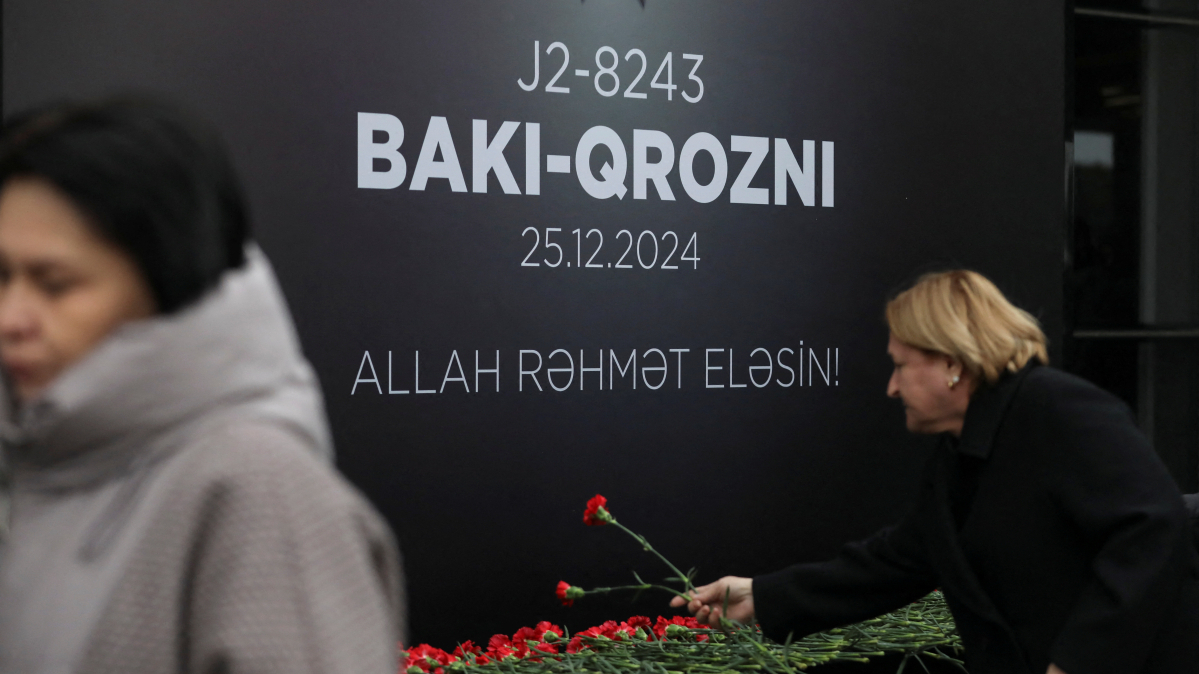
It’s been a year since an Azerbaijan Airlines plane crashed near Aktau, Kazakhstan, killing 38 people. Relatives and loved ones mourn the victims, as authorities near the final stage of their investigation.
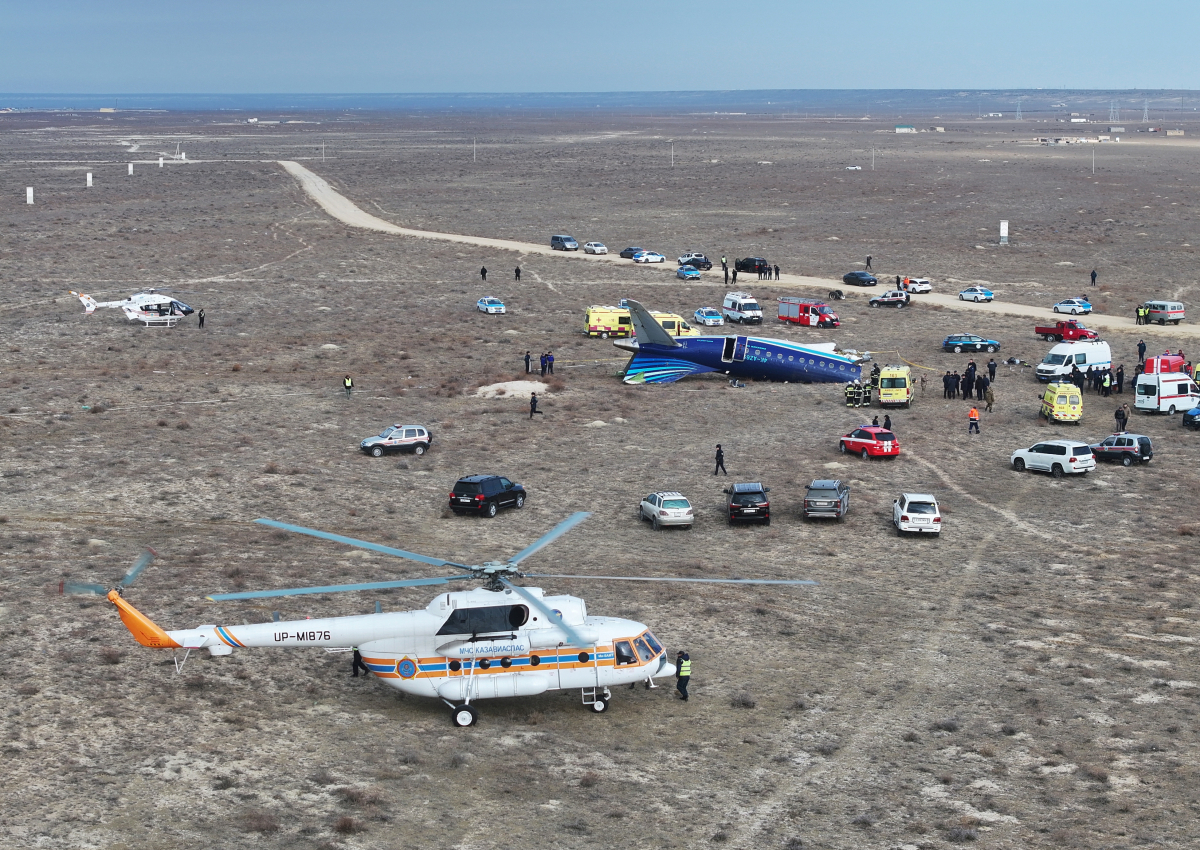
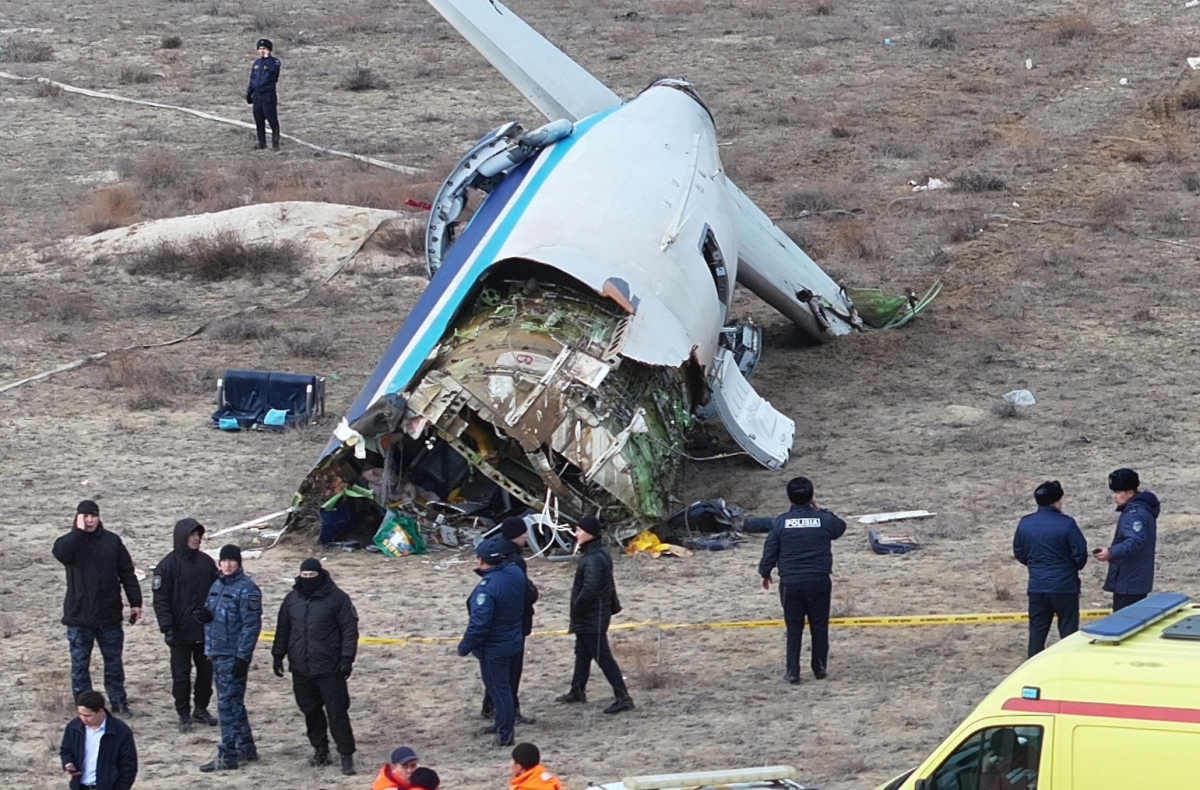
Around 30 kilometres from the city of Aktau the quiet desert landscape still bears the memory of tragedy.
On 25 December 2024, the flight, an Embraer 190‑100 IGW registered 4K‑AZ65, departed Baku, Azerbaijan, bound for Grozny, Russia, carrying 67 people.
The journey was initially routine, but while over Russian airspace, the aircraft experienced system failures, including the loss of GPS navigation and communications. Passengers reportedly heard a loud bang at this stage, indicating possible damage to the aircraft.
The crew attempted to land at Grozny Airport but were unable to do so safely. With systems failing and flight control compromised, the pilots diverted toward Aktau Airport in Kazakhstan for an emergency landing.
According to preliminary reports, primary control systems failed at 05:13 UTC, leaving the crew with severely limited manoeuvrability.
As the aircraft approached Aktau, communications with air traffic control were lost at 10:28 local time, shortly before the aircraft struck the ground about 3 kilometres from the runway. The plane impacted with its right wing first, tumbling and exploding upon collision, scattering debris across the desert landscape.
Among the 67 people on board, 38 were killed, including two pilots and a flight attendant, while 29 survived, many suffering serious injuries.
Survivors seated toward the rear of the aircraft were reportedly more likely to escape serious harm.
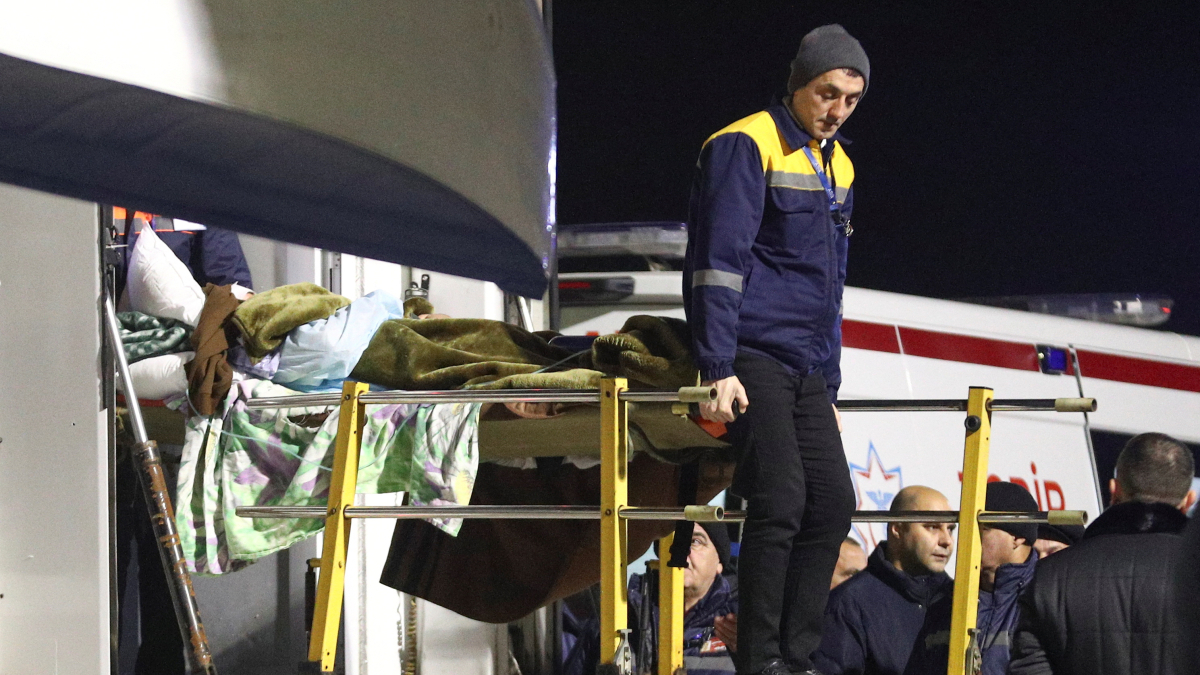
Emergency services were on site within minutes, extinguishing fires and assisting survivors. The crews worked around the clock to treat the injured and recover remains.
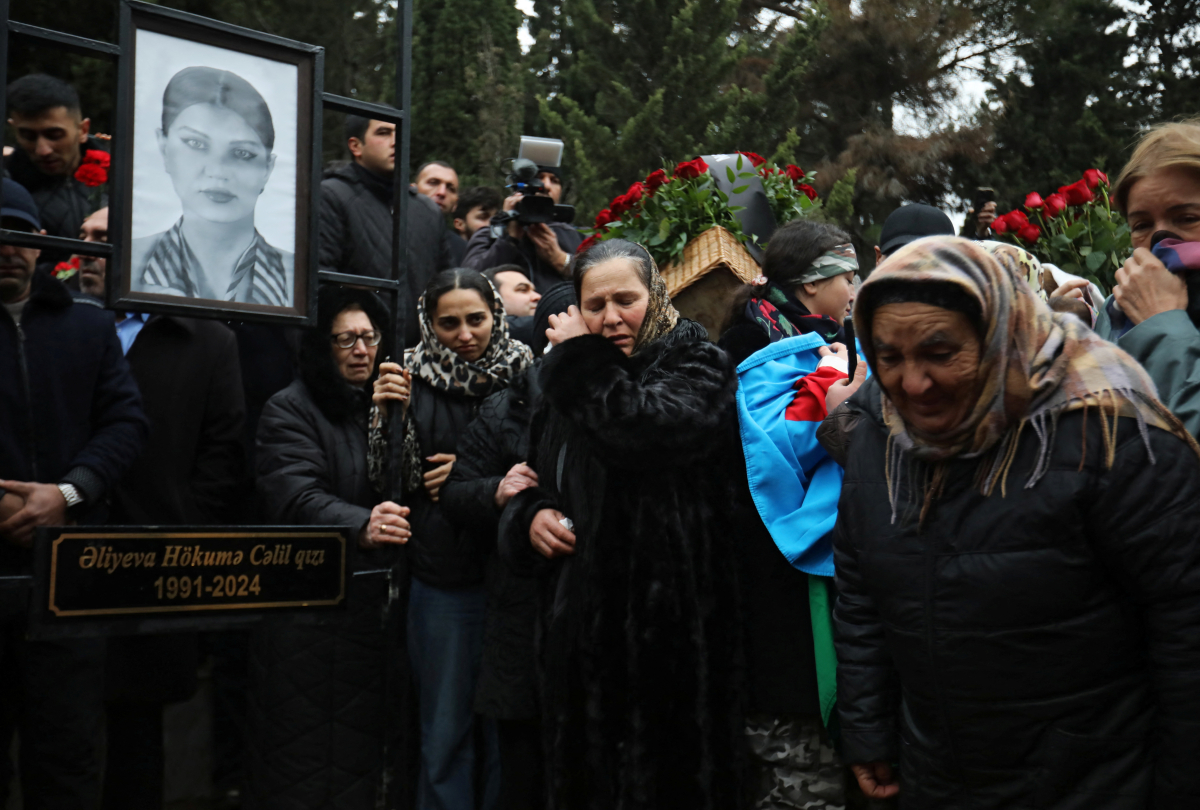
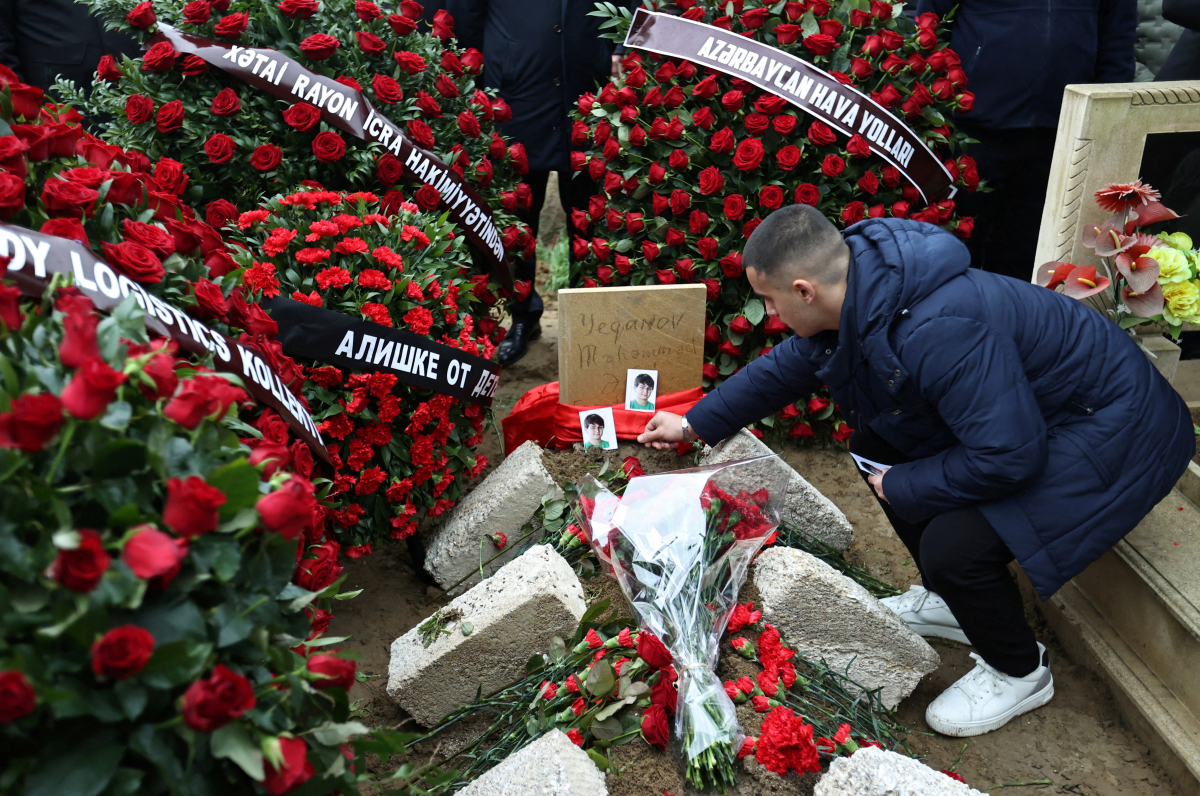
A year later relatives of the victims return to the crash site, they lay flowers and remember those who lost their lives on what was meant to be a routine holiday flight. These emotional memorials underscore the deep impact of the tragedy on families and communities.
Heroic crew
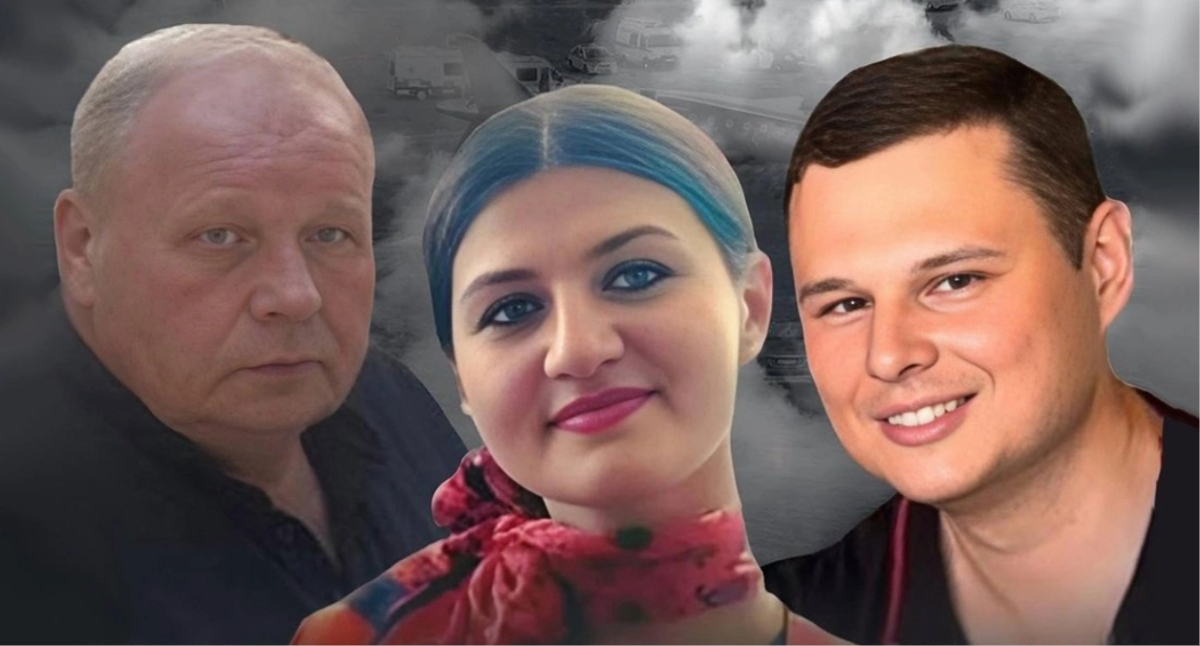
The flight crew aboard Azerbaijan Airlines Flight J2‑8243 comprised five Azerbaijanis. Captain Igor Kshnyakin and First Officer Aleksandr Kalyaninov were in command, supported by senior flight attendant Hokuma Aliyeva and cabin crew Zulfugar Asadov and Aydan Rahimli.
Captain Igor Ivanovich Kshnyakin was born in 1962 in Baku.
He began his career in 1982 as a second pilot on an An‑2 with the Yevlakh Aviation Squadron. In 2013, he became captain of Embraer 170/190 aircraft at Azerbaijan Airlines, ultimately logging 15,139 flight hours, including 11,180 as captain, with over 7,000 on the Embraer 190.
First Officer Alexandr Georgievich Kalyaninov, born in 1992 in Baku, served as co-pilot on Azerbaijan Airlines Flight J2-8243.
A graduate of the Baku European Lyceum, he later earned a master’s degree in aviation transport from the National Aviation University of Ukraine, specialising in flight operations during his time at the Kropyvnytskyi Flight Academy.
Hokuma Jalil gizi Aliyeva, the senior flight attendant on Azerbaijan Airlines Flight J2-8243 was born in 1991 in Susuzlug, Kalbajar district of Azerbaijan.
She had served with Azerbaijan Airlines since 2016, dedicating her professional life to ensuring passenger safety and comfort.
According to accounts of the survivors, in the final moments before the crash, Hokuma Aliyeva was heard reassuring passengers, trying to keep calm amid growing alarm and fear on board.
A recording shared by the Ministry of Foreign Affairs of Azerbaijan captured her voice as she repeatedly told passengers to fasten their seatbelts and assured them that “everything will be fine,” a phrase that has since become a poignant symbol of her courage and composure in the face of catastrophe.
Survivors and official accounts describe how her calming presence helped to steady passengers during the chaotic descent, providing comfort even as the aircraft’s condition deteriorated.
On 25 December 2024, in a final act of courage, Captain Igor Kshnyakin, First Officer Aleksandr Kalyaninov and Senior Flight Attendant Hokuma Aliyeva tried to save the aircraft from crashing, but tragically lost their lives in doing so.
Following the tragedy, they were all laid to rest at the II Alley of Honour in Baku, on 29 December 2024, with state honours recognising their service and sacrifice.
In recognition for their bravery and dedication during the fatal flight Igor Kshnyakin, Aleksandr Kalyaninov and Hokuma Aliyeva, were posthumously awarded the titles of National Heros of Azerbaijan and the "Rashadat" (Courage) medals by presidential decree on 29 December 2024.
The surviving crew flight members Zulfugar Asadov and Aidan Rahimli, have been awarded the 1st Class "Rashadat" (Courage) Order.
Survivors
Data provided by investigators showed that 37 of the passengers were Azerbaijani citizens, 16 were Russian, 6 were Kazakh, and 3 were Kyrgyz.
All three Kyrgyz passengers survived the crash, while casualties were reported among the other nationalities.
Emergency services transported survivors to hospitals in the Mangystau region, where many were treated for head injuries, fractures and severe shock.
Several survivors later gave accounts of the moments before the crash.
One passenger, Subhonkul Rakhimov, told Reuters that “after the bang … I thought the plane was going to fall apart,” adding that it became clear the aircraft had suffered serious damage.
Another passenger described hearing loud explosions and said fear spread rapidly through the cabin as the plane lost stability.
Another passenger, Vafa Shabanova, also recounted the panic inside the cabin.
She described hearing screams and realising that something terrible had occurred, adding to the chaos as the aircraft struggled to maintain stability. Survivors also recalled the actions of the cabin crew as the situation deteriorated.
One account described how passengers were instructed to move towards the rear of the aircraft as the crew attempted to manage the emergency.
Thirteen-year-old Muhammadali Farid oglu Yeganov was the youngest among the victims of the crash.
He was travelling from Baku to Grozny to spend the New Year holidays with his mother when the aircraft went down.
Remembered as a promising young athlete and a member of the Ganjlik football club, Muhammadali was described by friends and family as a cheerful and bright boy.
His mother, Rabia Bayramova, shared her grief, writing that each day brought “the reminder of your eternal, irreplaceable absence… I miss you, my Muhammadali.”
He was later laid to rest in Baku, where family, classmates and community members attended his funeral.
Among the young survivors, Salikhat Djerova marked her 17th birthday in hospital in January 2025.
A spokesperson for the clinic said that working with patients like her was “the strangest work, when at night you cry, and in the morning you have a reason to smile,” underscoring both the tragedy and the resilience of those injured.
Investigation
According to latest reports from Kazakh authorities, the official probe into the crash of Azerbaijan Airlines Flight J2‑8243 near Aktau has now reached its final phase.
Deputy Prime Minister Kanat Bozumbayev said the Ministry of Transport has completed the technical stage of the inquiry and investigators are awaiting final reports from developers and operators of the aircraft’s aeronautical systems before conclusions can be drawn.
He told reporters that the investigation could be finalised later this year or in early January 2026, with the final report to be published online once all data has been reviewed.
In earlier stages of the official investigation, Kazakhstan’s preliminary report published in February 2025 documented damage to multiple sections of the Embraer 190 consistent with impact from “external objects” rather than an internal mechanical failure.
The report noted damage to the fuselage, stabilisers and control surfaces, and confirmed that the aircraft’s hydraulic system had been compromised — findings aligned with a strike from outside the aircraft.
Russia’s Federal Air Transport Agency (Rosaviatsia) responded to the preliminary findings by stating that while the report identified damage from external interference, Russian investigators had not been given access to the foreign objects recovered from the aircraft to conduct independent analysis.
Rosaviatsia emphasised that Kazakhstan’s interim report did not include a formal cause of the crash and that work was still needed to determine the origin of the debris.
Azerbaijani and Kazakh officials have maintained that the aircraft was struck by shrapnel from Russian air defence fire occurring over Russian airspace near Grozny, citing both structural damage and data recovered from the plane’s flight recorders.
Baku’s position was reinforced by statements that the aircraft’s navigation systems were jammed and communications paralysed during the flight, complicating efforts to secure an emergency landing.
Azerbaijani President Ilham Aliyev said of the incident: “We can say with complete clarity that the plane was shot down by Russia. … We are not saying that it was done intentionally, but it was done.”
He added that, “unfortunately, for the first three days we heard nothing from Russia except delirious versions.”
On multiple occasions, Aliyev insisted Russia should publicly acknowledge responsibility.
“We know exactly what happened — and we can prove it. Moreover, we are confident that Russian officials also know what happened,” the President of Azerbaijan stated.
On 9 October 2025, in a rare public admission, Russian President Vladimir Putin acknowledged responsibility for the accident, stating that missiles fired by Russian air defences to intercept Ukrainian drones had exploded near the Azerbaijani aircraft and caused catastrophic damage.
“The Russian side will obviously do everything to provide compensation and give legal assessment to all responsible officials’ action,” he said.
“Of course, these words related to this tragedy, aimed at supporting — morally supporting — the families do not solve the main problem: we can’t bring back to life those who died as a result of the tragedy,” the Russian president added.
Putin also indicated that the missiles detonated close to the passenger jet due to a technical malfunction during air‑defence operations.
These developments mark a significant shift from earlier diplomatic reticence and suggest that the forthcoming final report — expected imminently — will be among the most comprehensive examinations of how external physical interference critically impaired Flight J2‑8243, leading to its tragic crash.
Interim statement
A document on the investigation into the aviation accident was issued on 25 December 2025, marking one year since the tragedy.
According to the statement, the investigation is being conducted by a special commission appointed by the Ministry of Transport of the Republic of Kazakhstan, which continues its work to determine the causes and contributing factors of the accident.
Representatives from Azerbaijan, Russia, and Brazil, as well as an observer from ICAO, are participating in the investigation.
The document reveals that the commission has collected and analysed a wide range of factual data, including information on the flight crew, air traffic controllers, operational documentation, flight preparation materials, meteorological data, and aircraft maintenance records.
Copies of the aircraft logbook and other flight-related documentation have also been obtained.
Both flight recorders were successfully recovered and analysed. Data from the Flight Data Recorder (FDR) were extracted and decoded, and the Cockpit Voice Recorder (CVR) was fully transcribed.
Investigators also conducted a detailed on-site examination of the crash location, documenting the spatial distribution of aircraft components, and carried out extensive photo and video recording.
Aircraft parts were collected and transported for further examination.
Multiple specialised forensic examinations were conducted, including trace, ballistic, explosive-technical, and fire analyses of foreign metallic objects found in the wreckage.
No traces of explosives were detected, and no evidence of explosion was found on three oxygen cylinders examined.
Further analysis of a hydraulic system No. 2 pipeline fragment revealed damage consistent with metal rupture caused by contact with solid external objects.
Investigators concluded that through-penetration damage could have been caused by metal fragments composed of iron-based alloys.
The investigation into the aircraft’s Central Maintenance Computer, conducted at the facilities of the manufacturer Honeywell International Inc, was inconclusive due to thermal damage.
Additional efforts are underway to recover data with the assistance of Delkin Devices Inc, the memory card manufacturer, in coordination with the authorised representative of the United States.
Analysis of data extracted from the aircraft’s GPS system modules has been completed and is currently under review.
Two dedicated working groups have been established as part of the investigation.
One group is analysing risk assessment procedures for flights over or near conflict zones, in line with ICAO Doc 10084, including the interaction between civil and military aviation sectors.
Documentation provided by the aviation authorities of Azerbaijan and Russia, as well as Azerbaijan Airlines, is being reviewed to assess compliance with existing regulations.
A second working group has completed a reconstruction of the hydraulic system No. 2 in Aktau to restore the spatial relationship of its components. Analysis of the reconstruction results is ongoing.
The investigation commission states that it is maintaining a balanced and objective approach, and that all conclusions will be based solely on verified facts.
The final investigation report will be published on the official website of the Ministry of Transport of the Republic of Kazakhstan once all remaining analyses are completed.
International response
The crash of Azerbaijan Airlines Flight J2‑8243 prompted condolences and reactions from leaders and governments around the world.
Kazakh President Kassym‑Jomart Tokayev offered official condolences to Azerbaijan following the crash, as did other heads of state.
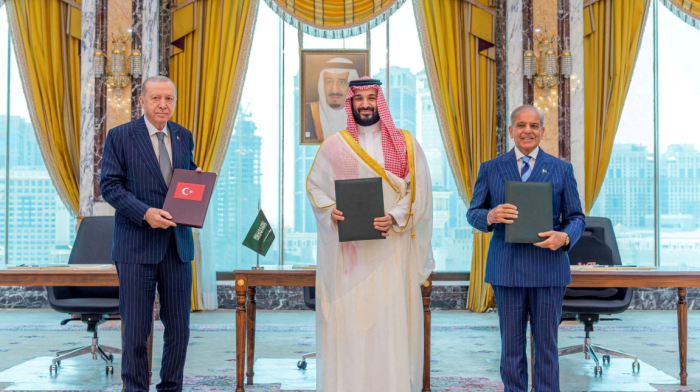
Turkish President Recep Tayyip Erdoğan, Serbian President Aleksandar Vučić, President of Tajikistan Emomali Rahmon, President of Belarus Aleksandr Lukashenko, President of Kyrgyzstan Sadyr Japarov and Pakistani Prime Minister Shehbaz Sharif were among those who conveyed sympathy to the families of the victims and wished a swift recovery to the injured, reflecting broad regional support.
Iranian President Masoud Pezeshkian, the Organisation of Turkic States and numerous foreign ministries and embassies also issued statements of condolence and solidarity with Azerbaijan following the tragedy.
Leaders beyond the region also responded.
Ukraine’s President Volodymyr Zelenskyy called for a “thorough investigation” into the crash and said that visual evidence at the site “points to Russia’s responsibility,” underscoring Kyiv’s interest in accountability for civilian aviation safety.
Poland’s Foreign Ministry issued a statement expressing “deepest condolences to the families and loved ones of the victims” and wishing a speedy recovery to those injured in the crash.
The crash had profound and lasting effects on Azerbaijan, Russia and the broader region.
It prompted Azerbaijan Airlines to temporarily adjust flight operations to Russian destinations, highlighted security concerns in regional airspace, and intensified public debate over aviation safety and cross‑border military activity.












What is your opinion on this topic?
Leave the first comment