Iran’s ambassador to Azerbaijan Mojtaba Demirchilou has outlined Tehran’s carefully calibrated positions on Azerbaijan’s relations with Israel and on major regional connectivity projects in an interview with AnewZ.
The ambassador acknowledged Azerbaijan’s sovereign right to determine its foreign partnerships, including its strategic relationship with Israel.
“Naturally, the sovereignty of the Republic of Azerbaijan allows it to establish relations with any side it chooses and this is its legitimate right,” he said.
At the same time, Demirchilou stressed that this principle is inseparable from Iran’s expectation that Azerbaijani territory will not be used in ways that could threaten Iranian security.
“As the highest officials of the Republic of Azerbaijan have stated, they will not allow their territory to be used against Iran. Naturally, we expect this to be the case,” he added.
The ambassador also expressed concern over what he described as attempts by Israeli officials to use visits to Baku as a platform for statements hostile to Iran, reflecting Tehran’s sensitivity not only to military realities but also to diplomatic signalling.
The remarks reveal Iran’s dual-track approach: formally respecting Azerbaijan’s sovereignty while drawing clear political and security red lines around Israel’s regional role.
A similar conditional logic shaped Demirchilou’s comments on regional transportation initiatives, including the TRIPP/Zangazur Corridor.
He said Iran supports projects that enhance economic cooperation, regional connectivity and development.
“Any plan in the field of transportation aims to preserve peace and stability in the region and contribute to economic development, we naturally support it,” he said.
However, Demirchilou repeatedly warned that Iran would oppose any initiative driven by external geopolitical objectives or directed against Iranian interests.
“If there is a plan that contains specific geopolitical objectives and is directed against Iran, then naturally Iran cannot tolerate such a matter,” he said.
When pressed for a clear endorsement of the TRIPP initiative itself, the ambassador reiterated the same formulation without offering a direct yes-or-no answer.
“Regardless of the name, if any plan in the field of transportation aims to preserve peace and stability in the region and contribute to economic development, we naturally support it,” he said.
The repeated ambiguity suggests Tehran’s intent to avoid openly opposing regional connectivity while retaining flexibility to challenge projects it views as strategically threatening.
The interview highlights an Iranian strategy defined less by outright opposition and more by careful qualification.
Tehran signals openness to cooperation and economic integration, but consistently frames its support as conditional, contingent on the absence of geopolitical motives.
For Azerbaijan, the remarks underline the diplomatic balancing act required to advance regional connectivity and strategic partnerships while managing the sensitivities of a neighbouring power whose acceptance remains cautious and closely guarded.
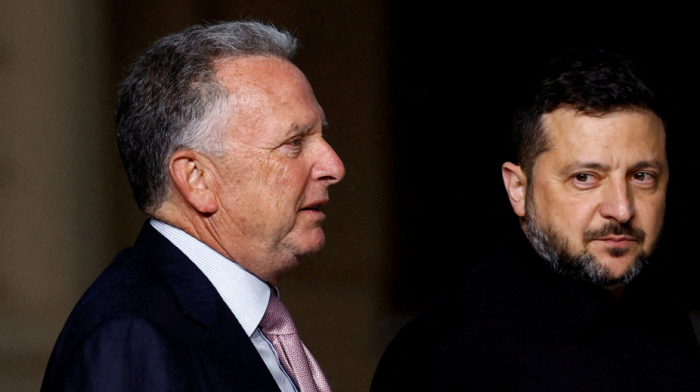
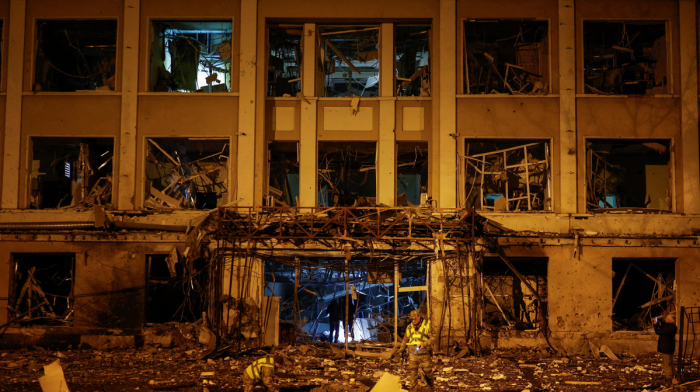
U.S. President Donald Trump has criticised Ukrainian President Volodymyr Zelenskyy for continuing to target Russia's energy infrastructure, while Russian strikes on Kyiv overnight killed at least one person and damaged a metro station.
The day after waiving sanctions and tariffs related to Russian exports, U.S. President Donald Trump said on Saturday he has yet to announce a final decision on the matter as Secretary of State Marco Rubio said officials want more time to evaluate the situation.
A Saudi AH-6i helicopter crashed in the Najran region of Saudi Arabia due to a technical malfunction, killing its two crew members, the Saudi-led coalition's spokesman Brigadier General Turki al-Maliki said in a statement on Sunday.
French President Emmanuel Macron has condemned the violence, looting and vandalism that erupted during cost-of-living protests across France. Prime Minister Sébastien Lecornu held crisis talks on Monday, calling for partial curfews and raising the possibility of a state of emergency.
An oil tanker caught fire after striking a naval mine in the southern part of the Strait of Hormuz, Iran’s Islamic Revolutionary Guard Corps (IRGC) Navy said late Sunday.
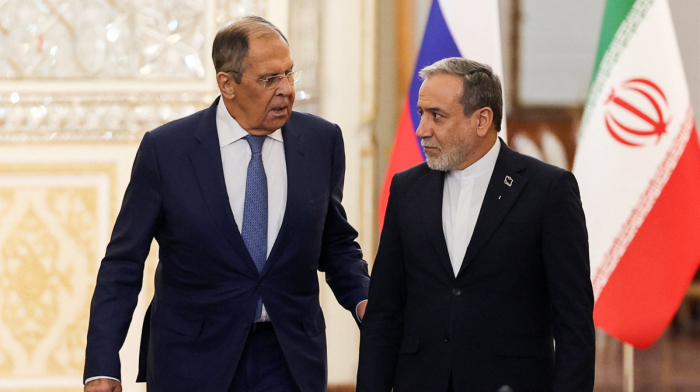
Iranian Foreign Minister Abbas Araghchi said regional issues should be resolved through diplomacy and blamed the United States for insecurity and tensions in the Strait of Hormuz, speaking at a joint news conference with Russian Foreign Minister Sergey Lavrov on Monday.
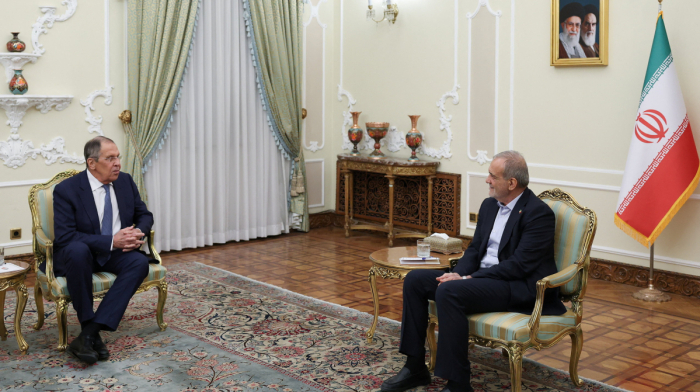
IranandRussia renewed calls for diplomatic solutions to end the ongoing regional conflict, while also pledging to deepen bilateral politicalandeconomiccooperation followingRussianForeignMinisterSergeyLavrov’svisittoTehranonMonday.
Türkiye is set to receive Russian diesel under a U.S.-backed agreement, Energy Minister Alparslan Bayraktar said on Sunday, as Ankara pushes ahead with plans to boost domestic gas production and reduce its reliance on imported energy.
An oil tanker caught fire after striking a naval mine in the southern part of the Strait of Hormuz, Iran’s Islamic Revolutionary Guard Corps (IRGC) Navy said late Sunday.
Azerbaijan exported $23.45 million worth of goods to Armenia between January and September 2026, according to data released by the State Customs Committee on 19 October.
Download the AnewZ app
You can download the AnewZ application from Play Store and the App Store.










What is your opinion on this topic?
Leave the first comment