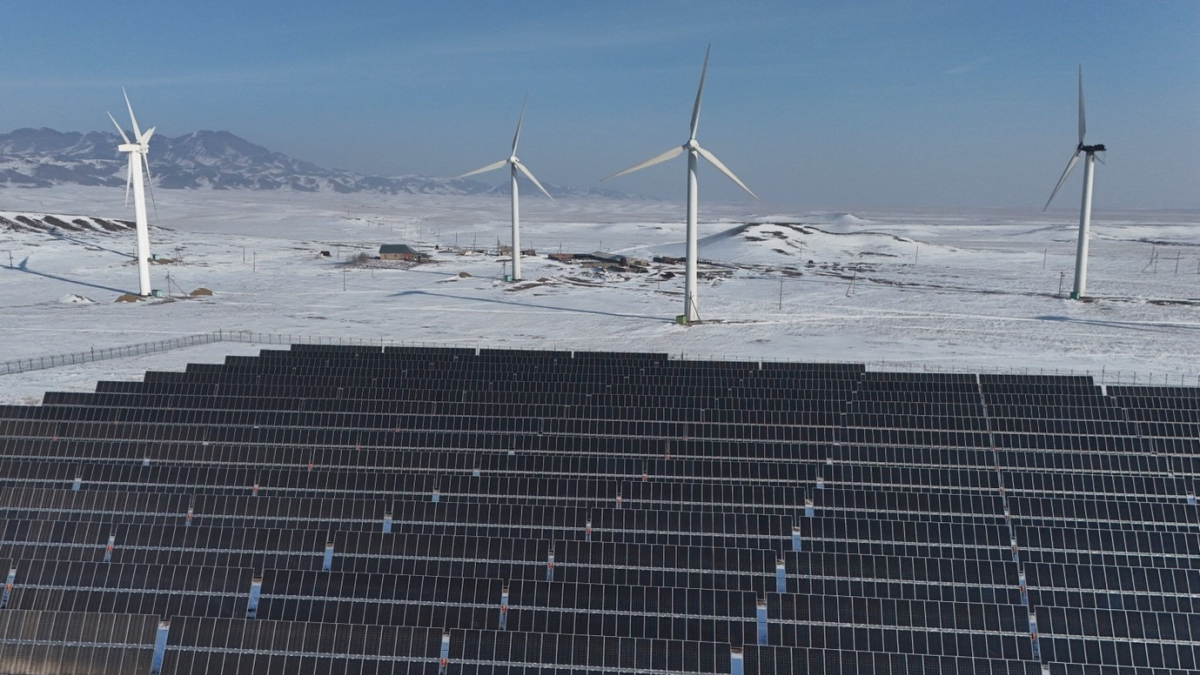
Central Asian countries are stepping up investment in renewable energy as governments across the region seek to strengthen energy security and prepare for mounting environmental pressures.
According to the Ministry of Energy of Kazakhstan, the country generated 2.3 billion kWh of electricity from renewable sources in the first quarter of 2026, a 15% increase year on year.
The government expects renewable generation to reach 8.8 billion kWh by the end of 2026 as it continues to expand its clean energy sector.
Ten new renewable energy facilities are scheduled to open in Kazakhstan this year, including four wind farms, five solar power plants and one hydroelectric station, with a combined capacity of 245 MW. Renewables accounted for 7% of Kazakhstan’s electricity generation in 2025, and authorities aim to raise that share to 15% by 2030.
Water shortages and demand pressures intensify
The push for renewables comes amid growing concerns over water scarcity and rising electricity demand across the region. A recent report by the Eurasian Fund for Stabilisation and Development warned that electricity demand could at least double by 2050, while water shortages may reach critical levels by 2040.
Many countries in the region, including Kyrgyzstan, already experience severe electricity shortages during winter and rely on costly fuel imports to stabilise their energy systems. Experts say energy and water challenges are becoming increasingly interconnected, forcing governments to seek long-term solutions that address both issues simultaneously.
The United Nations has previously warned that water shortages in the region could triple by 2040, causing annual economic losses of up to $2 billion.
Regional concerns have also grown over Afghanistan’s construction of the Qosh Tepa Canal, which diverts water from the Amu Darya River. Analysts estimate the canal could reduce the river’s flow by up to 12%, potentially affecting water supplies in Kazakhstan, Uzbekistan and Turkmenistan.
In this context, large hydroelectric projects such as the Kambarata-1 Hydropower Plant on the Naryn River are increasingly viewed as strategically important for both electricity generation and regional water management.
According to regional officials and development experts, the project could generate around 6 billion kWh of electricity annually - equivalent to roughly 40% of Kyrgyzstan’s current electricity supply.


















What is your opinion on this topic?
Leave the first comment