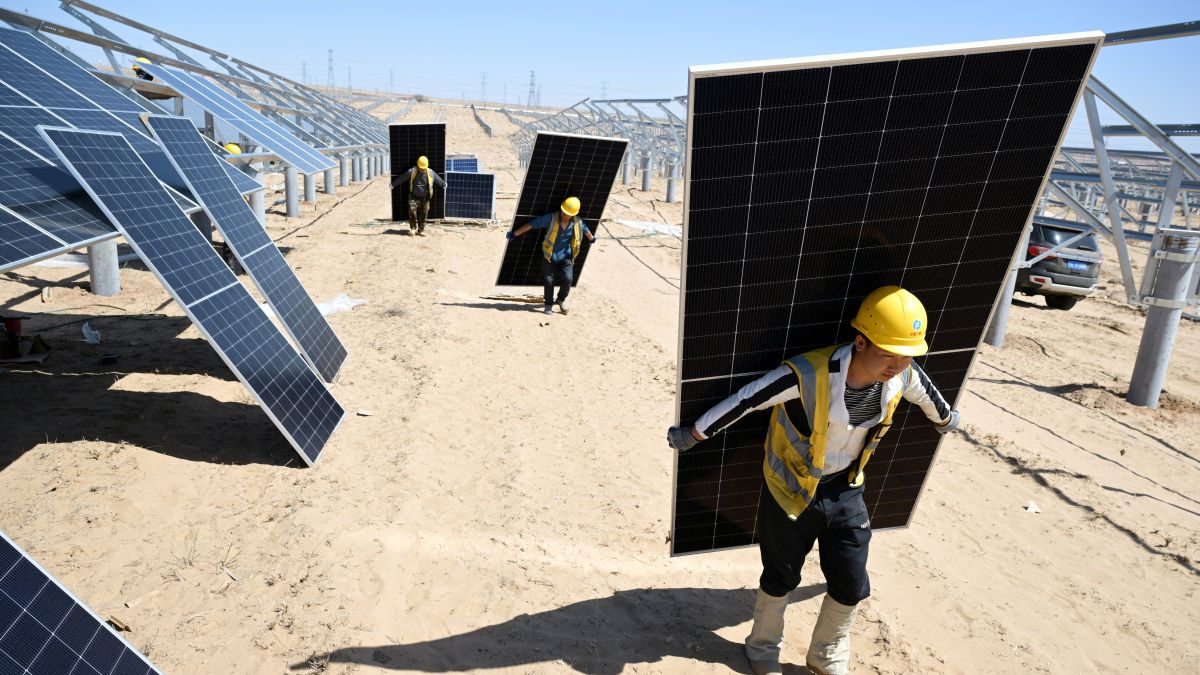
Construction has begun on a major new solar power project in Xizang, as China continues to expand its renewable energy capacity and push towards a greener future.
Located on the Qinghai-Tibet Plateau, the project will take advantage of the region’s unique natural conditions. Xizang receives strong and consistent sunlight throughout the year, while its high altitude means thinner air and lower pollution levels, allowing solar panels to generate electricity more efficiently than in many other regions. Vast stretches of open land also enable large-scale solar farms to be built without significant disruption to urban areas.
Supporting rising energy demand
Officials say the new facility will produce a significant amount of electricity, helping to meet rising energy demand while reducing dependence on coal and other fossil fuels. The power generated is expected to be transmitted to other parts of the country, supporting both local development and wider national energy needs.
The project also reflects China’s broader strategy to balance economic growth with environmental protection. In recent years, the country has invested heavily in solar, wind and hydropower, becoming a global leader in renewable energy capacity. Large-scale developments such as this are seen as essential to meeting long-term climate targets and improving air quality.
Challenges of high-altitude construction
However, building in Xizang is not without challenges. The region’s extreme weather - including strong winds, low temperatures and high levels of ultraviolet radiation - can make construction difficult. Workers and equipment must adapt to the high-altitude environment, which can slow progress and increase costs. Despite this, engineers are using advanced technology and more durable materials to ensure the project operates reliably over time.
Economic benefits for the region
Beyond energy production, the project is also expected to deliver economic benefits. It will create jobs during the construction phase and improve infrastructure in surrounding areas. In the long term, it may also support related industries and contribute to local development.
As work gets underway, the project is being seen as a major milestone in China’s renewable energy journey. It demonstrates how even remote and challenging regions such as Xizang can play an important role in the global transition towards cleaner and more sustainable energy sources.




















What is your opinion on this topic?
Leave the first comment