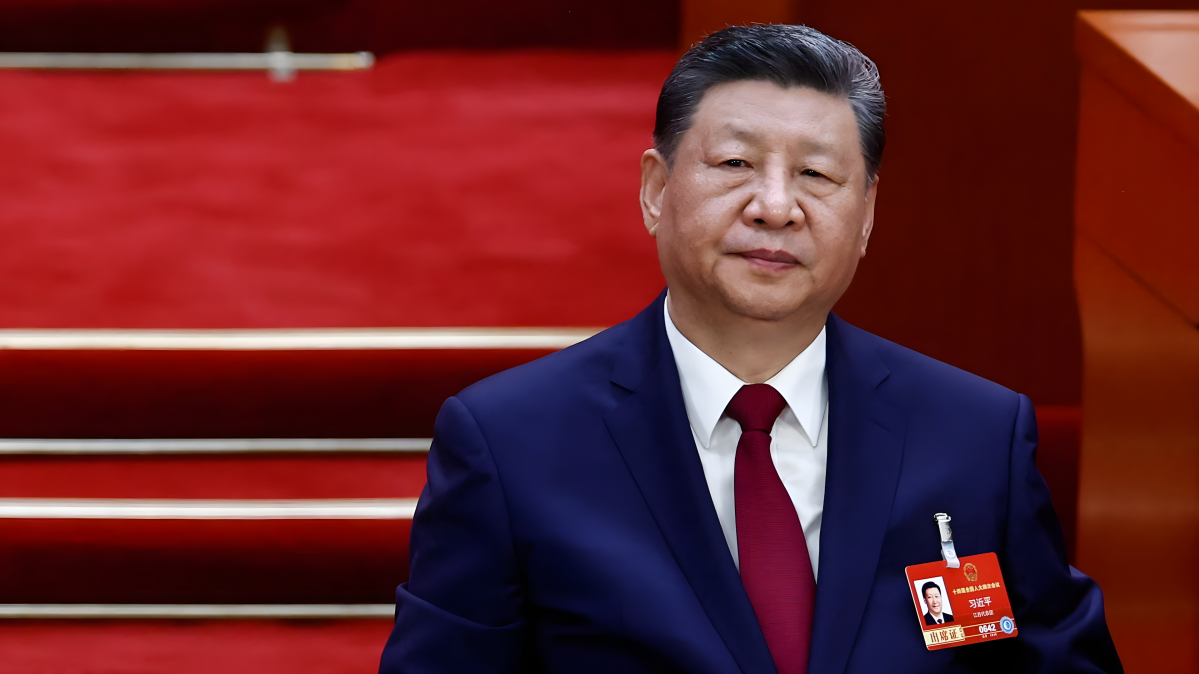
Chinese President Xi Jinping has ordered the accelerated development of a “new energy system” to safeguard national energy security, as the ongoing Iran conflict continues to trigger severe global energy shocks.
In a major policy address reported by state broadcaster CCTV on Monday, the leader of the world’s second-largest economy outlined a strategy balancing industrial demand with long-term climate goals. Xi emphasised hydropower expansion, ecological protection, and the safe, orderly rollout of nuclear energy.
“The Party Central Committee has gained a profound grasp of global energy development trends and made major decisions by advancing the new energy security strategy in depth,” Xi stated, referencing the supreme authority of the ruling Communist Party. The address framed energy independence not merely as an economic objective, but as a critical pillar of national defence.
While Xi did not explicitly name the Middle East conflict during his remarks, the geopolitical timing of the directive is clear. The U.S. and Iran have been engaged in a volatile five-week confrontation that has disrupted maritime traffic. Both sides are reportedly considering a Pakistani-brokered peace plan, even as Tehran resists international pressure to reopen the strategic Strait of Hormuz, through which roughly a fifth of the world’s oil flows.
The strategic cushion: coal and stockpiles
Despite instability in the Persian Gulf, analysts say China is relatively well positioned to absorb the current surge in global oil prices compared with Asian and European peers.
This resilience rests on a dual foundation. China has built substantial strategic petroleum reserves during periods of low prices. More importantly, its exposure to the Strait of Hormuz is limited, with imports through the route accounting for only about 5 per cent of total energy consumption.
Coal remains the cornerstone of China’s energy security, accounting for more than half of the country’s energy mix. “The path we took in being the first to develop wind and solar power has now proven to be forward-looking. At the same time, coal-fired power remains the foundation of our energy system and must continue to play its supporting role,” Xi said.
This stance underscores a central tension in global climate policy. China operates more than half of the world’s coal-fired power capacity, making it the largest carbon emitter. Western-led climate initiatives have long struggled to reconcile this reality. Beijing’s approach is to retain coal as a reliable backbone and flexible reserve, while accelerating its world-leading deployment of renewables.
Mega-projects and the low-carbon horizon
Despite defending coal’s short-term role, Xi stressed that China must remain committed to long-term low-carbon development.
“A greener, more diversified and resilient new energy system will provide a strong guarantee for China’s energy security and economic development,” CCTV reported, summarising the directive.
To achieve this, China is advancing infrastructure projects on an unprecedented scale, often in remote and challenging regions. Last July, construction began on what is set to become the world’s largest hydropower dam, located on the eastern edge of the Tibetan Plateau, designed to harness glacial meltwater to supply coastal cities.
Meanwhile, state news agency Xinhua reported that work began on Monday on a major solar thermal plant led by China General Nuclear Power Group. Built at an altitude of 4,550 metres in Tibet, the project reflects Beijing’s strategy of using its vast western regions to power a future low-carbon economy and reduce exposure to Middle Eastern geopolitical risks.













What is your opinion on this topic?
Leave the first comment