The World Meteorological Organization (WMO) has warned that the Earth’s climate system is becoming increasingly unstable, with new evidence showing a growing imbalance in how the planet absorbs and releases energy.
The findings, released on World Meteorological Day (23 March) alongside the State of the Global Climate 2025 report, confirm that the past decade was the hottest on record and highlight accelerating changes across the atmosphere, oceans and cryosphere.
Scientists stress that these are not short-term fluctuations but structural shifts in the Earth system, with impacts expected to last for centuries to millennia.
Below are the major conclusions from the WMO release:
1. Hottest decade on record
The period from 2015 to 2025 is confirmed as the warmest 11 years in the 176-year observational record.
In 2025, global temperatures were 1.43 °C ± 0.13 °C above pre-industrial (1850–1900) levels, making it the second or third warmest year on record, depending on the dataset used.
The record remains held by 2024, which reached 1.55 °C above pre-industrial levels.
2. Climate energy imbalance at record levels
For the first time, the WMO includes Earth’s energy imbalance (EEI) as a key climate indicator.
In 2025, EEI reached its highest level since records began in 1960, with the rate of increase estimated at 0.13 ± 0.03 W/m² per decade.
Satellite data shows an even faster rise of 0.44 ± 0.13 W/m² per decade since 2001, reflecting accelerating heat accumulation.
3. Greenhouse gas concentrations are rising
Atmospheric carbon dioxide reached 423.9 ± 0.2 parts per million (ppm) in 2024, the highest in at least 2 million years.
This represents 152% of pre-industrial levels, with an annual increase of 3.5 ppm, the largest since measurements began in 1957.
Methane (CH₄) rose to 1,942 ± 2 ppb (266% of pre-industrial levels) and nitrous oxide (N₂O) to 338.0 ± 0.1 ppb (125%), both record highs in at least 800,000 years.
4. Oceans are absorbing most of the excess heat
Around 91% of excess heat from the energy imbalance is stored in the oceans and ocean heat content reached a new record in 2025, exceeding the previous high by 24 ± 16 zettajoules (ZJ) - which is 10²¹ joules of energy.
Ocean heat content reached a new record high in 2025, reflecting the continued increase in energy.
The rate of ocean warming has more than doubled, rising from 3.05–3.91 ZJ per year (1960–2005) to 11.0–12.2 ZJ per year (2005–2025).
5. Melting ice and shrinking sea ice
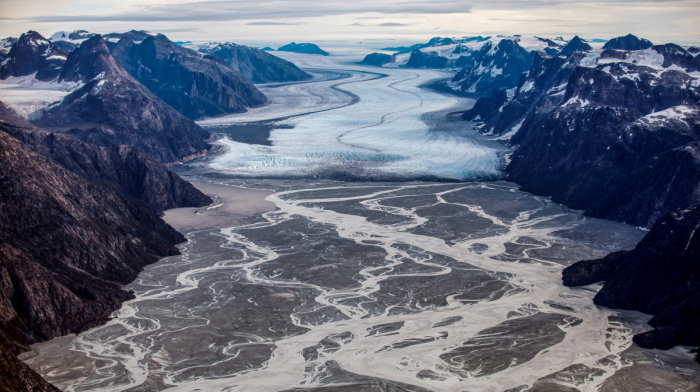
Arctic sea-ice extent in 2025 averaged 10.10 ± 0.33 million km², among the lowest on record, compared with a long-term average of 11.01 million km².
The Arctic’s maximum winter extent fell to a record low of 14.19 ± 0.40 million km².
Antarctic sea ice also remained historically low, with an annual average of 10.81 ± 0.26 million km², the third lowest on record, while the minimum extent dropped to 2.06 ± 0.10 million km².
6. Rising sea levels
Global mean sea level in 2025 remained near record highs and is now around 11 cm higher than in 1993, the start of satellite observations.
The rate of rise has accelerated from 2.65 ± 0.3 mm per year (1993–2011) to 4.75 ± 0.3 mm per year (2012–2025).
7. Ocean acidification continues
The oceans absorb significant amounts of CO₂, leading to ongoing declines in pH levels.
Ocean surface pH has declined at a rate of –0.017 ± 0.001 pH units per decade (1985–2025).
The IPCC finds current pH levels are unprecedented in at least 26,000 years, posing serious risks to marine ecosystems and fisheries.
8. Extreme weather and cascading impacts
The report’s supplement highlights how extreme events, including heatwaves, storms and droughts, are increasing and interacting with broader societal vulnerabilities.
Climate‑driven impacts are linked to food insecurity, displacement and economic losses in many regions.
These cascading impacts are becoming more severe as hazards overlap with limited adaptive capacity in vulnerable regions.
9. Climate change affecting health
Climate change is intensifying health risks, including heat stress and the spread of diseases such as dengue.
Around half of the global population is at risk, with 100–400 million infections annually, while approximately 1.2 billion people face workplace heat exposure each year.
10. Long‑lasting and partly irreversible changes
Many changes - including ocean warming, sea-level rise and acidification - are effectively irreversible on century to millennial timescales.
Growing urgency
WMO Secretary‑General Celeste Saulo said human activities are disrupting the natural equilibrium of the climate system and that “we will live with these consequences for hundreds and thousands of years.”
UN Secretary‑General António Guterres described the climate state as “in a state of emergency,” calling persistent record-breaking temperatures a clear signal to act.
Conclusion
The WMO report shows that climate change is accelerating, global systems are losing balance, and impacts are compounding across the atmosphere, oceans, ice sheets and human societies.
Scientists warn that these are not temporary anomalies but long-term changes embedded in the Earth system, underscoring the urgent need for sustained global climate action.






















What is your opinion on this topic?
Leave the first comment