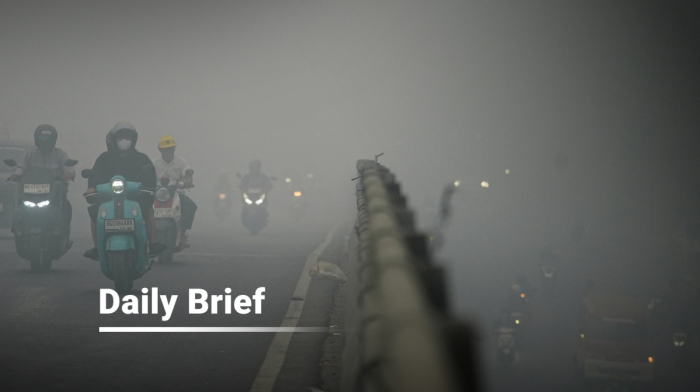
Dense smog has forced authorities in Pakistan’s Punjab province to shut several major motorways on Tuesday (16 December), stranding commuters as visibility dropped sharply and Lahore’s air quality reached hazardous levels.
Traffic slowed to a crawl in several areas, with commuters seen navigating through heavy haze as visibility fell to dangerous levels.
In Lahore, the air quality index stood at a hazardous 322 early in the morning, placing the city among the most polluted in the world at the time. Historic landmarks including the Badshahi Mosque and Minar-e-Pakistan were shrouded in smog, while daily life continued under a dense grey cover, with students walking to school and birds barely visible against the skyline.
The closures led to widespread disruption at toll plazas and bus stations. At the Babu Sabu toll gate, access to the motorway was sealed, leaving long lines of vehicles waiting. Bus services were halted, with passengers stranded for hours as they awaited further instructions.
“We’ve been waiting since 6 AM. The buses are ready, but we haven’t been allowed to board and no one is informing us,” said bus passenger Mohammad Naeem, expressing frustration over the uncertainty caused by the shutdown.
Another commuter, Hafiz Safar Abbas, said the situation had left the public anxious. He urged authorities to reopen the motorways as soon as weather conditions allow, stressing that public needs should be prioritised once visibility improves.
"The public is uncertain. If the weather clears, the motorways should reopen immediately," Abbas said
Bus operator Atif Nazir defended the decision, saying the closures were necessary to prevent accidents. He said the move was aimed at protecting both drivers and passengers during poor visibility caused by the smog.
Government authorities said they are monitoring conditions closely and will reopen motorways once it is deemed safe, urging travellers to remain patient as pollution levels and weather conditions continue to fluctuate across the region.
















What is your opinion on this topic?
Leave the first comment