Picture three scenarios: a hospital that can spot a disease before the patient feels sick, a power grid that feeds thousands of data centres and a government network that is attacked daily. All three depend on artificial intelligence, and one question matters most: who is really in charge?
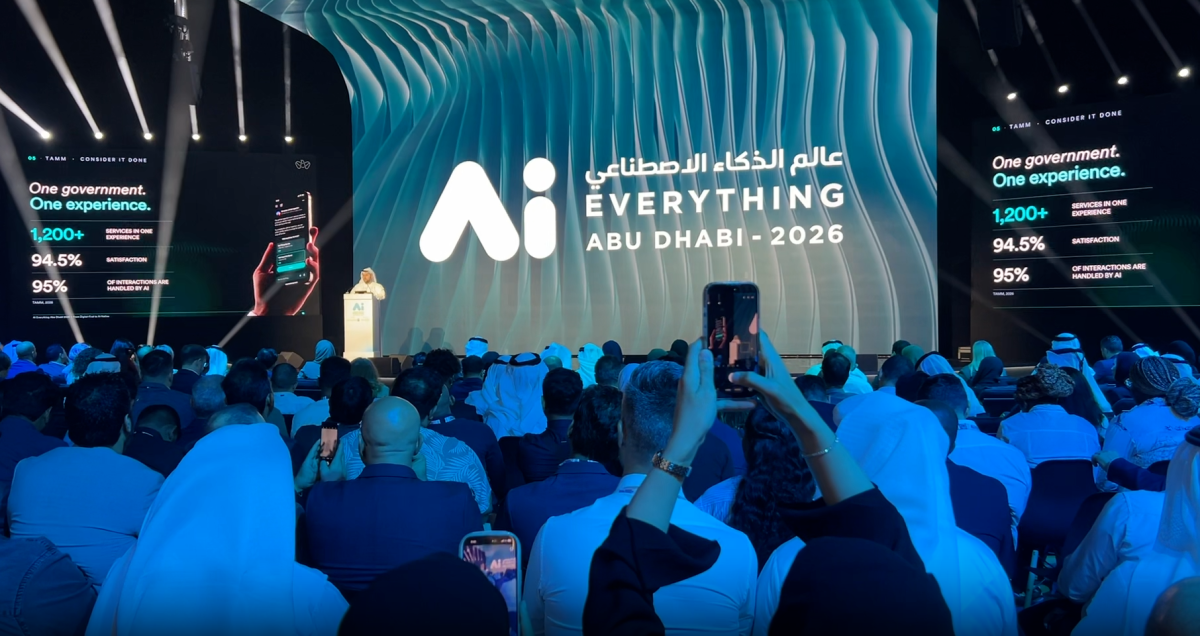
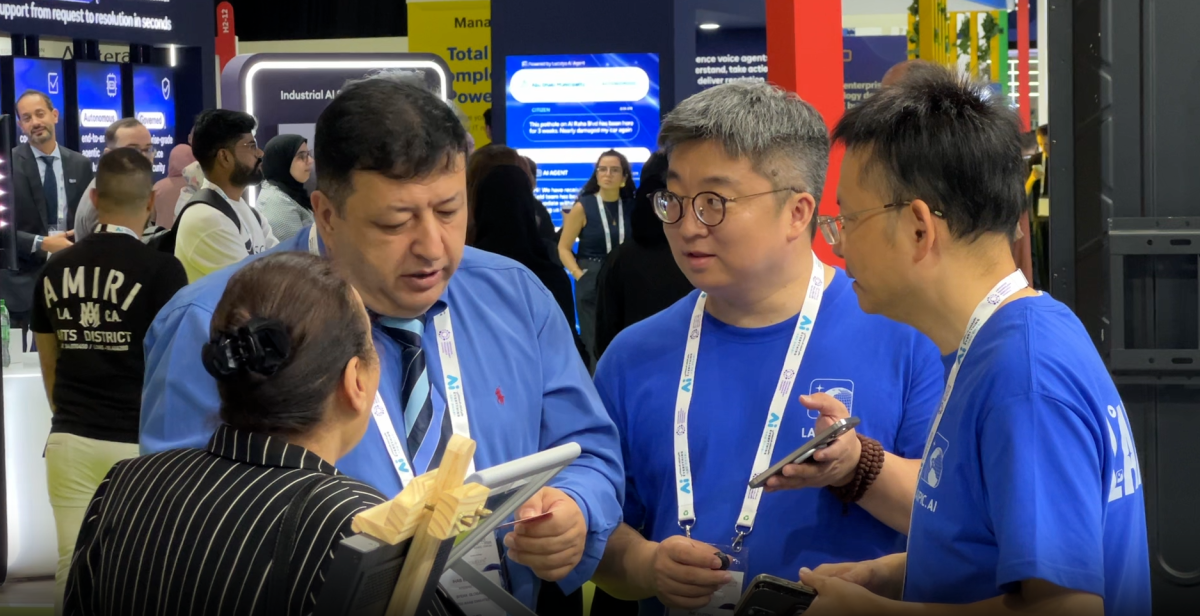
That question was the setting for various panels and sessions during the two-day AI Everything Abu Dhabi conference, which has now closed. More than 400 exhibitors attended, with over 180 speakers and more than 200 investors who manage around $100 billion in technology.
Here are some of the takeaways:
Governments and AI
The World Bank surveyed 60 economies, and nearly two-thirds of the governments give their staff official access to generative AI. However, only 39 per cent have formal rules for using it; another 38 per cent are still writing the rules. The World Bank describes this adoption as “broad but shallow”. In other words, the technology arrived before the rulebook.
Abu Dhabi is moving fast. Its digital strategy for 2025 to 2027 puts 13 billion dirhams ($3.5 billion) into government transformation. It plans more than 200 AI solutions across public services and a 100 per cent sovereign cloud. The target is to become the world's first fully AI-native government by 2027.
Medicine and AI
Abu Dhabi calls itself a “living lab” for AI in healthcare. Its health chairman says AI is not hype, it is a utility. The emirate is joining genetic data, wearable data and health records to speed up drug discovery. In June, a health delegation from Abu Dhabi took part in 22 partnerships and agreements in the United States, covering genomics, AI and new therapies. The summit also had a dedicated LifeTech event on AI in healthcare, biotechnology and drug discovery.
But health data is the most personal data we have. A mistake in a hospital is not like a mistake in an email. So, the final decision must stay with a doctor, not an algorithm.
Climate and AI
AI is part of the climate problem --- and maybe part of the solution. The International Energy Agency says electricity demand from data centres will more than double by 2030. To put that into perspective, that is slightly more than what all of Japan uses today. Last year, data centre demand already grew by 17 per cent, while global electricity demand grew only three per cent.
Cybersecurity and AI
The head of the UAE Cyber Security Council says the country faces about 600,000 attacks every day -- that's a whopping 25,000 every hour. Officials say attackers now use AI to write phishing messages, find weak points and even create malicious software. But defenders use AI too. Dubai recently introduced a tool to detect deepfake videos. So, AI is on both sides of the fight.
So what did Abu Dhabi tell us?
Look again at the three scenarios mentioned above: the hospital, the power grid and the government network. In each one, AI gives speed and power. But speed is not enough. We also need clear rules, strong security and a human who is responsible for the final decision.
The technology will keep getting smarter. The real test is whether we stay wise enough to control it.
Read more:













What is your opinion on this topic?
Leave the first comment