live U.S. military says rescue operations under way after plane crashes in Iraq- Friday, 13 March
Leaders of Iran, Israel, and the United States reiterated their determination to press on with the conflict on Friday (13 March), as the Middle Eas...
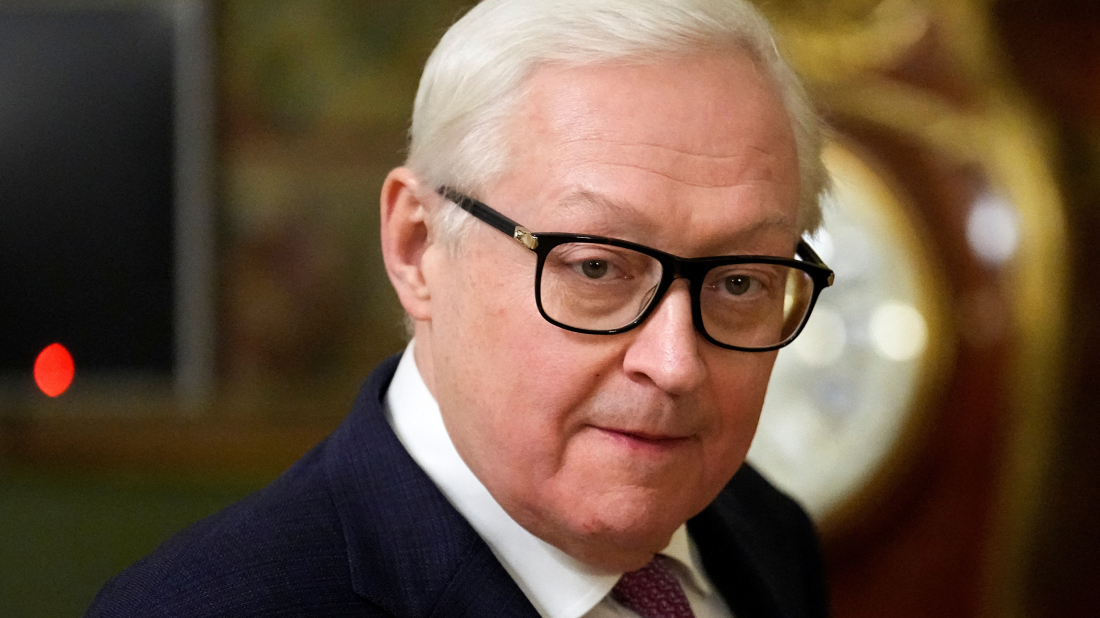
Russia weighs resuming nuclear tests amid strained U.S. ties, says Deputy FM Ryabkov. Putin recently eased nuclear doctrine, citing Western escalation in Ukraine. Last test was in 1990.
A possible resumption of nuclear weapons tests by Moscow remains an open question in view of hostile U.S. policies, a senior Russian diplomat was quoted as saying early on Saturday.
"This is a question at hand," Deputy Foreign Minister Sergei Ryabkov told TASS news agency when asked whether Moscow was considering a resumption of tests.
"And without anticipating anything, let me simply say that the situation is quite difficult. It is constantly being considered in all its components and in all its aspects."
In September, Ryabkov referred to President Vladimir Putin as having said that Russia would not conduct a test as long as the United States refrained from carrying one out.
Moscow has not conducted a nuclear weapons test since 1990, the year before the collapse of the Soviet Union.
But Putin this month lowered the threshold governing the country's nuclear doctrine in response to what Moscow sees as escalation by Western countries backing Ukraine in the 33-month-old war pitting it against Russia.
Under the new terms, Russia could consider a nuclear strike in response to a conventional attack on Russia or its ally Belarus that "created a critical threat to their sovereignty and (or) their territorial integrity".
The changes were prompted by U.S. permission to allow Ukraine to use Western missiles against targets inside Russia.
Russia's testing site is located on the remote Novaya Zemlya archipelago in the Arctic Ocean, where the Soviet Union conducted more than 200 nuclear tests.
Putin signed a law last year withdrawing Russia's ratification of the global treaty banning nuclear weapons tests. He said the move sought to bring Russia into line with the United States, which signed but never ratified the treaty.

The U.S. should shut down its military bases in the Middle East, Iran's new Supreme Leader Mojtaba Khamenei said on Thursday (12 March). His words were read out by a broadcaster on state Iranian television.
More than 68,000 children in eastern Afghanistan have been displaced after clashes between Afghan and Pakistani forces intensified along the border, according to a new report by Save the Children.
Georgia has cancelled international tenders for the construction of major road sections that form part of a regional highway linking the country with the borders of Armenia and Azerbaijan.
Norwegian police apprehended three brothers suspected of carrying out Sunday's (8 March) bombing at the U.S. embassy in Oslo, in an attack investigators have branded an act of terrorism.
“Get ready for oil to be $200 a barrel," a spokesman for the Iranian Army warned the world on Wednesday (11 March), as attacks on ships in the Strait of Hormuz escalated. Meanwhile, 32 countries agreed to the largest ever release of oil reserves in an attempt to reduce prices.
The European Commission will instruct governments to be flexible in enforcing EU rules on gas imports, diplomats told Reuters on Thursday (12 March), a move likely to benefit imports from Azerbaijan.
Start your day informed with AnewZ Morning Brief. Here are the top news stories for the 13rd of March, covering the latest developments you need to know.
Ayman Ghazali, a 41-year-old U.S. citizen born in Lebanon, crashed his truck into the hallway of a Detroit-area synagogue on Thursday (12 March) while children attended preschool. Security personnel shot him dead during the confrontation, and authorities said no one else was seriously injured.
Balendra Shah is set to become Nepal's prime minister after winning a landslide in the country's 2026 elections. The election comes after a GenZ-led protest in which dozens died in September last year, helped to overthrow the government
Although against international humanitarian war, targeting desalination plants and other key locations is increasingly being used as a way of making an opponent weaker in battle. Water-related violent events have increased rapidly since 2022.
You can download the AnewZ application from Play Store and the App Store.
What is your opinion on this topic?
Leave the first comment