Kyrgyzstan scheme aims to improve young families' parenting skills
The Cabinet of Ministers of Kyrgyzstan has approved a new programme aimed at develop...
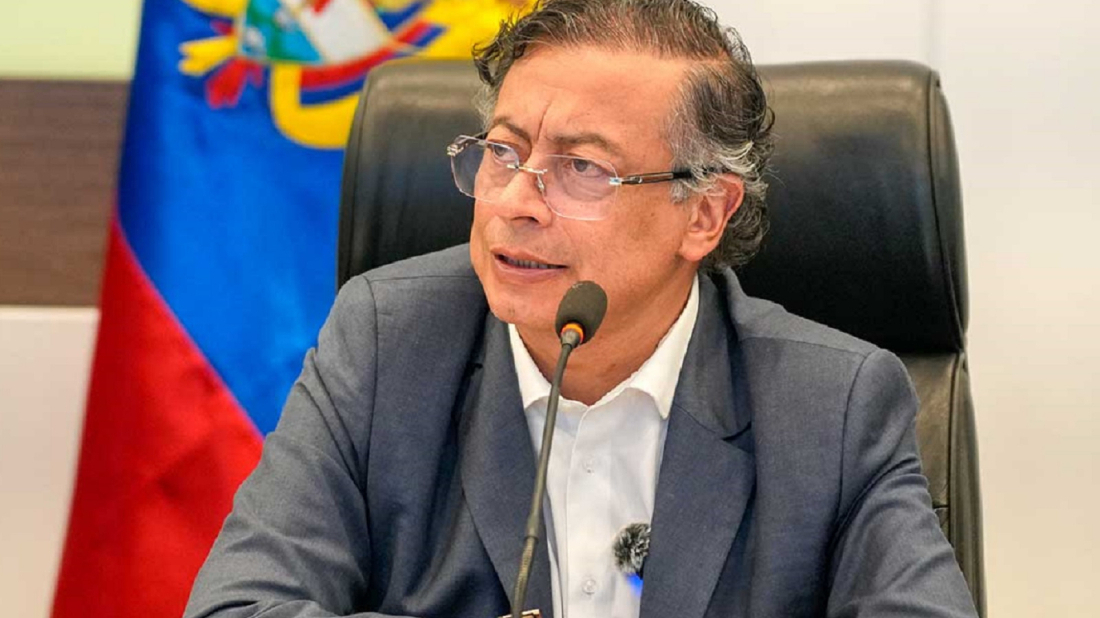
Colombian President Gustavo Petro has condemned U.S. military operations against vessels in the Caribbean, which have resulted in dozens of deaths and heightened tensions in the region.
Petro described the U.S. actions as extrajudicial executions and a violation of international humanitarian law, even if those on board the vessels were carrying narcotics.
Elected in 2022 as Colombia’s first left-wing president, Petro was previously a member of the M-19 guerrilla group, later serving as a congressman and Mayor of Bogotá. Since taking office, he has revitalised diplomatic relations with Venezuelan President Nicolás Maduro and strengthened ties with other regional left-leaning leaders, including Brazil’s Luiz Inacio Lula da Silva, Chile’s Gabriel Boric, and Mexico’s Claudia Sheinbaum.
U.S. sanctions
On Friday, 24 October, the U.S. imposed sanctions on President Petro, accusing him of failing to halt the flow of cocaine from Colombia to the United States. Treasury Secretary Scott Bessent said: “Since President Gustavo Petro came to power, cocaine production in Colombia has reached the highest level in decades, flooding the U.S. and harming Americans.”
Petro responded on X , stating that he has fought drug trafficking for decades and that the sanctions will not force him to step back.
The sanctions also target Petro’s wife, son, and Colombia’s Interior Minister Armando Benedetti. Last weekend, former President Trump threatened to raise tariffs on Colombia and announced that all U.S. funding to the country had been suspended.

Mojtaba Khamenei, son of the late Ayatollah Ali Khamenei, is a hardline cleric with strong backing from the Islamic Revolutionary Guard Corps. His rise signals continuity in Tehran's anti-Western policies.
Global oil prices surpassed $119 a barrel on Monday (9 March, 2026), an almost four year high, as the Middle East conflict rumbled on.
China has urged Afghanistan and Pakistan to resolve their dispute through dialogue after Chinese envoy Yue Xiaoyong met Afghan Foreign Minister Amir Khan Muttaqi, as fighting between the two neighbours entered its eleventh day.
Welcome to our live coverage as the conflict involving Iran enters its 11th day. Tensions in the region remain high as the United States and Iran exchange increasingly sharp warnings over the strategic Strait of Hormuz, a critical artery for global oil supplies.
Entry and exit across the state border between Azerbaijan and Iran for all types of cargo vehicles, including those in transit, will resume on 9 March, according to a statement by the Cabinet of Ministers of Azerbaijan.
U.S. Ambassador to the United Nations, Mike Waltz, has addressed the U.N. Security Council, saying the world must consider how effective its engagement with the Taliban-run country is as millions face hunger.
British MPs have rejected a proposal to introduce an Australia-style ban on social media for under-16s, opting instead to give ministers flexible powers to impose restrictions on platforms.
Australia has granted humanitarian visas to five Iranian women footballers who sought asylum, fearing persecution after refusing to sing their national anthem at an Asia Cup match.
Start your day informed with AnewZ Morning Brief. Here are the top news stories for the 10th of March, covering the latest developments you need to know.
U.S. President Donald Trump called his recent phone conversation with Russian President Vladimir Putin “very good.” The two leaders spoke on Monday about the situation in Iran and other international issues.
You can download the AnewZ application from Play Store and the App Store.
What is your opinion on this topic?
Leave the first comment