Iran has strongly condemned the renewed U.S. attacks on Thursday as a violation of the UN Charter, saying Washington has rendered its ceasefire deal struck in April with Tehran meaningless.
“The illegal and criminal attacks by the United States...are not only a gross violation of the United Nations Charter and the fundamental rules of international law regarding respect for national sovereignty and territorial integrity of states, but have also rendered the ceasefire of 8 April practically meaningless,” the Foreign Ministry said in a statement.
“Iran strongly condemns the crimes of the U.S. terrorist regime in its massive attack last night and emphasises that the responsibility for the very dangerous consequences resulting from this warmongering rests with the U.S. ruling elite.”
Foreign Ministry Spokesman Esmaeil Baghaei, in an interview with the state-owned IRNA news agency on Wednesday, said that Tehran is reviewing prospects of the mediated talks with Washington in the wake of the latest ceasefire violations.
“We have to review it. Diplomacy and the battlefield are not separate matters. Rather, they run alongside and complement each other in safeguarding Iran’s interests and security,” he added.
Iran announced on Thursday it has shut the Strait of Hormuz to all maritime traffic following U.S. attacks on its southern ports and inland military sites close to the capital, Tehran, and neighbouring Alborz Province.
The Khatam al-Anbiya Central Command warned that while the strategic waterway will be closed to all types of vessels, including tankers and commercial ships, any that attempt to sail through the maritime corridor will be targeted.
According to the official sources covering military and defence news, the Revolutionary Guards (IRGC) Navy also announced that the Strait of Hormuz “remains shut until further notice”.
It warned that “no vessel should leave its anchorage in the Persian Gulf and the Sea of Oman,” stressing that “approaching the Strait of Hormuz will be considered cooperation with the enemy.”
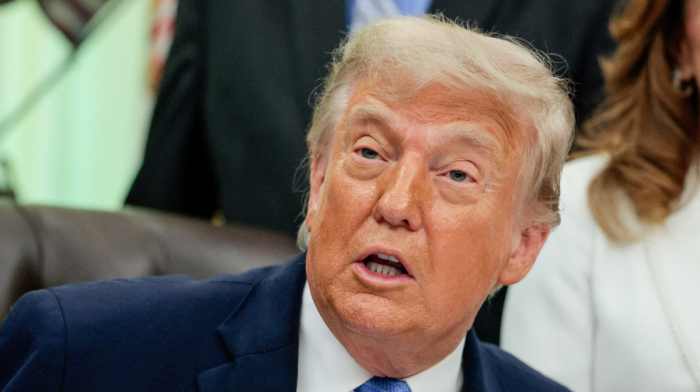
The force strongly denied U.S. President Donald Trump's remarks claiming Iran directly contacted him to end the attacks, branding it as a “cover to escape” Tehran’s retaliation.
The Revolutionary Guards and Army in separate statements vowed a “crushing” response to the attacks, rejecting Iran ceased retaliatory operations to the latest U.S. air raids.
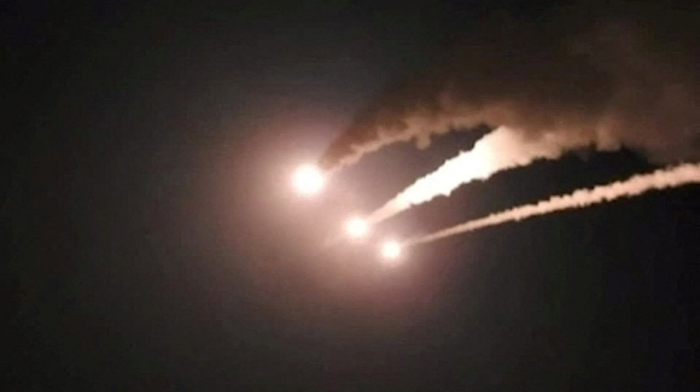
Iran’s Armed Forces said they attacked U.S. bases in Bahrain, Jordan and Kuwait with missiles and drones, targeted two tankers in the Strait of Hormuz, and intercepted and fired upon an F-16 fighter jet.
Meanwhile, President Masoud Pezeshkian has denounced as “a sign of desperation” the U.S. president’s renewed threat of striking at Iran’s vital infrastructure, including bridges and power plants.
“Vital infrastructure are the life arteries of the people. Threatening to target them, from transportation networks to the electricity and water industries, is not a show of strength but a sign of desperation in the face of the will of a nation,” he stated in a post on X social platform.
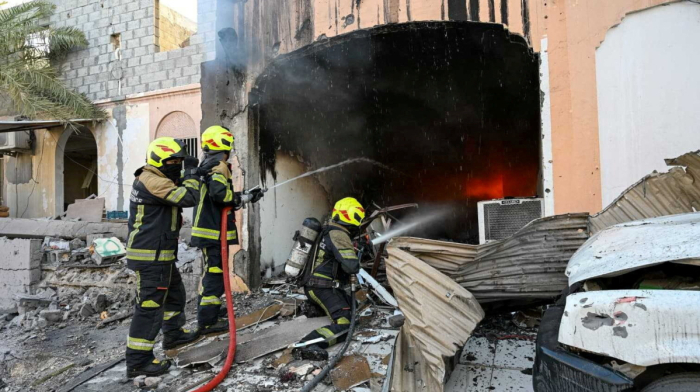
Foreign Ministry Spokesman Baghaei also condemned the targeting of two civilian water desalination facilities on Iran's southern Sirik Island, saying the United States must be held accountable for what he described as "systematic brutal attacks" on critical civilian infrastructure.
The renewed standoff between Iranian and U.S. militaries came on the eve of the first anniversary of the 12-day war, which falls this coming Saturday.
On 13 June 2025, Israel attacked Iran and was later joined by the U.S., which bombed several of Iran’s major civilian nuclear facilities that were under UN safeguards.
















What is your opinion on this topic?
Leave the first comment