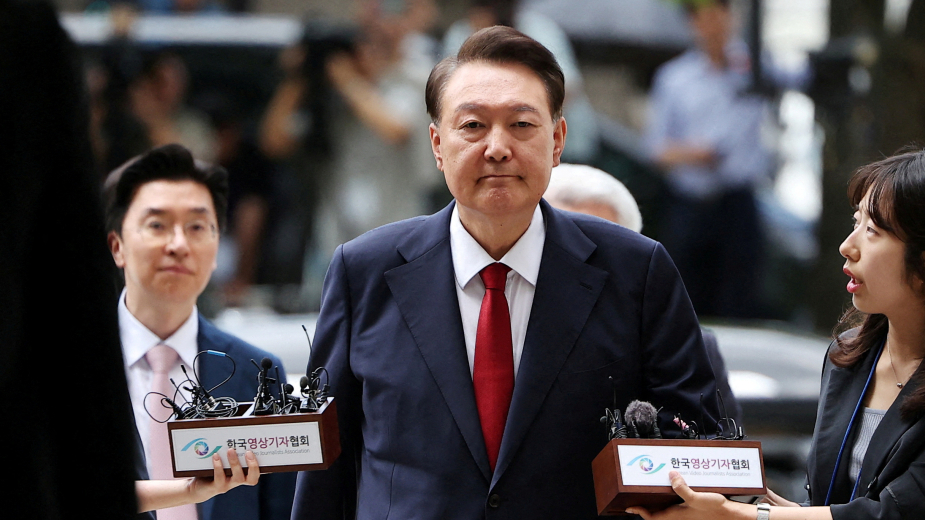
A South Korean court has sentenced former president Yoon Suk Yeol to 30 years in prison over charges linked to a military drone operation involving North Korea.
The Seoul Central District Court found Yoon Suk Yeol guilty of aiding the enemy and abuse of power, ruling that he had been involved from the outset in an October 2024 drone incursion over Pyongyang.
The court said the operation was intended to help create a pretext for his subsequent declaration of martial law in December 2024.
The verdict adds to a series of rulings against the former conservative leader, whose attempt to impose martial law triggered one of South Korea’s most serious political crises in decades.
Prosecutors had sought a 30-year prison sentence in April, while a separate court in February sentenced Yoon Suk Yeol to life imprisonment after convicting him of leading an insurrection linked to the same events.
Yoon Suk Yeol had served as South Korea’s top prosecutor before entering politics.
Defence rejects allegations
Yoon Suk Yeol has consistently denied wrongdoing. His legal team said he neither ordered nor approved the drone operation.
Lawyers argued the flights were unrelated to martial law and instead a response to months of cross-border activity by North Korea, including the sending of balloons carrying waste materials.
Removal from office
Yoon Suk Yeol was removed from office after South Korea’s Constitutional Court upheld his impeachment. The decision led to a snap election, which was won by liberal candidate Lee Jae Myung.
The former president remains in custody and has appealed previous rulings. He is also expected to challenge the latest sentence.
The case has deepened divisions in South Korean politics, with supporters of Yoon Suk Yeol arguing the charges are politically driven, while critics insist the rulings reflect the seriousness of actions that threatened democratic stability.












What is your opinion on this topic?
Leave the first comment