Concurrent with the renewed military standoff between Iran and the U.S. in the Middle East, Tehran and Washington are clashing at the International Atomic Energy Agency (IAEA), where the U.N. nuclear watchdog’s Board of Governors is holding its quarterly meeting in Vienna.
Foreign Minister Abbas Araghchi has written to the foreign ministers of the member states represented on the agency’s board, denouncing the U.S. for tabling a draft resolution against Iran’s nuclear programme.
Meanwhile, the Islamic Revolutionary Guard Corps (IRGC) warned against continued U.S. military attacks on Iran, while the country’s Armed Forces said they had targeted U.S. bases in Bahrain, Jordan and Kuwait with ballistic missiles and drones, and had shot down an MQ-9 drone.
According to the state-owned IRNA news agency, which published Araghchi’s letter, Iran’s top diplomat described the U.S. move as “politically oriented” and an “ill wishing” act intended to justify Washington’s anti-Iran policies and seek legitimacy for its military attack on Iran’s nuclear sites last year.
“Less than 24 hours after the Board of Governors passed last year's resolution in June 2025, the Israeli and U.S. regimes launched an illegal attack on Iran's safeguarded nuclear facilities, killing a large number of Iranians.”
Warning against what he described as the abuse of the U.N. agency, Araghchi asked: “Is IAEA once again going to become a tool to justify attacks on peaceful nuclear facilities?”
Tehran blames previous resolution for attacks
Iran criticised the board’s 2025 resolution accusing Tehran of non-compliance, saying its adoption paved the way for the 12-day Israel-U.S. conflict and the bombing of Iran’s major nuclear sites, which were under U.N. safeguards.
Following what it described as the IAEA’s failure to condemn air strikes on Iran’s three civilian nuclear facilities, Tehran suspended its co-operation with the U.N. watchdog, with the exception of the Bushehr nuclear power plant.
Deputy Foreign Minister for Legal and International Affairs Kazem Gharībābādī, in a post on the social media platform X, said the draft U.S. resolution backed by three European countries was an attempt to “whitewash the crimes of the aggressors”.
Citing IAEA documents, he said, “it was the Israel-U.S. attacks last June on Iran’s nuclear facilities which resulted in halting the verification activities and banning the agency’s inspectors from Iran for safety reasons”.
“Now the U.S. wants to turn the effects of its illegal attack into a case against Iran,” he added.
Military tensions continue in the Gulf
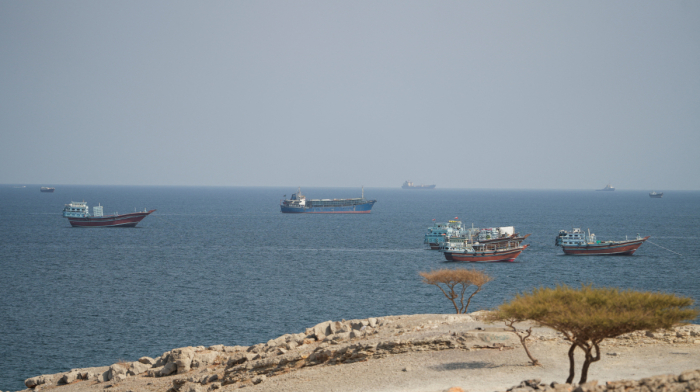
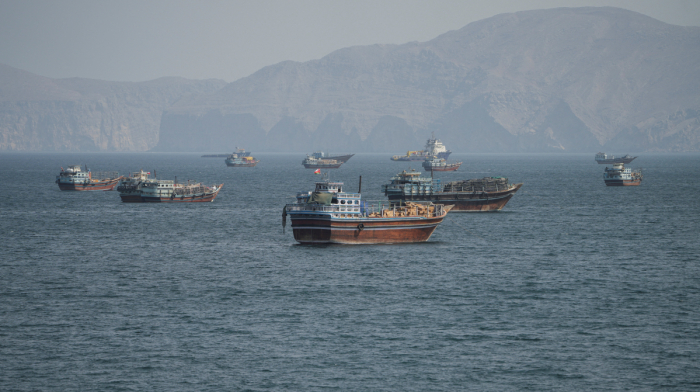
While the Iranian and U.S. delegations remain at loggerheads in Vienna, their militaries continue to exchange fire in the Persian Gulf and the Gulf of Oman despite a fragile ceasefire and stalled efforts to extend it.
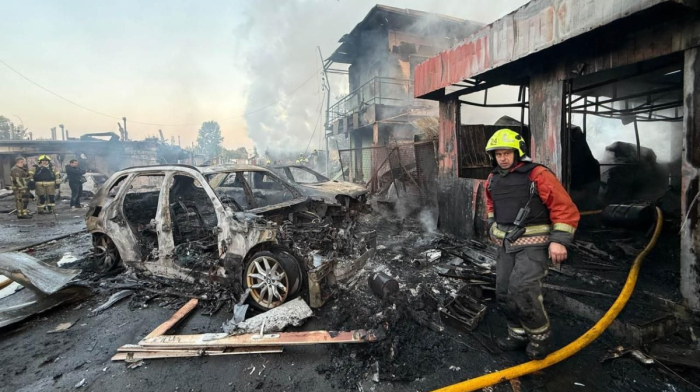
Following Tuesday’s crash of a U.S. Apache attack helicopter, reportedly brought down by an Iranian drone, clashes intensified as U.S. forces launched strikes on Iranian ports in the south of the country.
Iran did not claim responsibility for downing the helicopter and responded by attacking U.S. bases in the region, including facilities in Bahrain, Jordan and Kuwait.
In the wake of the latest exchanges, Araghchi said in a post on X that U.S. forces and other foreign militaries should leave the region if they wished to remain safe.
“Despite its defeats on the battlefield, the U.S. opted to test our determination. Our Powerful Armed Forces will leave no attack or threat unanswered.”
Earlier on Tuesday, following U.S. threats of retaliation, he reiterated the same message in another post on X:
“Foreign forces in proximity to our territory are at constant risk on account of their own human errors, plain accidents, or potentially being caught in crossfire.”
“To reduce risk, best solution is for them to leave. We prefer language of diplomacy but speak other languages too.”
Parliament Speaker Mohammad Bagher Ghalibaf, who is also involved in the mediated talks with the U.S., echoed that position in a post on X, saying Iran preferred diplomacy but was more fluent in other languages.
The renewed attacks came on the eve of the first anniversary of the 12-day war, which falls on Saturday.
On 13 June last year, Israel launched attacks on Iran and was later joined by the U.S., which bombed several of Iran’s major civilian nuclear facilities that were under U.N. safeguards.








What is your opinion on this topic?
Leave the first comment