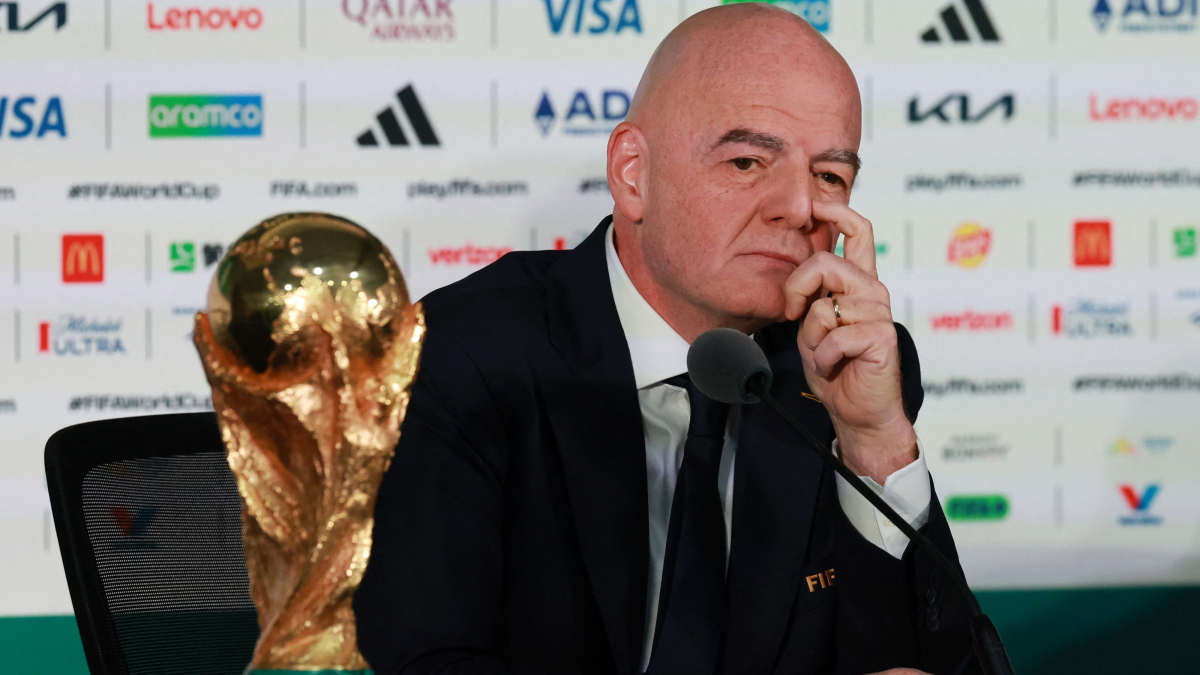
The 2026 FIFA World Cup is set to become the biggest tournament in football history.
For the first time, the competition will feature 48 teams and be hosted across three countries: the U.S., Canada and Mexico. As anticipation builds, questions remain over whether the expanded format and vast geographical scale will transform the experience for players and supporters alike.
Football analyst Haya Obeydat, who serves as the main contact for UEFA and FIFA in Azerbaijan, believes the tournament could become a defining moment in World Cup history.
Expansion brings opportunity and uncertainty
One of the biggest talking points surrounding the 2026 tournament is the increase in participating teams from 32 to 48.
Critics have questioned whether the expansion could dilute the quality of the competition by allowing weaker sides to qualify. However, Obeydat argues that the benefits may outweigh the risks.
"I don't think it will reduce the quality too much," she says.
"Of course, there will be some teams that are not as strong as the traditional football powers, but it also gives more countries a chance to compete on the biggest stage. We could see some surprises and that's part of what makes the World Cup special."
The prospect of unexpected results has long been one of the tournament's defining characteristics, and the expanded format could create more opportunities for emerging football nations to make their mark.
The challenge of distance
The scale of the tournament presents another major challenge.
With matches spread across three countries and host cities separated by vast distances, travel could become a significant factor in team performance.
Obeydat believes the impact may be greater than many people currently expect.
"The distance between the cities is huge and changing time zones can affect sleep and recovery through jet lag," she says.
"The top teams will be prepared for it, but when two teams are very close in quality, those small details can make a difference."
Managing player recovery, travel schedules and tactical preparation may therefore become just as important as what happens on the pitch.
A different experience for fans
The cost of attending the World Cup is also likely to be a concern for many supporters.
According to Obeydat, expenses extend far beyond match tickets.
"It's not just about the ticket price," she says. "Fans also have to pay for flights, hotels, transport, food and everything else.
"For many people, especially those travelling from abroad, it could be very expensive."
She warns that wealthier supporters may enjoy a far more comfortable tournament experience, while others will need to plan carefully and make financial sacrifices to attend.
"Fans with the biggest budgets will have more options and more comfort," she says. "Other supporters may have to be much more careful with their travel plans."
Despite those concerns, she hopes the atmosphere that makes the World Cup unique will remain accessible to fans from different backgrounds.
"Football should be for everyone, so hopefully fans from different backgrounds will still be able to enjoy the tournament," she says.
A turning point for the World Cup
For Obeydat, the 2026 edition could ultimately be remembered as a landmark event.
"We've never had a World Cup with 48 teams spread across three countries," she says.
"Everything will be bigger than before. Whether people like it or not, I think this tournament will be remembered as the turning point for the World Cup."
She also believes Canada could emerge as one of the tournament's biggest winners regardless of the final result.
"Hosting matches can help grow the game, attract new fans and inspire young players," she says.
"Winning the World Cup would be amazing, but sometimes the long-term impact can be even more important."
Early predictions
identified Germany, Portugal, Argentina and France as her early favourites.
"All four teams have a lot of quality, experience and players who can make a difference in big moments," she says.
However, she stops short of naming a likely champion.
"It's too early because this is a slightly different World Cup and things could play out in a very different way compared to what we are used to," she says.
"It's hard to confidently pick a winner right now. This is a completely different World Cup and everything can happen."
With a new format, unprecedented travel demands and ongoing questions over affordability, the 2026 World Cup may be remembered not only for who lifts the trophy, but also for how it reshapes football's biggest tournament.














What is your opinion on this topic?
Leave the first comment