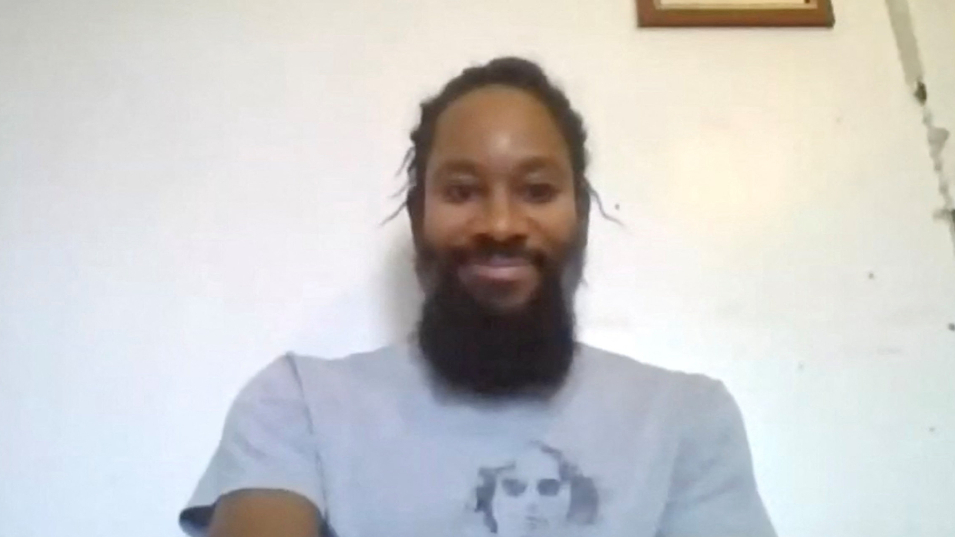
Jason Arday, the former University of Cambridge professor at the centre of a plagiarism row, has been found dead. He was appointed Cambridge's youngest ever Black professor in 2023, but quit on 5 August, after being accused of lifting passages from his PhD from the work of other academics.
Emergency services were called to an address in Battersea, south London, on Friday after receiving reports of a man who was unresponsive. The Metropolitan Police said the death is being treated as unexpected, but is not believed to be suspicious.
The news came just days after Arday resigned from his position as Professor of Sociology of Education at Cambridge, citing the toll that allegations of plagiarism and public scrutiny had taken on his personal life.
A celebrated academic whose rise inspired many
Arday's appointment to Cambridge in 2023 attracted national attention. At the age of 37, he became the university's youngest Black professor, a milestone widely seen as significant in a sector where Black academics remain heavily under-represented.
His personal story was central to that achievement.
Arday often spoke about the challenges he faced growing up with autism and developmental difficulties. He was non-verbal until the age of 11 and did not learn to read and write until his late teens before eventually earning a doctorate and pursuing a successful academic career.
Before joining Cambridge, he worked as a physical education teacher and later held academic positions at Durham University and the University of Glasgow, building a reputation as a researcher focused on education, race and social inequality.
His memoir, Great And Unfortunate Things, which chronicles that journey, was published in the United States earlier this week and is due for release in the UK later this month.
Controversy engulfed the final weeks of his career
The final chapter of Arday's career was overshadowed by allegations concerning his academic work and aspects of his personal achievements.
The controversy began after Nathan Cofnas, a former Cambridge academic, publicly alleged that he had identified multiple instances of plagiarism in Arday's published work and doctoral research.
Cofnas, who was previously sacked by Cambridge over a blog post about Black academics, said he had put Arday's PhD through plagiarism detection software, and found that many parts were taken from other academics' work, sometimes repeating copy-editing mistakes from the original source.
Cambridge initially backed Arday, accusing those questioning his academic integrity of having racist motives. However, on 7 August the university said it had begun an investigation following "new information" about his academic qualifications and honorary appointments.
Biographies claimed Arday had visiting professorships at Glasgow University and Ohio State University, but both institutions denied he ever held such a role. He was also reported to have claimed to be an honorary professor at Durham University, but Durham denied this.
After the plagiarism allegations came to light, some of Arday's other claims about his achievements came under the spotlight.
Arday also claimed to have completed 30 marathons in 35 days, a feat which would make him an elite ultra-endurance runner. Arday claimed to have had a fractured leg while running nine of those marathons.
Arday told the Guardian he had been threatened after his Cambridge appointment, including having a severed pig’s head delivered to his parents’ home. Subsequent investigations found no evidence to support this claim.
Arday repeatedly denied plagiarising material. While acknowledging errors in some early academic work, he argued that mistakes had been mischaracterised and said they stemmed in part from difficulties linked to autism and a learning process that relied heavily on imitation and pattern recognition.
Biographies also said he had volunteered with the charity WaterAid and travelled to South America and West Africa to install water points providing clean drinking water.
WaterAid disputed this, pointing out that under it had a policy on not sending volunteers abroad.
Liverpool John Moores University, which awarded Arday his PhD in 2015, had previously examined concerns surrounding his doctoral thesis and concluded that plagiarism had not occurred.
However, the debate intensified as further questions emerged surrounding elements of his academic record and claims relating to charity fundraising and endurance events.
Resignation after months of pressure
On announcing his resignation last week, Arday said the personal cost of the controversy had become unbearable.
He argued that academic criticism had evolved into something far more damaging, describing the experience as one of relentless speculation and personal attacks.
Supporters rallied around him, with several academics and public figures arguing that he had become the target of an unfair campaign. The Good Law Project, which publicly backed him during the controversy, previously described the allegations as part of a broader effort to undermine minority scholars in prominent positions.
Speaking shortly before his resignation, Arday rejected suggestions that he was dishonest, arguing that the public response had been disproportionate to the allegations.
Tributes from across education
Tributes quickly emerged from universities, political figures and former colleagues.
Cambridge Vice-Chancellor Professor Deborah Prentice said the university was "desperately saddened" by the news and offered condolences to Arday's family and friends.
Deputy Prime Minister and Education Secretary Lucy Powell said she was "deeply shocked and saddened", urging people to remember that individuals caught up in public controversies have families and loved ones.
The University of Glasgow described itself as shocked by the death of a former colleague, while Durham University remembered Arday as a warm and supportive academic who worked to create opportunities for doctoral students.
Read more:















What is your opinion on this topic?
Leave the first comment