Militants have staged coordinated attacks in Mali’s capital, Bamako, and several locations across the country, the army said on Saturday (25 April), in an assault apparently involving jihadist and Tuareg-led groups.
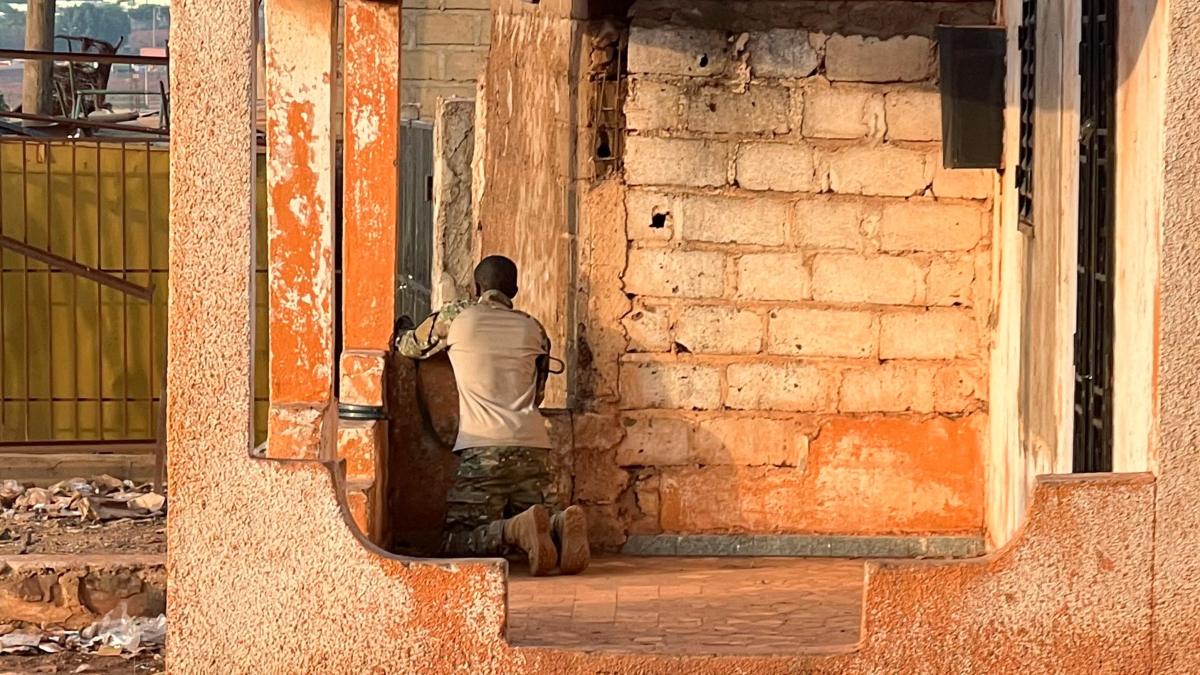
Explosions and gunfire were heard shortly before 06:00 GMT near a major military base in Bamako, with soldiers blocking roads in the area.
There were similar incidents at around the same time in the central town of Sévaré, and in the northern locations of Kidal and Gao.
“There’s gunfire everywhere,” a witness in Sévaré said.
Mali’s army said “terrorist” groups had attacked several positions in the capital and elsewhere, without giving further details. It added that fighting was ongoing and urged people to remain calm.
Mohamed Elmaouloud Ramadane, a spokesperson for the Azawad Liberation Front (FLA), a Tuareg-dominated rebel alliance, said on social media that its forces had taken control of multiple positions in Kidal and Gao.
Four security sources said the regional al-Qaeda affiliate Jama’at Nusrat al-Islam wal-Muslimin (JNIM) was involved in Saturday’s attacks.
There was no immediate claim of responsibility from JNIM, which frequently targets military installations across Mali, or from Islamic State in the Sahel Province (ISSP).
Mali has faced persistent instability since soldiers led by Assimi Goïta toppled former president Ibrahim Boubacar Keïta in 2020, following mass protests over corruption and the government’s handling of the insurgency.
Goïta later removed civilian leaders and assumed the presidency after a second coup in 2021, after which relations with former colonial power France deteriorated sharply.
France, which had led counter-terrorism operations in Mali, withdrew its troops in 2022. Since then, Mali has relied on Russian mercenaries for security operations.
Despite this, jihadist groups, including affiliates of al-Qaeda and Islamic State, have expanded their presence across the country.
Mali is also dealing with a long-running Tuareg-led rebellion in the north, where separatist groups seek independence for the region of Azawad, citing political and economic marginalisation.
Mali's Defence Minister killed in coordinated attacks
Mali’s Defence Minister Sadio Camara died after sustaining injuries in an attack on his residence in Kati, near Bamako, according to a government statement delivered by spokesperson Issa Ousmane Coulibaly.
Authorities said a vehicle carrying explosives, driven by a suicide attacker, struck the residence, followed by an exchange of gunfire. Camara was taken to hospital, where he later died. The government declared two days of national mourning.
The incident occurred amid coordinated attacks across several locations in Mali, reportedly carried out by Jama'at Nusrat al-Islam wal-Muslimin in cooperation with a Tuareg-led rebel group.
No official casualty figures have been released, though the government extended condolences to civilian and military victims. Analysts and diplomats described the operation as one of the largest of its kind in recent years.
The United Nations stated that the Secretary-General Antonio Guterres condemned the attacks and expressed concern over the security situation in the Sahel region.








What is your opinion on this topic?
Leave the first comment