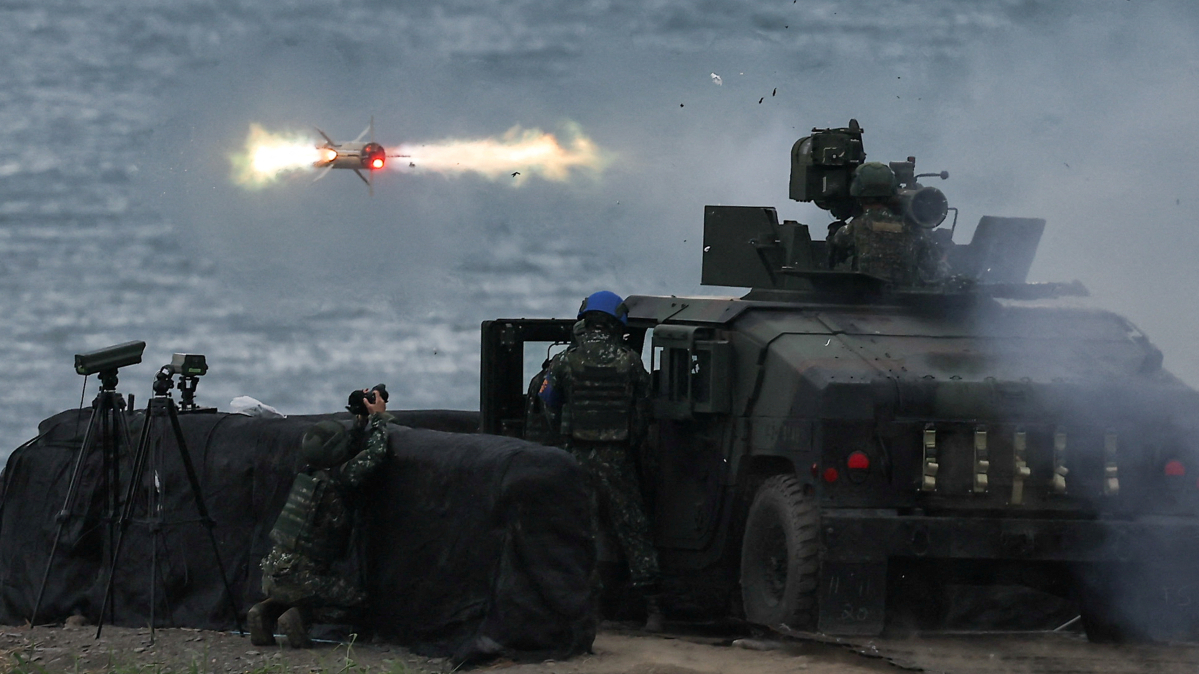
A bipartisan group of 37 U.S. lawmakers have written to senior Taiwanese politicians expressing concern about parliament stalling proposed defence spending, saying that the threat posed by China has never been greater.
Taiwan President Lai Ching-te last year proposed $40 billion in extra defence spending to counter China which views the island as its own territory.
But the opposition, which has a majority in parliament, has refused to review the proposal and instead advanced its own, less expensive proposals, which only fund the purchase of some of the U.S. weapons Lai wants.
The U.S. letter, addressed to Taiwan parliament speaker Han Kuo-yu, the heads of the opposition parties the Kuomintang (KMT) and Taiwan People's Party, as well as the caucus whip for the ruling Democratic Progressive Party, said the United States and Taiwan shared a strong and enduring partnership.
"However, the threat posed by the People's Republic of China (PRC) against Taiwan has never been greater. Xi Jinping is focusing every element of the PRC's national power to control Taiwan," said the letter, released on Thursday and referring to China's president.
The U.S. must address the massive backlog in weapons deliveries to Taiwan, but Taiwan needs to step up too, the letter said.
"We commend Taiwan for making important progress in strengthening its military readiness, reserve forces, and asymmetric defence capabilities," it said.
"Nevertheless, we fear that without significant increases in Taiwan's defence spending at levels reflected in President Lai's proposed special budget, this progress will be insufficient."
Signatories to the letter included Senators Pete Ricketts and Chris Coons, senior members of the Senate Foreign Relations Committee, and Young Kim and Ami Bera, senior members of the House Foreign Affairs Committee.
Several U.S. lawmakers have already made public expressions of concern about the stalled budget.
The Taiwan People's Party (TPP) has always supported a "reasonable and steadily growing" defence budget and understood U.S. concerns, it said in a statement, but added that spending requests had to be subject to democratic oversight and fiscal discipline.
There was no immediate response to the letter from the Kuomintang (KMT), or Chinese Nationalist Party in Taiwan.
The Democratic Progressive Party (DPP) said in a statement it agreed with the letter and hoped the recipients would read it "thoroughly."
The delay in passing the spending risks a "rupture" in the joint line of defence against China, Taiwan's defence minister said on Wednesday, as Lai again urged parliament to approve the spending measure.
The United States is Taiwan's most important international backer and arms supplier, despite the lack of formal diplomatic ties.
The Trump administration has pressed its allies to increase defence spending, something Lai and his government have enthusiastically embraced.
China has never renounced the use of force to bring Taiwan under its control. Lai has repeatedly offered talks with China, but been rebuffed, and says only Taiwan's people can decide their future.
Three days ago, China said it will offer firm support for "patriotic pro-reunification forces" in Taiwan and strike hard against "separatists." A top Chinese official in charge of policy towards the democratically-governed island said in comments published on Tuesday.
China views Taiwan as its own territory despite the objections of the government in Taipei and has ramped up its military and political pressure against the island as Beijing seeks to assert its sovereignty claims.
Addressing this year's annual "Taiwan Work Conference", a key meeting which sets the tone for China's policy towards the island, the ruling Communist Party's fourth-ranked leader Wang Huning said officials must advance the "great cause of national reunification", the official state-run Xinhua news agency said.











What is your opinion on this topic?
Leave the first comment